
 EN
EN
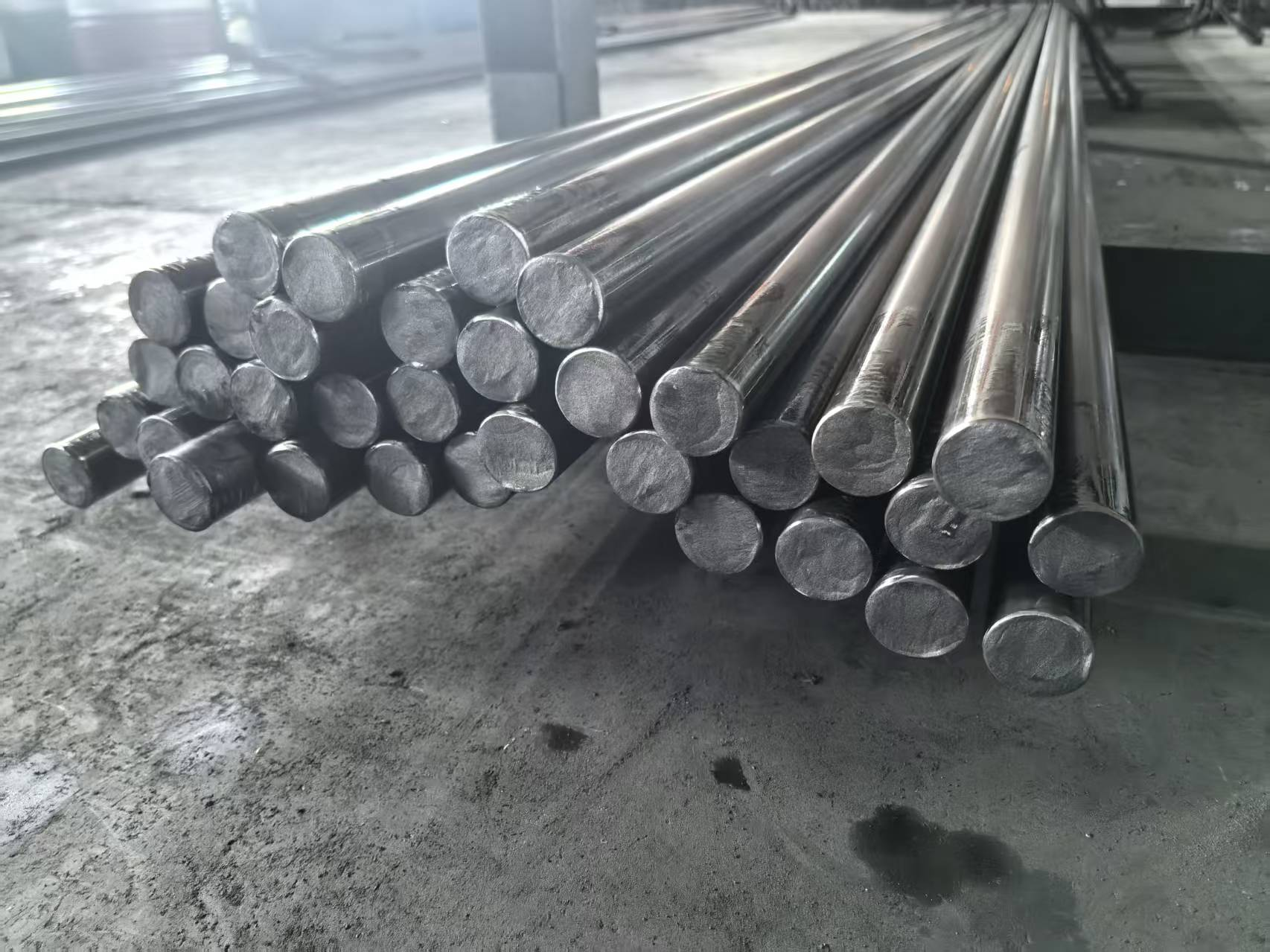
Corrosion Behavior of Cold Drawn Carbon Steel in Aggressive Environments
Electrochemical Degradation in Acidic and Saline Media
Cold drawn carbon steel undergoes rapid electrochemical degradation in acidic (pH < 4) or chloride-rich environments. The dominant mechanism is anodic dissolution—iron oxidizes to Fe²⁺—while cathodic oxygen reduction generates hydroxyl ions. In saline media, chloride ions aggressively breach the native oxide film, initiating localized pitting; corrosion rates exceed 0.5 mm/year in aerated 3.5% NaCl solutions (NACE SP0169-2022). Acidic conditions further accelerate uniform corrosion via hydrogen evolution, with mass loss rates doubling per 10°C temperature rise. In coastal-industrial atmospheres—where combined chloride and sulfate pollutants extend time-of-wetness—field data from ISO 9223 monitoring sites show corrosion depths of 80–150 μm after one year. Differential aeration cells under deposits or crevices intensify attack, especially where cold drawing leaves incomplete or non-uniform protective scales.
Impact of Cold Drawing–Induced Residual Stresses on Corrosion Initiation
Cold drawing introduces high tensile residual stresses at the surface—typically 200–400 MPa—that fundamentally promote corrosion initiation. These stresses elevate the electrochemical potential in deformed regions, turning them into preferential anodic sites. Plastically deformed carbon steel exhibits a 30–50% higher corrosion current density (icorr) in dilute sulfuric acid than stress-relieved counterparts (Samusawa, Corrosion Science, 2019). When residual stresses exceed 60% of yield strength—and temperatures rise above 60°C—chloride-induced stress corrosion cracking (SCC) becomes a critical failure mode. Dislocation pile-ups and elongated grain structures created during drawing form micro-galvanic cells that destabilize nascent oxide films, enabling pit nucleation within 24–72 hours in aggressive electrolytes. Post-draw stress relief annealing reduces corrosion susceptibility by ~40%, confirming residual stress as the dominant driver of early-stage degradation.
Microstructural Vulnerabilities: Pearlite Networks and Grain Boundary Exposure
The ferritic-pearlitic microstructure of cold drawn carbon steel presents intrinsic corrosion weaknesses. Pearlite colonies—alternating lamellae of cementite (Fe₃C) and ferrite—act as potent micro-galvanic couples: ferrite corrodes sacrificially while cementite serves as an efficient cathode. This accelerates localized dissolution along pearlite boundaries, with weight loss rates 2–3× higher than in fully ferritic zones at pH 3–5. Cold drawing fragments and aligns pearlite bands, exposing elongated, high-energy grain boundaries prone to impurity segregation. In marine atmospheres, grain boundary corrosion can penetrate up to 10 μm within one week. Moreover, the fine-grained surface layer increases grain boundary density, creating continuous pathways for corrosive species and enabling intergranular attack that compromises mechanical integrity well before measurable wall loss occurs.
Real-World Performance Benchmark: Cold Drawn Carbon Steel vs. Common Corrosion-Resistant Alternatives
Field Performance Data from Offshore and Chemical Processing Facilities (ISO 15156 Context)
In ISO 15156–governed sour service and offshore chloride-rich environments, uncoated cold drawn carbon steel consistently demonstrates limited corrosion resistance. Independent laboratory tests and field records reveal stark performance gaps versus austenitic stainless steels.
| Environment | Typical Cold Drawn Carbon Steel (A36-equivalent) | 316L Austenitic Stainless Steel | Key Degradation Driver |
|---|---|---|---|
| Urban / Industrial Atmosphere | ~2 years to through-wall penetration | >70 years without maintenance | Continuous passive layer |
| 3% NaCl Immersion (simulated seawater) | Visible pitting within 72 hours | >1,000 hours, no local attack | Molybdenum-assisted passivation |
| Acidic pH 3 Process Fluid | Through-wall loss within 24 hours | >480 hours without perforation | Chromium oxide self-repair |
| Galvanic Coupling (e.g., to stainless bolt) | Severe crevice and pitting corrosion | Cathodic, yet minimal degradation | Insulated connections required |
Offshore platform maintenance logs show replacement rates for uncoated cold drawn carbon steel piping supports are five to ten times higher than for 316L equivalents. Its lack of a stable passivation layer leaves the ferrite-pearlite matrix vulnerable to chloride-induced pitting and hydrogen sulfide cracking—failure modes explicitly addressed in NACE MR0175/ISO 15156 material selection guidelines.
Cost–Durability Analysis Against Galvanized Steel and Austenitic Stainless Steels
Lifecycle cost analysis reveals raw material price alone is misleading. While cold drawn carbon steel costs 70–80% less per ton than 316L stainless, factoring in corrosion allowances, coating renewal, and unplanned downtime shifts the economic balance decisively.
Hot-dip galvanized carbon steel relies on sacrificial zinc protection—but in continuously wet or acidic conditions, zinc depletion reaches up to 1 µm/month, exhausting a standard 85 µm coating in under seven years and exposing the base steel to rapid rust. In contrast, austenitic stainless steels (e.g., 304L, 316L) form a self-healing chromium oxide layer that regenerates spontaneously in oxygenated environments and does not deplete.
For intermittently corrosive applications, a properly specified barrier coating on cold drawn carbon steel can deliver 10–15 years of service at one-third the material cost of stainless steel. But in permanently immersed chloride service or low-pH chemical processing, the higher upfront investment in 316L stainless is consistently justified: maintenance savings exceed $500 per linear meter of pipe over a 20-year operating window. The economic crossover point—where stainless becomes cheaper than repeated hot-dip regalvanizing and repair—typically occurs within 8–12 years in aggressive industrial settings.
Practical Mitigation Strategies to Enhance Cold Drawn Carbon Steel Longevity
Optimizing Barrier Coatings for the Unique Surface Topography of Cold Drawn Carbon Steel
The linear grooves and fine-scale roughness imparted by cold drawing directly affect coating adhesion and durability. Without proper preparation, these features trap contaminants or create pinholes. A proven mitigation strategy begins with abrasive blasting to a near-white metal profile (ISO 8501-1 Sa 2½), removing mill scale and establishing a uniform anchor pattern that mechanically interlocks with the protective layer. High-build epoxy coatings and thermally sprayed zinc provide dense, pore-free films that conform tightly to the textured surface. Notably, the compressive residual stresses induced by cold drawing help maintain coating integrity under flexural loading, inhibiting crack propagation. For maximum service life, apply a two-coat system—zinc-rich primer followed by a chemically resistant topcoat—to isolate the substrate from moisture, chlorides, and acidic vapours. Routine touch-up of impact-damaged areas preserves barrier continuity and prevents localized corrosion onset.
FAQ
What are the main causes of corrosion in cold drawn carbon steel?
Acidic and chloride-rich environments are the primary causes of corrosion in cold drawn carbon steel. Residual stresses and microstructural vulnerabilities also contribute to accelerated degradation.
How does cold drawing increase corrosion susceptibility?
Cold drawing induces high tensile residual stresses and alters microstructures, such as exposing pearlite bands and grain boundaries, making the steel more susceptible to initiation and propagation of corrosion.
What are effective mitigation strategies for cold drawn carbon steel corrosion?
Applying barrier coatings like high-build epoxy or thermally sprayed zinc after proper surface preparation can significantly reduce corrosion rates. Stress-relief annealing also helps decrease susceptibility.
Why do stainless steels outperform cold drawn carbon steel in corrosive environments?
Stainless steels, especially austenitic grades, form self-healing chromium oxide layers that effectively resist corrosion, making them highly durable in aggressive conditions.
Is hot-dip galvanized carbon steel a cost-effective alternative?
Hot-dip galvanized carbon steel can be a cost-effective alternative in moderately corrosive conditions but not for prolonged exposure to continuously wet or acidic environments where zinc depletes quickly.
Table of Contents
- Corrosion Behavior of Cold Drawn Carbon Steel in Aggressive Environments
- Impact of Cold Drawing–Induced Residual Stresses on Corrosion Initiation
- Real-World Performance Benchmark: Cold Drawn Carbon Steel vs. Common Corrosion-Resistant Alternatives
- Practical Mitigation Strategies to Enhance Cold Drawn Carbon Steel Longevity
-
FAQ
- What are the main causes of corrosion in cold drawn carbon steel?
- How does cold drawing increase corrosion susceptibility?
- What are effective mitigation strategies for cold drawn carbon steel corrosion?
- Why do stainless steels outperform cold drawn carbon steel in corrosive environments?
- Is hot-dip galvanized carbon steel a cost-effective alternative?