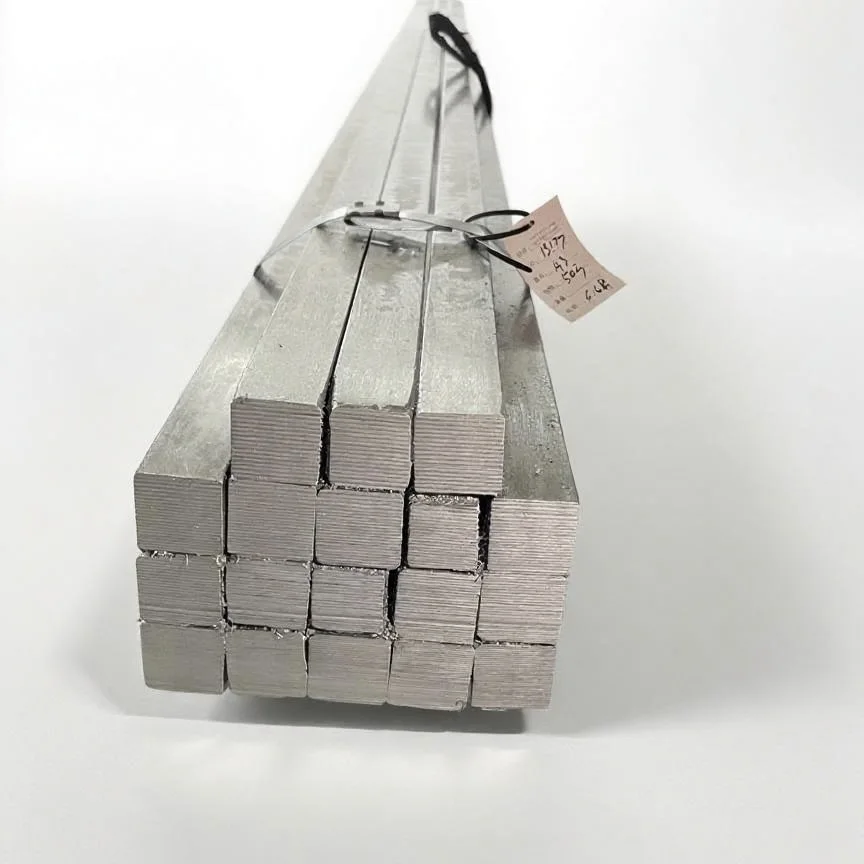
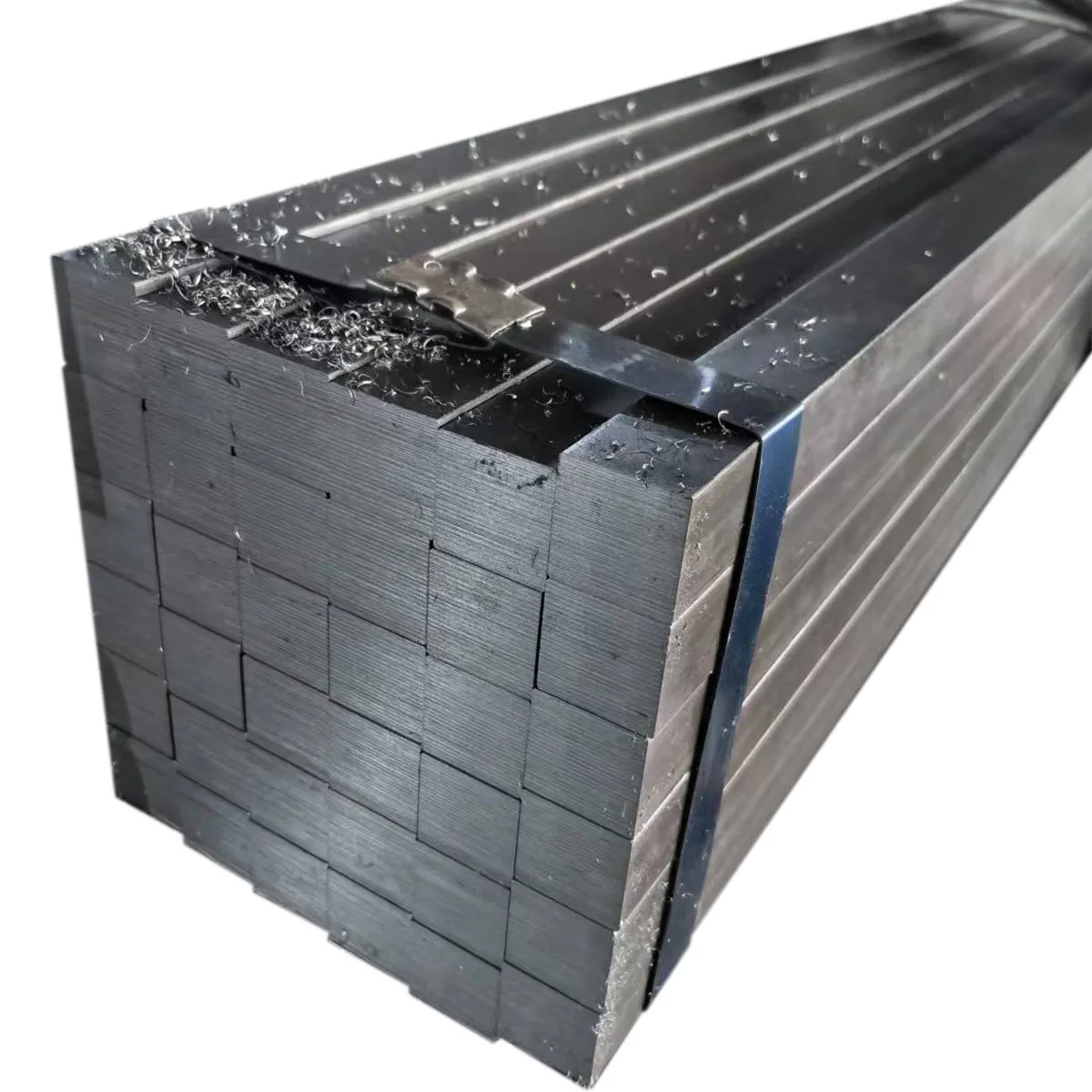
Cold Drawn Square Steel: Structural Stability, Precision, and Multi-Industry Versatility
Cold drawn square steel stands out as a specialized and high-performance metal product in modern manufacturing, defined by its uniform square cross-section, exceptional dimensional precision, and robust mechanical properties. Distinct from cold drawn round steel (cylindrical) and flat steel (rectangular), its symmetrical square shape delivers unique structural stability—ensuring balanced load distribution across all sides—and seamless integration into assemblies requiring angular alignment. This combination of form and function has made it an essential component in industries where structural integrity, precise fitting, and long-term reliability are non-negotiable.
The production of cold drawn square steel follows a meticulous, quality-focused process to maximize precision and material performance. It begins with selecting high-grade hot-rolled square steel bars or billets, with material composition tailored to end-use needs: common options include low-carbon steel (e.g., 1010, 1045 for general applications), alloy steel (for enhanced strength), and stainless steel (for corrosion resistance). Before the cold drawing stage, the raw material undergoes critical preparation: it is thoroughly cleaned to remove scale, rust, and contaminants (via pickling or shot blasting), then coated with a high-performance lubricant (such as sodium stearate or polymer-based compounds) to reduce friction and prevent die wear. The core step involves pulling the prepped steel through a custom-machined square die at room temperature—this cold deformation compresses the material’s grain structure, eliminating internal defects like porosity and inclusions while shaping it into a precise square profile. The result is exceptional dimensional control: side length tolerances as tight as ±0.02 mm and squareness tolerances (deviation from perfect 90° angles) of less than 0.1 mm/m, far surpassing the precision of hot-rolled square steel.
A key advantage of cold drawn square steel is its superior structural symmetry and dimensional accuracy. Unlike hot-rolled square steel, which often suffers from uneven side lengths, rounded corners, or surface roughness, cold drawn variants feature sharp, consistent 90° corners, uniform side dimensions, and a smooth surface finish (typically 1.2–4.0 μm Ra). This symmetry ensures balanced load-bearing capacity—critical for applications like structural supports or machine frames, where uneven stress distribution could lead to deformation or failure. Additionally, the precise dimensions eliminate the need for secondary machining (e.g., milling or grinding) in most cases, cutting production time and costs while ensuring seamless assembly. For example, in the manufacturing of precision sliding rails or modular frames, the consistent square profile guarantees a tight fit and smooth operation, reducing wear and extending component lifespan.
Beyond structural benefits, cold drawn square steel delivers enhanced mechanical performance driven by the cold working process. Strain hardening from die pulling increases tensile strength by 25–40% and yield strength by 30–50% compared to hot-rolled equivalents, making it ideal for high-load applications. Its dense, uniform grain structure also boosts ductility and impact resistance, allowing it to withstand repeated stress (e.g., in moving machinery parts) without cracking. The square shape further amplifies these advantages: for instance, in shaft applications, the flat sides of square steel provide better torque transfer than round steel, while in structural brackets, the symmetrical cross-section ensures even stress distribution across all edges.
The versatility of cold drawn square steel is evident in its wide range of industrial applications. In the machinery and equipment sector, it is a staple for manufacturing precision components like gear shafts, lead screws, and machine tool guides—where its square profile enables secure fastening and precise movement. The automotive industry uses it for parts such as steering system components, suspension brackets, and seat adjustment mechanisms, leveraging its strength and symmetry to handle dynamic loads. In construction and infrastructure, cold drawn square steel serves as structural supports for modular buildings, railing posts, and decorative metalwork—its sharp corners and uniform appearance enhance both functionality and aesthetics. The electronics and electrical sector relies on it for manufacturing terminal blocks and grounding bars, where its flat sides ensure stable electrical contact and easy installation. Even in specialized fields like agricultural machinery (for implement frames) and marine engineering (for corrosion-resistant stainless steel components), cold drawn square steel meets the unique demands of harsh operating environments.
Quality control is integral to cold drawn square steel production, with strict protocols enforced at every stage. Manufacturers conduct chemical composition analysis to verify material purity, tensile and hardness tests to confirm mechanical properties, and dimensional inspections using advanced tools (e.g., digital calipers, coordinate measuring machines) to ensure compliance with side length and squareness standards. The material adheres to global specifications such as ASTM A108 (carbon steel), DIN 1015 (general use), and JIS G3507 (stainless steel), guaranteeing consistency across batches. To enhance durability, surface treatments are often applied: galvanizing for outdoor corrosion resistance, zinc plating for wear protection in machinery, and passivation for stainless steel to reinforce rust resistance.
As industries pursue greater efficiency, sustainability, and miniaturization, cold drawn square steel continues to innovate. Advances in die technology—including computer numerical control (CNC) machined dies—have enabled the production of smaller, more precise square profiles (down to 3 mm side length) for microelectronics and medical devices. The adoption of eco-friendly lubricants and closed-loop recycling systems has reduced the environmental impact of production, aligning with global sustainability goals. Additionally, the development of high-strength alloys (e.g., HSLA 500) has expanded its use in lightweight sectors like electric vehicles (EVs), where it is used for battery module frames—combining thin profiles with exceptional strength to reduce vehicle weight and improve energy efficiency.
In conclusion, cold drawn square steel exemplifies the fusion of precision engineering and material science. Its symmetrical square profile, exceptional dimensional accuracy, and enhanced mechanical properties make it a critical component in modern manufacturing. Whether powering machinery, supporting buildings, or enabling automotive innovation, it delivers the reliability, strength, and versatility that industries demand. As technology advances, cold drawn square steel will continue to adapt, solidifying its role as a foundational material for the next generation of industrial solutions.

Copyright © 2026 by Jiangsu Beitong Cold-drawn Section Steel Technology Co., Ltd.
 EN
EN