
 EN
EN
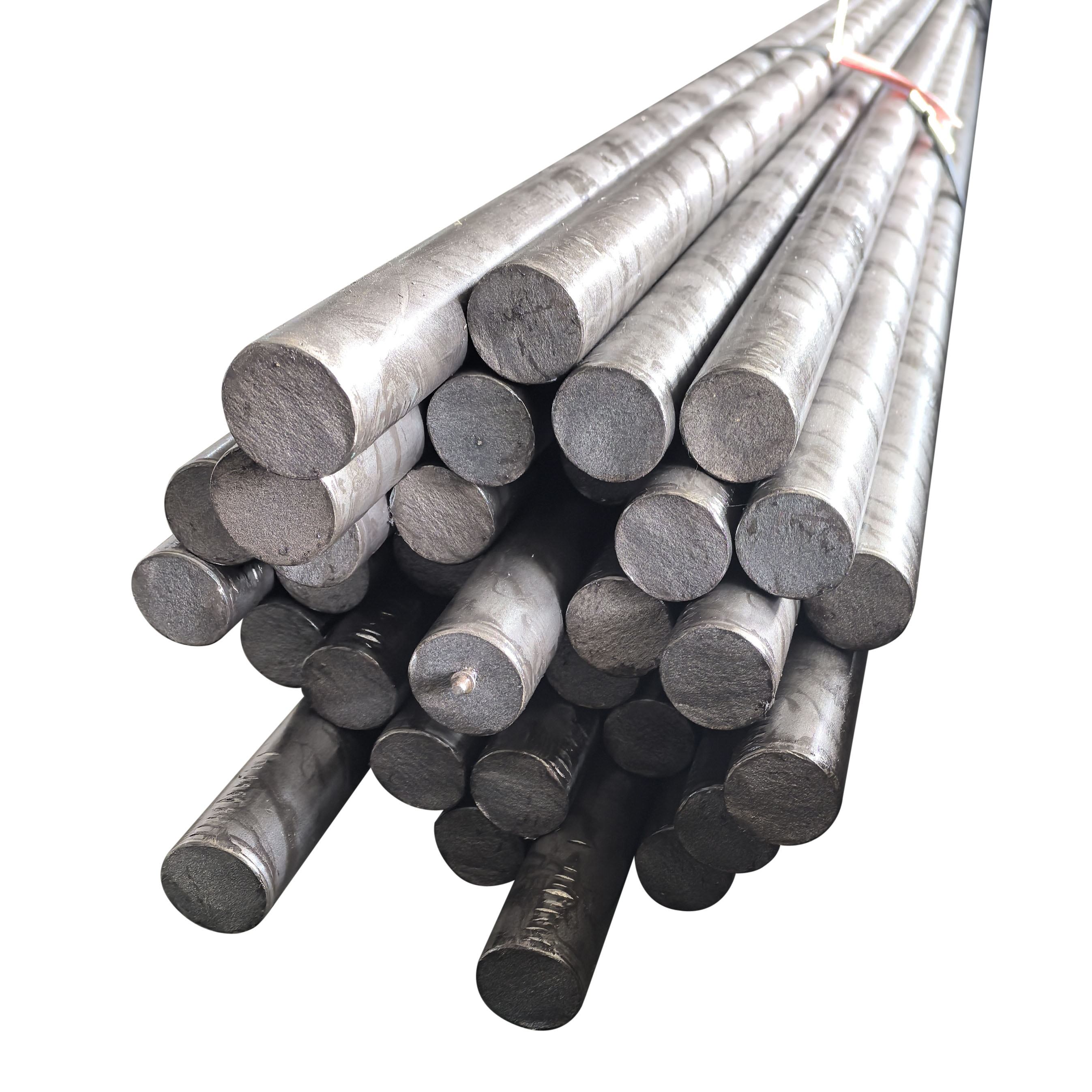
Automotive Industry: Safety-Critical Applications Requiring Cold Finished Steel
Axles, Steering Components, and EV Powertrain Parts Built for Dimensional Accuracy
Cold finished steel is the backbone of safety-critical automotive components where failure is not an option. Axles, steering knuckles, and electric vehicle (EV) powertrain parts demand dimensional consistency to withstand high cyclic loads and ensure predictable performance. Unlike hot-rolled stock, cold finishing processes such as drawing or turning reduce diameter tolerances to ±0.001 inches—meeting the Society of Automotive Engineers’ 2023 benchmark—and improve straightness, directly enhancing shaft alignment and reducing vibration. For EV applications, rotor shafts and gearbox components made from cold finished bars maintain tight runout specifications, enabling quieter operation and extended battery range through minimized frictional losses. The enhanced yield strength—up to 30% higher than hot-rolled equivalents—allows downsizing of part cross-sections without compromising durability, a critical advantage for lightweighting. Engineers apply safety factors of 1.5 to 3.0 when designing with cold finished steel, leveraging its consistent mechanical properties to avoid oversized, heavy parts. Material certifications typically require adherence to ASTM A108, with tensile strengths exceeding 100 ksi for grades such as 1045 and 4140 after cold working. The uniform microstructure ensures predictable fatigue life, reducing warranty claims for drivetrain components by an estimated 20%, according to the 2022 Automotive Reliability Study.
How Surface Finish and Tolerance Control Enable Seamless Assembly in Modern Vehicles
The surface finish of cold finished steel is not merely cosmetic—it directly impacts assembly efficiency and component longevity. Cold drawing and polishing achieve surface roughness Ra values below 0.8 µm, reducing friction and wear in mating parts such as constant-velocity joints and valve stems. Tight dimensional tolerances eliminate the need for secondary machining, allowing manufacturers to integrate shafts and bushings into robotic assembly lines with zero-fit issues. A 2024 survey of top transmission manufacturers found that switching to cold finished steel bars cut assembly line stoppages by 45% and reduced post-assembly rework costs by $12 per unit. The improved surface integrity also enhances adhesive bonding and coating adhesion—critical for corrosion protection in under-hood environments. Precise control over roundness and straightness ensures components like steering rack bars resist binding under extreme loading, maintaining responsive handling and driver safety. This consistency minimizes variability in automated manufacturing, enabling the production of millions of vehicles with uniform quality. The result is a supply chain where cold finished steel functions not just as a material but as a key enabler of lean manufacturing and zero-defect objectives.
Aerospace and Defense: Extreme Performance Demands Met by Cold Finished Steel
Certification Compliance (AMS, MIL-SPEC) and NADCAP Traceability Requirements
Aerospace and defense material specifications demand full lot traceability and certifiable mechanical properties—making cold finished steel indispensable. Producers must meet Aerospace Material Specifications (AMS) and military standards (MIL-SPEC) that define exact chemistry, tensile strength, and microstructure. The NADCAP accreditation process further enforces rigorous process control throughout manufacturing, from melt sourcing to final straightening and polishing. Leading bar mills maintain digital heat maps tracking every bar’s position in the furnace, ensuring uniform properties and full documentary evidence. This level of rigor prevents part substitution and guarantees that each serialized component—whether a flight-critical actuator shuttle or a landing gear pin—can be traced back to its original heat lot. In an industry projected to reach $35.82 billion by 2033 (Straits Research, 2025), any deviation in dimensional stability or surface finish can precipitate premature fatigue or stress corrosion. Cold finished steel consistently holds within ±0.0005 inch, satisfying the most demanding AMS and MIL-SPEC callouts while enabling NADCAP-certified shops to pass first-article inspections without concession.
Fatigue Resistance and Thermal Stability in Landing Gear and Actuation Systems
Landing gear and flight control actuation systems endure cyclic loads, shock, and wide thermal swings—conditions that demand high fatigue strength and dimensional stability. Cold finished steel bars exhibit a work-hardened surface layer and refined core microstructure that raise the fatigue endurance limit by as much as 25% compared to hot-rolled equivalents. This performance gain directly extends the safe life of landing gear pivot points and actuator housings. During takeoff and landing, trunnion pins and torque links experience stress reversals that can initiate cracks from surface imperfections; the polished, scale-free surface of cold finished bars eliminates stress risers and improves crack initiation resistance. Thermal stability is equally critical. Actuation spools must maintain precise axial clearances from –65 °F on a cold-soaked airframe to over 300 °F near hydraulic systems. Cold finished alloy steels retain virtually zero thermal growth at standard operating parameters due to controlled residual stress distributions. The refined grain structure also provides superior resistance to galling and adhesive wear in sliding-contact actuators, reducing maintenance intervals and improving mission readiness. By selecting cold finished steel processed to AISI 4340 or 300M specifications, engineers can safely design lighter landing gear and control surface components that meet demanding fatigue spectra without derating.
Medical Device Manufacturing: Biocompatibility and Precision in Cold Finished Steel
ASTM F138/F139 Stainless Steel Bars for Implantable Orthopedic and Cardiovascular Devices
Implantable medical devices demand materials that combine high precision with proven biocompatibility. Cold finished steel—particularly ASTM F138 and F139 grades of 316L stainless steel—meets these stringent requirements for orthopedic and cardiovascular applications. These standards specify tightly controlled chemical composition, mechanical properties, and surface quality to ensure long-term corrosion resistance and minimal tissue reaction. The cold finishing process refines grain structure and achieves tight dimensional tolerances—often within ±0.05 mm—essential for components like bone screws, hip stems, and vascular stents. Such precision reduces post-machining steps and supports consistent fit in anatomical environments. Furthermore, the smooth surface finish, typically Ra 0.4 µm or better, facilitates sterilization and resists biofilm formation—critical for patient safety. Manufacturers rely on certified cold finished bars to maintain traceability from melt to final product, aligning with ISO 13485 and FDA quality system regulations. This combination of mechanical integrity, dimensional control, and surface quality makes cold finished stainless steel bars a foundational choice for life-saving implants.
Industrial Machinery and Tooling: Longevity and Reliability Through Cold Finished Steel
In industrial machinery and tooling—where consistent performance under heavy loads and repetitive cycles is non-negotiable—cold finished steel delivers unmatched longevity and reliability. The cold drawing, turning, and grinding processes refine the steel’s grain structure, significantly boosting tensile strength, hardness, and wear resistance. This translates directly into components that maintain dimensional stability and resist surface degradation even after thousands of operating hours. Shafts, spindles, tool holders, dies, and fixture bodies machined from cold finished bars achieve tight tolerances (often ±0.001 inches or better) and a superior surface finish that minimizes friction and galling. As a result, assembly fits remain precise over time, reducing vibration, alignment drift, and the risk of premature failure. The predictable mechanical properties of cold finished steel allow tooling to withstand high-speed machining conditions and thermal cycling without losing accuracy—ensuring cutting tools, molds, and wear parts deliver consistent output batch after batch. This intrinsic durability not only extends service intervals and lowers replacement costs but also cuts unplanned downtime on critical production lines. For manufacturers who rely on high-volume stamping, injection molding, or CNC machining, choosing cold finished steel for key components is a proven strategy to enhance overall equipment effectiveness and sustain reliable operation year after year.
FAQ Section
What is cold finished steel?
Cold finished steel refers to steel that undergoes additional finishing processes, such as drawing, turning, or polishing, to achieve improved dimensional tolerances, strength, and surface finish.
Why is cold finished steel preferred in automotive applications?
Cold finished steel offers higher yield strength, precise dimensional tolerances, and superior surface finish, which are crucial for safety-critical automotive components like axles, steering knuckles, and EV powertrain parts.
How does cold finished steel enhance aerospace and defense systems?
Cold finished steel meets stringent material specifications such as AMS and MIL-SPEC, providing extreme fatigue resistance, thermal stability, and traceable manufacturing processes essential for aerospace and defense applications.
Is cold finished steel biocompatible for medical device manufacturing?
Yes, ASTM F138/F139 grades of cold finished stainless steel meet biocompatibility requirements and offer precision and corrosion resistance suitable for implantable orthopedic and cardiovascular devices.
What are the benefits of using cold finished steel in industrial machinery?
Cold finished steel ensures long-term dimensional stability, increased wear resistance, and predictable mechanical properties, making it ideal for components like shafts, dies, and tooling in heavy-duty machinery.
Table of Contents
- Automotive Industry: Safety-Critical Applications Requiring Cold Finished Steel
- Aerospace and Defense: Extreme Performance Demands Met by Cold Finished Steel
- Medical Device Manufacturing: Biocompatibility and Precision in Cold Finished Steel
- Industrial Machinery and Tooling: Longevity and Reliability Through Cold Finished Steel
-
FAQ Section
- What is cold finished steel?
- Why is cold finished steel preferred in automotive applications?
- How does cold finished steel enhance aerospace and defense systems?
- Is cold finished steel biocompatible for medical device manufacturing?
- What are the benefits of using cold finished steel in industrial machinery?