Cold Drawn Special Steel Profile: Customized Precision, Tailored Performance, and Adaptive Solutions for Specialized Industries
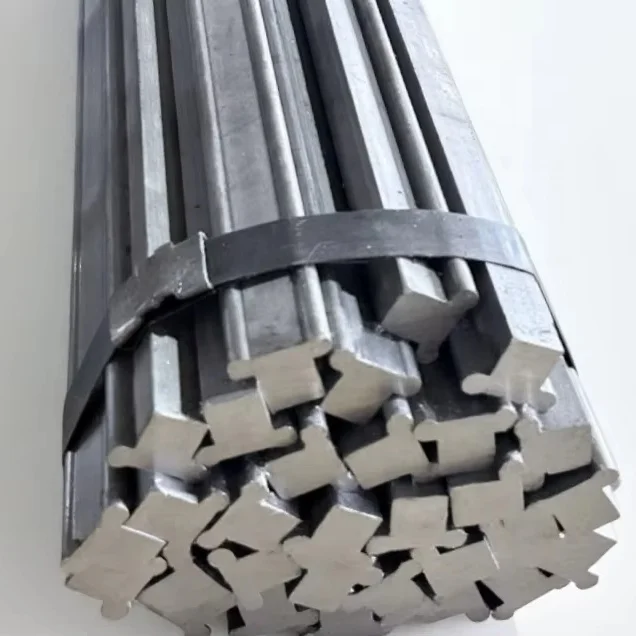
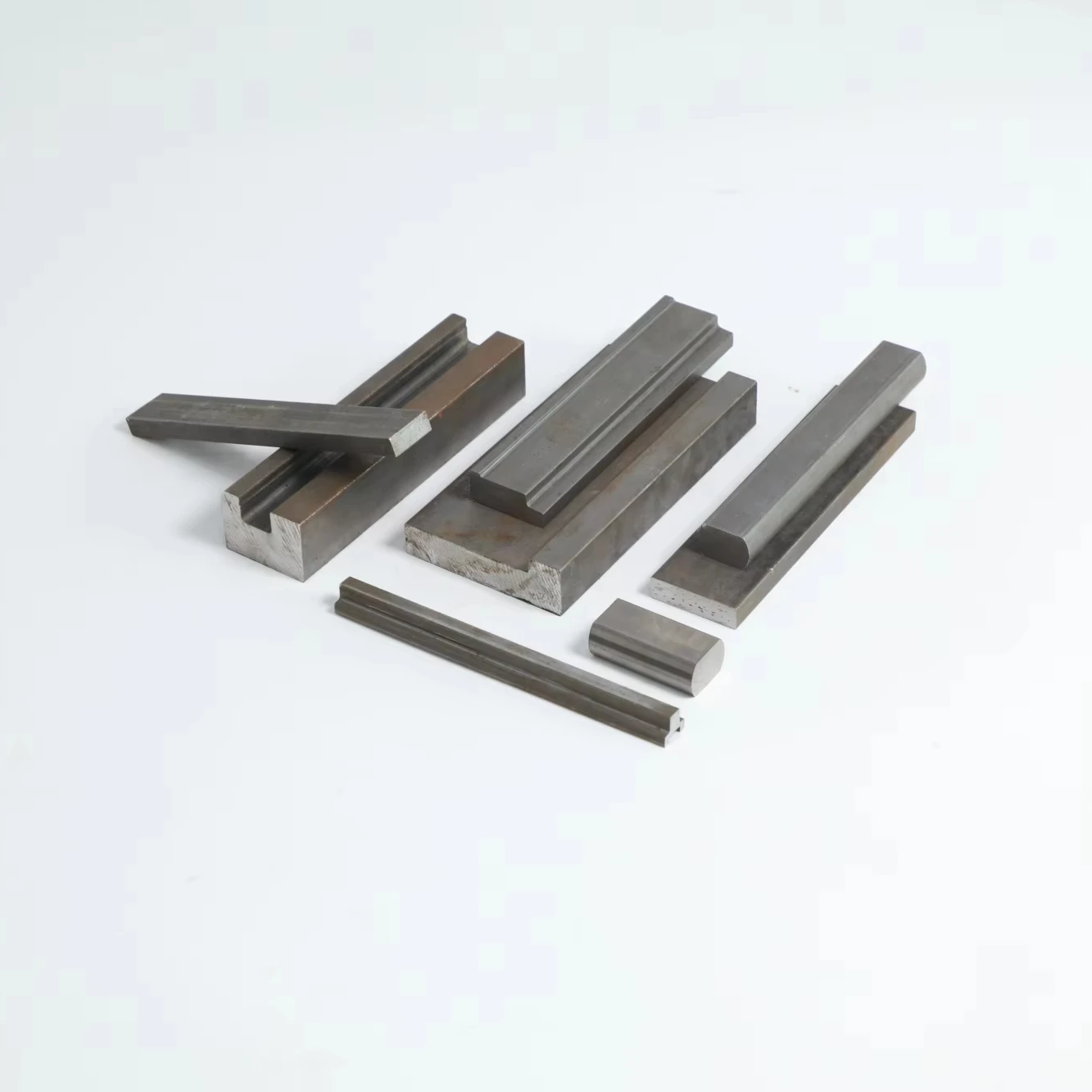
Cold drawn special steel profile represents the pinnacle of customization in cold-drawn steel manufacturing, distinguished by its non-standard, application-specific cross-sections, tailored material properties, and ability to meet unique industrial requirements. Unlike standardized cold-drawn products (round, flat, square, or hex steel), these profiles are engineered with unconventional shapes—such as T-sections, U-channels, grooved bars, or irregular polygons—to address specialized functional needs, from complex load distribution to space-constrained assembly. This flexibility makes them indispensable in industries where off-the-shelf steel products cannot deliver the precision, performance, or form required for critical applications.
The production process of cold drawn special steel profile is a highly customized sequence, designed to align with the unique specifications of each end-use. It begins with a collaborative design phase: engineers work closely with clients to define cross-sectional geometry (e.g., thickness variations, notch positions, or integrated slots), material selection, and mechanical performance targets (tensile strength, corrosion resistance, or ductility). The raw material is then chosen based on these requirements—options include low-carbon steel for general customization, alloy steel (e.g., chromium-molybdenum steel) for high-strength needs, stainless steel (304, 316) for corrosion resistance, or even high-temperature alloys (e.g., Inconel) for extreme environments.
Pre-production preparation is meticulous: the raw steel (typically hot-rolled billets or bars) undergoes thorough cleaning to remove scale and contaminants via chemical pickling or mechanical grinding. A custom-formulated lubricant is applied—selected based on the steel type and die complexity—to minimize friction and prevent surface defects during drawing. The core step involves pulling the prepped steel through a custom-machined die (engineered to the exact cross-sectional design) at ambient temperature. For complex profiles, multi-stage drawing may be required: the steel is pulled through a series of progressively shaped dies to gradually form the final profile, reducing the risk of material cracking or deformation. This process delivers exceptional dimensional accuracy—tolerances as tight as ±0.01 mm for critical dimensions—and a smooth surface finish (0.6–3.0 μm Ra), eliminating the need for costly secondary machining.
A defining advantage of cold drawn special steel profile is its tailored functionality. Unlike standardized profiles, which often require modification to fit specialized applications, these custom profiles are designed to integrate seamlessly into end products, optimizing performance and reducing assembly time. For example, a grooved cold drawn profile used in automotive window regulators eliminates the need for additional slot-cutting, ensuring precise alignment of the window mechanism and reducing wear. Similarly, a T-shaped profile for solar panel frames provides built-in mounting points, simplifying installation and improving structural stability. The cold working process further enhances functionality by increasing tensile strength (20–45% higher than hot-rolled equivalents) and yield strength, while improving material uniformity—critical for applications where consistent performance under stress is essential.
The versatility of cold drawn special steel profile is evident in its wide range of specialized applications. In the automotive industry, it is used to manufacture custom components like seat track rails (with integrated lubrication channels), transmission shift forks (irregular profiles for precise gear engagement), and battery tray supports (lightweight, high-strength profiles for EVs). The aerospace sector relies on it for aircraft interior structures (custom U-channels for panel mounting) and engine components (heat-resistant alloy profiles for fuel lines). In renewable energy, it serves as custom brackets for wind turbine blades (optimized for wind load distribution) and solar tracker frames (grooved profiles for precise movement). The medical device industry uses stainless steel special profiles for surgical instrument handles (ergonomic shapes for grip) and implant components (biocompatible materials with tight dimensional control). Even in consumer electronics, it is employed for custom chassis parts (thin-walled profiles for miniaturized devices) and heat sinks (integrated fins for enhanced thermal management).
Quality control for cold drawn special steel profile is rigorous and application-specific. Manufacturers conduct comprehensive testing at every stage: chemical composition analysis (via mass spectrometry) verifies material purity; tensile, hardness, and impact tests confirm mechanical properties align with client specifications; and dimensional inspections—using advanced tools like 3D scanners and coordinate measuring machines (CMMs)—ensure cross-sectional accuracy and straightness. For critical applications (e.g., aerospace or medical), non-destructive testing (NDT) such as ultrasonic or X-ray inspection is performed to detect internal defects. The profiles also adhere to industry-specific standards, such as ASTM A510 for carbon steel, ASTM A276 for stainless steel, or AS9100 for aerospace-grade materials, guaranteeing reliability and compliance.
As industries demand greater innovation and miniaturization, cold drawn special steel profile continues to evolve. Advances in die manufacturing—including 3D-printed ceramic dies and CNC-machined carbide dies—have enabled the production of more complex profiles (e.g., multi-cavity or thin-walled designs) with shorter lead times. The adoption of smart manufacturing technologies, such as real-time process monitoring via sensors, ensures consistent quality during production. Additionally, the development of sustainable materials—such as recycled steel alloys and eco-friendly lubricants—reduces the environmental impact of production, aligning with global sustainability goals. For emerging sectors like quantum computing and hydrogen energy, cold drawn special steel profiles are being engineered to meet ultra-precise dimensional requirements and resistance to extreme conditions (e.g., cryogenic temperatures or hydrogen embrittlement).
In summary, cold drawn special steel profile is a testament to the adaptability of cold-drawn technology in meeting specialized industrial needs. Its customized cross-sections, tailored mechanical properties, and seamless integration into end products make it a critical enabler of innovation across industries. Whether optimizing automotive performance, enhancing aerospace safety, or advancing medical technology, it delivers the precision, reliability, and functionality that modern manufacturing demands. As technology progresses, cold drawn special steel profile will continue to push the boundaries of customization, solidifying its role as a foundational material for the next generation of specialized solutions.


Copyright © 2026 by Jiangsu Beitong Cold-drawn Section Steel Technology Co., Ltd.
 EN
EN