
 EN
EN
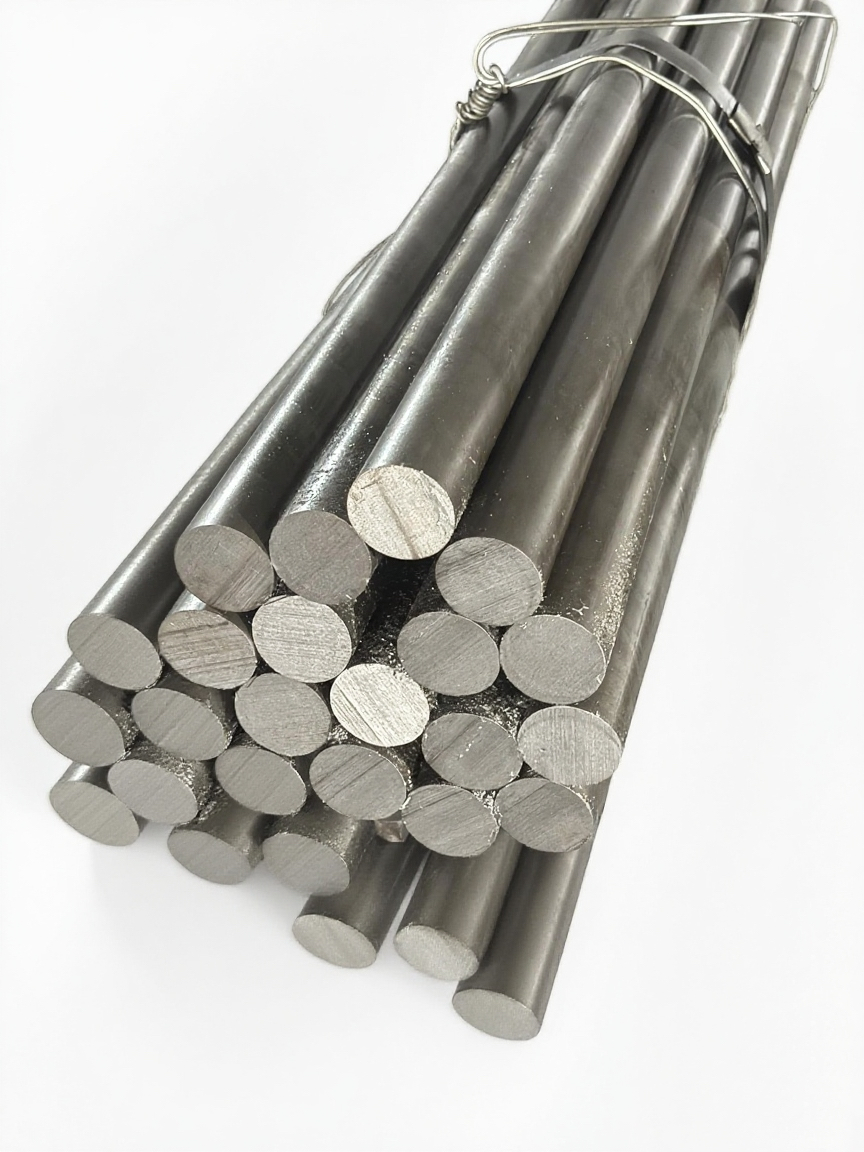
Concerning Dimensional Accuracy and the Finish of the Surface: The Advantage of Cold Drawn Steel for High-Reliability Assemblies
No Need for Fit-Up Adjustments for Hydraulic Cylinders and Boom Linkages with ±0.05 mm Tolerances
Key feature of Cold drawn steel is precision of up to ±0.05 mm. This means that components like boom linkages and hydraulic cylinders can be easily assembled with no further machining required. This precision also eliminates the fitting adjustments that are normally required absorb about 15 to 20% of time of the assembly of construction equipment. When rods of cylinders and pins of linkages are in the same ranges of dimension, the seals seat properly and no hydraulic fluid is allowed to leak across the surfaces of the seal at 5,000 psi. The pivot points of the boom are also more concentric and evenly distribute the load to the bearings which prevents rapid wear of the bearings due to reduced uneven loads. The benefits of cold drawn steel are in contrast to hot rolled steel. Hot rolled components are typically so poor that manufacturers have to grind or hone them. Cold drawing is unique because it is the only method that can be done at ambient temperatures. The metal grains are simply offset to the desired position without the use of the warping that is characteristic of heat treatments.
Cold Drawn Surfaces Have Greater Longevity for Rods and Bushings: (Service life of sliding parts e.g., guide rods and bushings gets extended due to smooth surface finish of cold drawn products (Ra ≤ 0.8 µm) and sustains less surface wear owing to smooth surface finish of cold drawn products)
In addition to surface finish contributing to wear resistance against sliding contact surfaces e.g. seals in reduced friction (guide rods) and reduced wear in bushings resulting in prolonging the life of bushings in extreme operating environments (bushings of less than 0.8 µm surface finish to sustain three times the life of bushings with greater than 0.8 µm surface finish) in mechanically repetitive components of excavators i.e., arm hinges where surface finish of less than 5 microns is irrefutably necessary for a smooth finish.
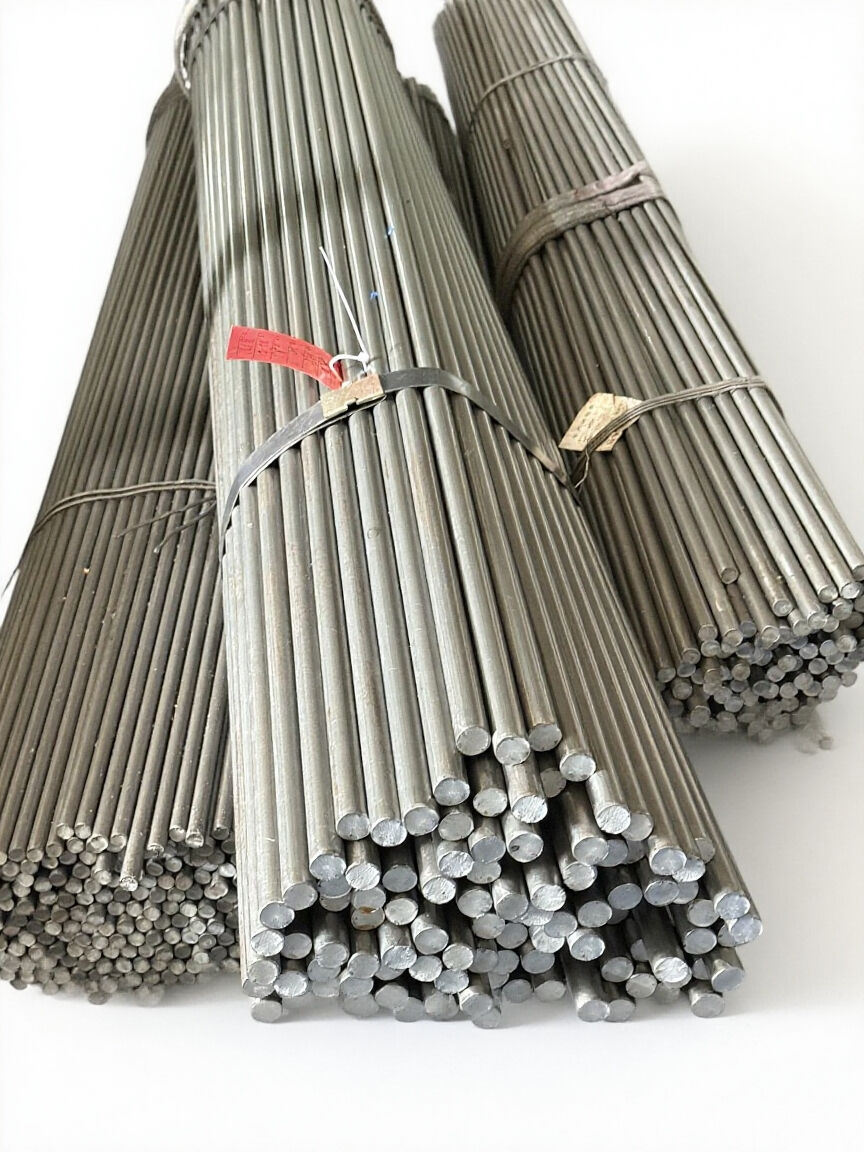
Cold drawn boom tubes accumulated more than 10,000 hours of operation in the field and cold drawn telescopic boom tubes lasted almost 2.3 times of the field tested compared to the machined boom tubes. Why is there such a dramatic difference in wear rates? work hardened surface of the cold drawn boom tubes are about 25% harder than the raw material of the boom tubes.
Benefits from Cold Drawing: Enhanced Strength, Hardness, Fatigue Resistance
Cold Work Hardening Boosts Yield Strength (40%) As Compared To Hot Rolled Steel, This Is Important For Load Bearing Shafts and Pins
The cold drawing process, alters the internal structure of steel, at the micro level, by creating controlled pressure to deform the steel plastically. This process also strengthens the steel compared to hot rolled steel, achieving a 20% to 40% increase in yield strength. This type of strength is critical in the manufacture of hydraulic shafts and pivot pins. The cold drawing process also creates internal dislocations, and, despite keeping the material within the same dimensions, strengthens the material. Materials that have been cold drawn have the following properties: permanent deformation resistance to bending, better wear and friction resistance, and reliability in hydraulic boom systems and in undercarriage systems. The extra strength from cold drawn materials also allows engineers to design components that are lighter without compromising safety. This is very important in systems where components are designed to fail.
Balancing Ductility and Strength: Optimal Cold Reduction Ratios for Heavy-Duty Applications Like Pinion Shafts
Achieving the ideal balance between ductility and strength is a matter of getting the cold reduction process right. Construction-grade steel is ideal for a cold reduction process between 15 and 30%. Any more than that can cause the steel to become brittle and crack under stress. Any less will leave the steel lacking in strength to sustain high loads. When processing pinion shafts for torque transmission through swing drive excavators, proper processing is required to achieve fatigue resistance of 500MPa for 10 million cycles in accordance with standard rotating beam test. We, also, require 40-60 joules of impact toughness at -20 degrees Celsius, to avoid any cold impact related problems. We also aim for uniform hardness throughout the material. For tough steel, the maximum hardness range should be 5 HRC between the 2 sides of a cross-section. All mentioned criteria enable the part to withstand excavators' digging shocks and avoid cracks. Accurate field tests proved the approach to be a game changer, extending the required maintenance intervals by 30% when compared to standard hot formed parts.Key Uses of Cold Drawn Steel in Construction Machinery Systems
Structural & Rotating Parts: Bucket Pins, Track Roller Axles, Telescopic Boom Tubes, and Steering Knuckles
Cold drawn steel is used for almost all components in construction machinery because it is dimensionally stable and resists fatigue better than other materials. For example, bucket pins endure very hard environmental stress cycles. Pins also need a surface hardness of at least 45 HRC. With track roller axles, manufacturers require consistent cross sections and tolerances of 0.05 mm so that everything is aligned optimally over rough terrain. The strain hardened microstructure formed during the cold drawing process increases the strength of telescopic boom tubes, allowing them to withstand average hydraulic collapse pressure. Steering knuckles also need to be 20 to 40 percent yield stronger than standard hot rolled steel to withstand the twisting forces on the pivot. Overall, the greater the reliability of the components, the less likely the machinery is to experience a breakdown. In fact, the hardened bushings used in a number of linkages last about 30 percent longer than average operational intervals, so overall linked systems pose fewer maintenance and downtime costs.
Cost and Efficiency Advantages: How Cold Drawn Steel Saves on Machining and Field Services
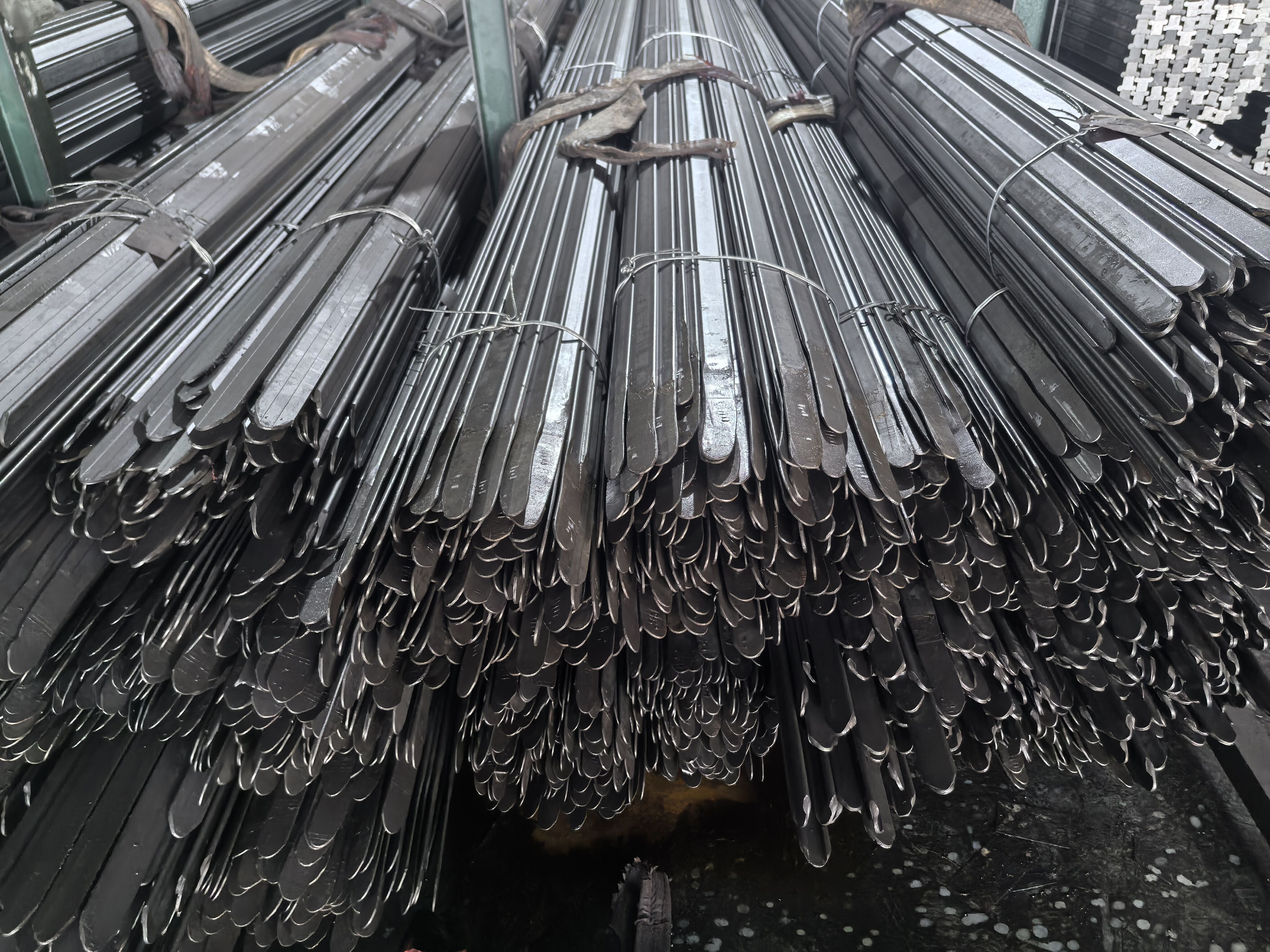
Cold drawn steel saves money in manufacturing and in the field when the machinery is working. Since the material is close to its final shape, there's less work to be done on it later, and the surfaces are smooth to Ra 0.8 micrometers, which is better than the 1.6 that is commonly claimed. That finish will reduce machining time between 15% to 30% over the typical hot rolled steel. Manufacturers machining components like hydraulic rods or pivot shafts will no longer have to do rough turning and several rounds of grinding. Less grinding means less electricity used and less tool wear.
Cold drawn profiles have good production efficiency, documented by a reduction of 22% to the number of rejected parts in the production of parts with tolerances of about ±0.05 mm. Steel parts in production machines that have a high level of cold drawn steel, such as the large boom pivots, have a reduced incidence of failures, with one report indicating a 40% decrease in the frequency of premature failures. What is the reason for this? The microscopic structure of the steel changes during the cold drawing process, resulting in increased resistance to plastic deformation when subjected to cyclic loading. These improvements translate to reduced replacement part expenses, resulting in increased operational cost efficiency of the machine.
Most Frequently Asked Questions
What are the benefits of cold drawn steel?
Cold drawn steel provides high strength and hardness as well as improved machinability by reduced machining time and waste, and better surface finish which reduces friction.
How does cold drawn steel benefit hydraulic cylinders and boom linkages?
Cold drawn steel improves the reliability and longevity of hydraulic cylinders and boom linkages by eliminating the need for fit up adjustments and providing better engagement between hydraulic seals and boom linkage bearings.
What is the importance of surface finishing in sliding elements?
Surface finishing improves the service life of guide rods, bushings, and other wear components by reducing sliding friction, which also diminishes the likelihood of stress concentrations that would lead to structural failure.
What is the benefit of cold work hardening on steel?
By cold work hardening, the yield strength of steel is increased by 20-40%, enabling steel components to handle greater stress, better abuse, and increased service life in static and dynamic deflection applications.
Where in construction machinery is cold drawn steel used?
Due to the superior construction and fatigue resistance of cold drawn steel, it is used in static and moving structural elements, such as bucket pins, axle pins, boom segment tubes, and steering knuckles.
Table of Contents
- No Need for Fit-Up Adjustments for Hydraulic Cylinders and Boom Linkages with ±0.05 mm Tolerances
- Benefits from Cold Drawing: Enhanced Strength, Hardness, Fatigue Resistance
- Structural & Rotating Parts: Bucket Pins, Track Roller Axles, Telescopic Boom Tubes, and Steering Knuckles
- Most Frequently Asked Questions