
 EN
EN
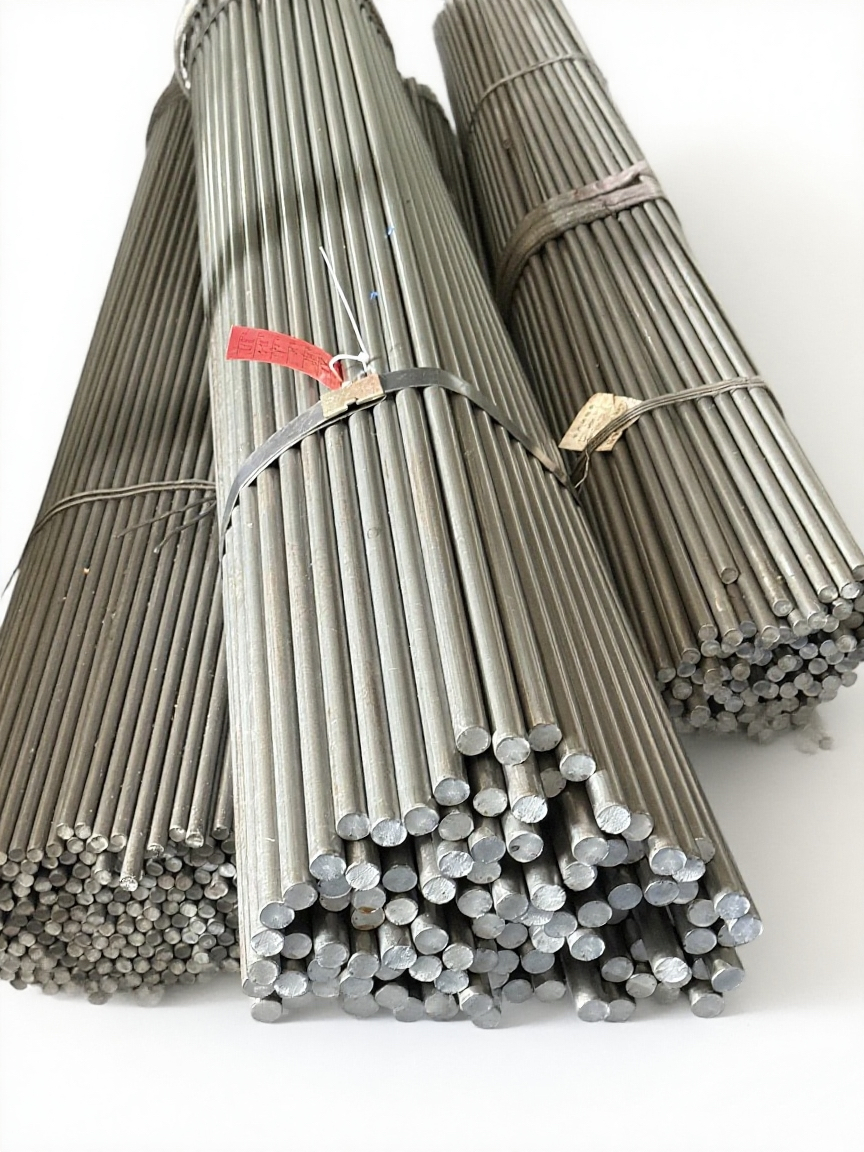
Superior Dimensional Accuracy and Surface Integrity
Tight Tolerance Control for CNC Machining and Assembly
Cold drawn steel delivers exceptional dimensional precision due to the cold drawing process—pulling hot-rolled bar through a die at room temperature. This reduces cross-sectional area while achieving diameter tolerances as tight as ±0.025 mm, consistent with ISO IT7–IT8 standards. The resulting geometric consistency minimizes CNC setup adjustments and stock removal, cutting cycle times by up to 20% compared to hot-finished alternatives. For automated assembly, this repeatability reduces misfits and rework; leading manufacturers report a 15% drop in scrap rates after switching to cold drawn feedstock. Cold working also eliminates surface decarburization, preserving material integrity at the outer layer where stress concentrates. With diameter variation typically held to within 0.1 mm over six meters, multi-spindle lathes and Swiss-type machines operate uninterrupted—ensuring every pin, shaft, or sleeve meets blueprint specifications without in-process sorting.
Enhanced Surface Finish Reducing Friction and Extending Component Life
Cold drawing burnishes the steel surface, delivering an Ra roughness of 0.8–1.6 µm—often eliminating the need for secondary grinding. This smoother finish lowers the coefficient of friction in sliding contacts, reducing operating temperatures and wear in linear guides, bearings, and valve stems. Life-cycle testing shows cold drawn shafts exhibit 30–40% less wear than turned hot-rolled counterparts under identical lubrication conditions. The absence of mill scale and the dense, work-hardened surface inhibit crack initiation, enhancing fatigue resistance under cyclical loads. For hydraulic cylinder rods or electric motor shafts, the as-drawn surface frequently serves as the final functional finish—preserving beneficial compressive residual stresses and extending service intervals without added polishing steps.
Enhanced Mechanical Properties Through Cold Drawing
Work Hardening and Increased Yield Strength Without Alloy Additions
Cold drawn steel gains strength through mechanical work hardening—not alloy additions. As the bar passes through the die, dislocation density increases dramatically, raising tensile and yield strength by 15–25% over the original hot-rolled condition. Because strengthening arises from crystal lattice rearrangement—not chemistry—engineers can specify basic low-carbon grades and still achieve performance suitable for precision components. This avoids costly alloying elements like nickel or molybdenum and often eliminates post-processing heat treatments. Machinists receive tighter-tolerance blanks with higher intrinsic strength, reducing scrap during turning or milling and enabling lighter, more cost-effective designs—all while maintaining reliability.
Directional Grain Alignment Improving Fatigue Resistance and Load Distribution
Cold drawing elongates steel grains along the longitudinal axis, creating a fibrous, anisotropic microstructure. This directional grain flow improves fatigue resistance by providing a continuous path for cyclic load distribution. Components such as shafts, pins, and spindles experience peak stresses along their primary axis—the aligned grain structure enhances load-carrying capacity in that direction while distributing stress over a larger volume. This reduces crack initiation at stress concentrators, extending life in dynamic applications. For CNC machining and automated assembly, consistent grain alignment ensures uniform mechanical properties across batches—giving design engineers predictable, repeatable component behavior.
Reliability in High-Volume Precision Manufacturing
Batch-to-Batch Consistency Enabling Automated Production and Lean Assembly
Cold drawn steel maintains exceptional batch-to-batch dimensional stability, with diameter variations routinely held within ±0.025 mm across production lots. This consistency is essential for automated CNC cells, where even minor deviations can accelerate tool wear or trigger alignment faults. In lean assembly, uniform material behavior eliminates frequent recalibration and supports just-in-time workflows. According to the 2022 Precision Manufacturing Survey, raw material inconsistency accounts for 42% of unplanned line stoppages in high-volume metalworking—making cold drawn steel a key enabler of operational continuity. Its repeatability also strengthens predictive maintenance algorithms, as consistent material response allows more accurate wear modeling. The result is higher OEE, lower scrap, and sustained throughput—reinforcing cold drawn steel’s role in scalable, reliable manufacturing.
Critical Applications Across Precision Engineering Industries
The consistent mechanical properties and exact geometries of cold drawn steel make it indispensable where safety, longevity, and performance are non-negotiable—from high-speed rotating assemblies to stationary structural elements. Two sectors exemplify its critical value: automotive manufacturing and heavy industrial machinery.
Cold Drawn Steel in Automotive Powertrain and Chassis Components
Engine and transmission systems require materials that withstand repetitive torque and thermal cycling without deformation. Cold drawn steel bars are machined into gear blanks, input shafts, and axle components routinely meeting IT7–IT8 tolerance bands. The process imparts a favorable compressive stress layer on the surface, increasing fatigue strength and delaying crack initiation in critical parts like constant velocity joints and steering knuckles. In chassis applications, high yield strength enables thinner, lighter control arms and stabilizer bars—supporting fuel efficiency targets. Leading powertrain suppliers report up to a 12% reduction in finish-machining scrap when substituting hot-rolled with cold drawn stock, minimizing disruptions on high-volume automated lines.
Use in Industrial Machinery: Shafts, Pins, Bearings, and Linear Motion Systems
In rotating equipment, linear guides, and bearing assemblies, dimensional stability and surface integrity are paramount. Cold drawn shafting achieves straightness of 0.5 mm per meter or better—reducing runout that causes vibration and seal wear in pumps and compressors. Hardened and ground pins produced from cold drawn blanks show uniform case depth, critical for resisting brinelling in high-cycle linkages. Consistent diameter tolerances simplify automated insertion of bearing seats and retaining rings, eliminating manual rework. The refined surface finish—often below 0.8 µm Ra—lowers friction in sliding applications, reducing heat generation and supplemental lubrication needs. Machine builders typically extend scheduled maintenance intervals by 20–30% when adopting cold drawn components for guides and spindles—validating long-term cost savings in lean assembly environments.
FAQ Section
What is cold drawn steel?
Cold drawn steel is steel that undergoes a process of pulling hot-rolled bar through a die at room temperature to achieve improved dimensional accuracy, surface finish, and mechanical properties.
What are the benefits of cold drawn steel for CNC machining?
Cold drawn steel offers tight tolerance control, enhanced surface finish, and work-hardened properties, which reduce CNC setup adjustments and improve machining efficiency.
How does cold drawn steel improve component performance?
Cold drawn steel has a smoother surface finish and aligned grain structure, which lower friction, reduce wear, and enhance fatigue resistance—extending component life.
Why is batch-to-batch consistency important in precision manufacturing?
Batch-to-batch consistency ensures dimensional stability, minimizes alignment faults, and supports automated production processes, reducing unplanned line stoppages and scrap rates.
What are common applications for cold drawn steel?
Cold drawn steel is commonly used in automotive powertrain and chassis components, as well as industrial machinery like shafts, pins, linear guides, and bearing assemblies.