
 EN
EN
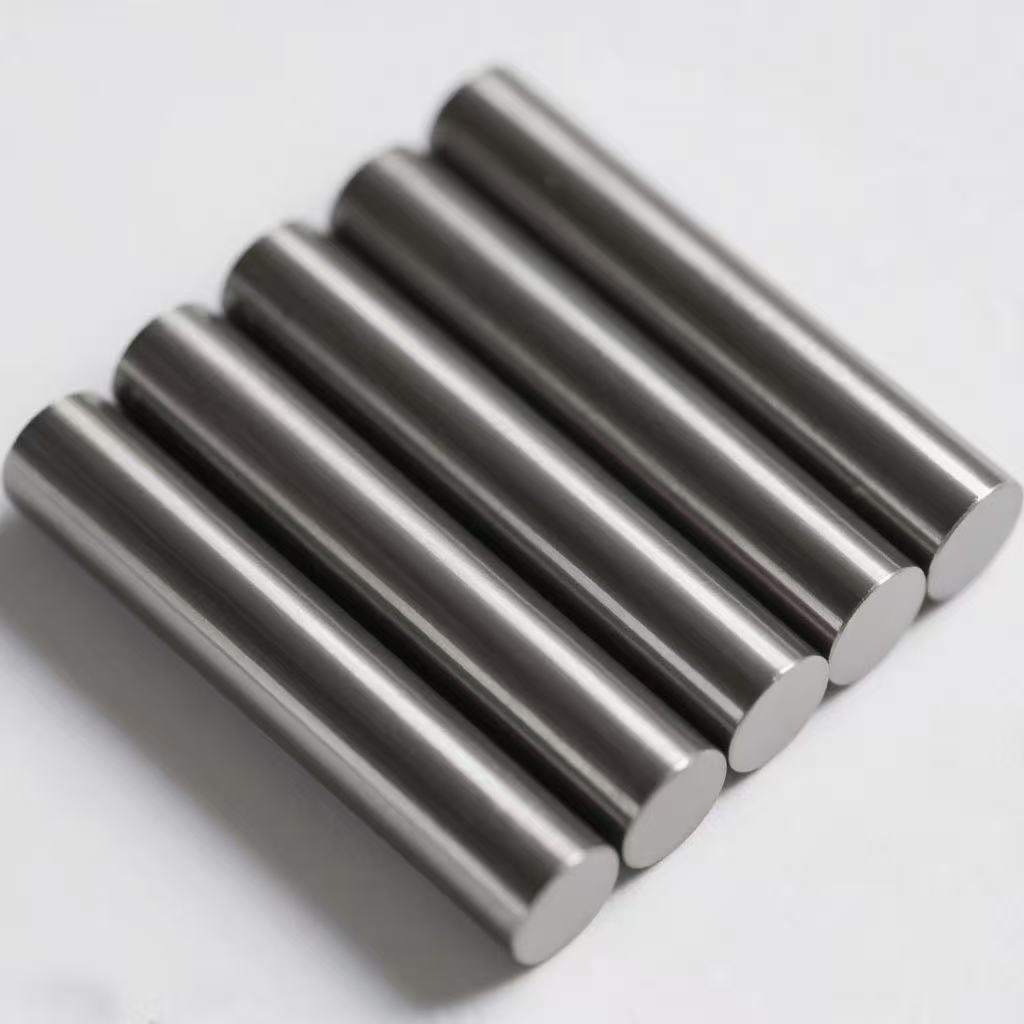
High-performance alloy steel bars are the backbone of extreme industrial manufacturing, covering aerospace defense, nuclear power generation, thermal power supercritical units, automotive lightweighting and heavy machinery fields. Different working environments of high temperature, radiation, fatigue shock and long-term creep require strictly customized alloy steel grades, smelting processes and quality inspection standards. This article systematically introduces the performance advantages, industry standards, grade selection and practical application values of premium alloy steel bars for core industrial scenarios.
1. Aerospace & Defense: Extreme Temperature, Fatigue and Zero-Defect Requirements
Aerospace and defense components operate in the harshest working conditions on Earth, including ultra-low temperature fuel tank environments and high-temperature turbine exhaust zones over 600°C. Structural parts such as aircraft landing gear, turbine shafts and fuselage frames bear repeated high-cycle fatigue loads and multi-directional stress.
Tiny defects determine flight safety. Non-metallic inclusions larger than 50 microns can become crack sources under cyclic loading, leading to fatigue failure. Therefore, aerospace-grade alloy steel bars require ultra-high microcleanliness.
Vacuum remelting technologies including VAR and ESR are mandatory processes for aviation materials. They reduce sulfur and oxygen impurities to trace levels, eliminate component segregation, and refine inclusion morphology, achieving true zero-defect material performance.
Core Industry Certification Standards
Aerospace alloy steel production strictly follows global authoritative specifications:
- ASTM Axxx series (A29, A322, A370) governs mechanical properties and chemical composition
- ASTM A681 regulates high-performance tool alloy steel
- AMS 2301 is the top industry standard for aircraft steel flaw detection, requiring nearly zero surface and subsurface defects
- Compliant with mainstream OEM specifications including Boeing D6-5531 and Airbus AIPS 40-10
Practical Application: SAE 4340 Aerospace Alloy Steel Bar
SAE 4340 is the universal standard material for commercial and military aircraft main landing gear struts. Its nickel-chromium-molybdenum formula provides excellent deep hardenability. Even for cross-sections over 300 mm, it can stably maintain 260 ksi tensile strength and high Charpy impact toughness above 50 ft·lb.
After VAR vacuum remelting and AMS 2301 ultra-clean treatment, SAE 4340 landing gear components achieve a service life of more than 30,000 flight cycles without fatigue failure. Fine grain microstructure and uniform martensitic structure greatly extend maintenance cycles and reduce aircraft operating costs.
2. Nuclear & Power Generation: Long-Term Creep and Radiation Resistant Alloy Steel Bar
Power and nuclear equipment requires 40–60 years of ultra-long service life under continuous high temperature, high pressure, neutron radiation and creep load. Radiation embrittlement and high-temperature creep are the two core failure risks for thick-wall pressure vessels, steam pipelines and generator rotors.
Only ultra-clean ESR electroslag remelted alloy steel bars can meet nuclear-grade requirements. Advanced smelting control limits inclusion size below 0.5mm², with full-volume non-destructive testing including ultrasonic ASTM E1444, radiographic ASTM E94 and eddy current inspection to detect tiny 0.2mm micro defects.
All production batches provide complete chemical traceability, high-temperature mechanical data and impact transition curves, fully complying with ASME Section III and NRC/IAEA nuclear safety regulations.
Supercritical Power Grade: ASTM A182 F22Cl3 & P91
For ultra-supercritical power plants with steam temperature up to 620°C, ordinary carbon steel cannot resist creep and thermal fatigue.
- ASTM A182 F22Cl3 (2.25Cr-1Mo) features excellent hydrogen corrosion resistance and high-temperature strength stability, widely used in high-pressure headers and thick-wall steam piping.
- P91 (9Cr-1Mo-V) premium alloy steel bar provides industry-leading creep rupture performance. It maintains 100MPa+ rupture strength for 100,000 hours at 600°C.
Precise heat treatment (1040–1080°C normalizing + 730–760°C tempering) forms stable tempered martensite and fine carbide precipitation, ensuring decades-long dimensional stability and crack resistance for thermal power equipment and improving overall power generation efficiency above 45%.
3. Automotive & Heavy Engineering: Balancing High Strength, Toughness and Cost Efficiency
The automotive and heavy machinery industries focus on lightweight optimization, manufacturing stability and full lifecycle cost control. According to SAE International 2022 lightweight benchmark data, replacing ordinary carbon steel with high-grade alloy steel for chassis and suspension parts can reduce weight by 15%, improve fuel efficiency by 3–5%, and meet emission standards without sacrificing crash resistance.
For construction machinery, mining equipment and off-highway vehicle axles, alloy steel bars need to withstand severe shock load, torsion overload and abrasive wear. AISI 4140, 4340 and 8620 are the most cost-effective mainstream grades.
Alloy Steel Bar Grade Performance Comparison
表格
| Alloy Grade | Tensile Strength | Hardness (HB) | Core Applications | Cost Performance |
|---|---|---|---|---|
| AISI 4140 | 850–1000 MPa | 250–300 | Axles, gears, crankshafts | Best cost-performance for mass production |
| AISI 4340 | 930–1080 MPa | 280–330 | Heavy-duty shafts, aircraft parts | Premium strength for extreme load scenarios |
| AISI 8620 | 600–800 MPa | 200–250 | Transmission gears, camshafts | Balanced toughness and machinability |
Grade selection is not simply based on strength data. It requires matching microstructure, heat treatment stability and machinability with actual working conditions. AISI 4140 is the preferred solution for high-volume industrial production; AISI 4340 is used for mission-critical fatigue-resistant components. Stable material homogeneity effectively reduces heat treatment scrap rate and improves production yield.
FAQ
Why is microcleanliness critical for aerospace alloy steel bars?
Ultra-high microcleanliness eliminates tiny non-metallic inclusions, preventing crack initiation under multi-axis cyclic stress and ensuring long-term fatigue safety of turbine shafts and landing gear components.
What are the benefits of vacuum-melted alloy steel bars?
VAR and ESR vacuum remelting drastically reduces oxygen and sulfur impurities, refines internal structure, improves fatigue resistance, toughness and overall mechanical consistency for high-end industrial applications.
What is SAE 4340 alloy steel used for?
SAE 4340 vacuum remelted alloy steel bar is the standard material for aircraft landing gear, offering ultra-high hardenability, tensile strength and long-cycle fatigue resistance.
What alloy grades are suitable for power generation equipment?
ASTM A182 F22Cl3 and P91 alloy steel bars are specially developed for supercritical and ultra-supercritical power plants, delivering excellent high-temperature creep resistance and thermal fatigue stability.
How do alloy steel bars support automotive lightweighting?
High-strength alloy steel reduces component weight by up to 15%, effectively improving fuel economy and reducing emissions while maintaining structural impact resistance and driving safety