
 EN
EN
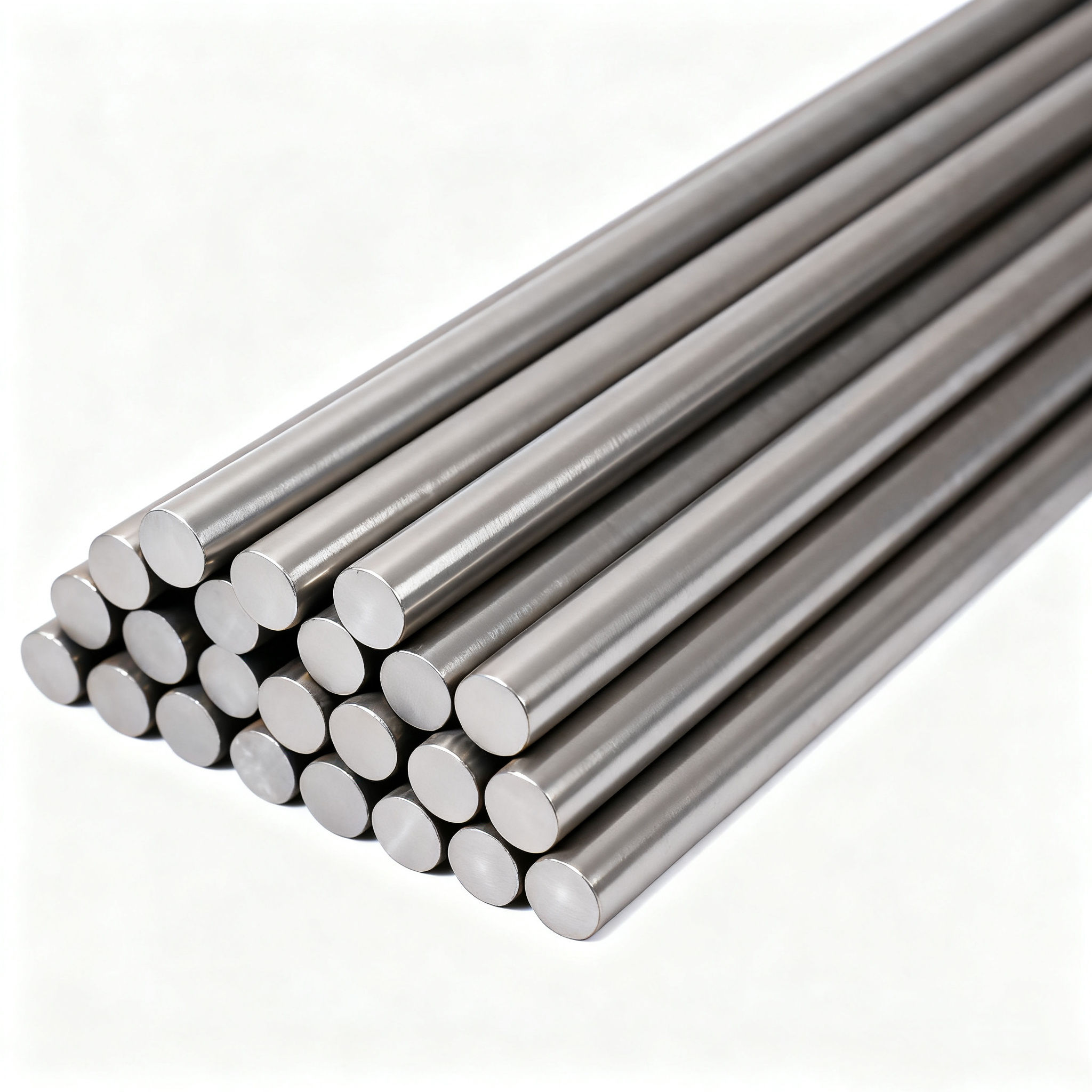
When discussing cold drawing, we focus on what makes it stronger. Here we examine the strengthening mechanism at work, a process termed work hardening, which is achieved by squishing the material at room temperature, as opposed to softening it via heating. The work entails routing metal rods through a series of progressively smaller dies. As a consequence of the flow and deformation, the internal microstructure of the rod is transformed and the rod is strengthened. The specific mechanism that is affected is called dislocation, which is a one-dimensional linear defect within the crystal structure of the material. The process is typically capable of producing an approximate increase of 15% to 25% in tensile strength, and an increase of around 20% to 30% in yield strength, relative to hardened hot rolled steel. An illustrative example is the 1045 grade medium carbon steel. After drawing, these materials can achieve yield strengths that exceed 470 MPa, thereby meeting the stringent standards set by ASTM for structural bolts and fasteners. Furthermore, it is impressive that despite the increase in strength, the metal retains sufficient ductility, in order for it to be cold headed as required, during the various stages of operational construction.
Improved Surface Finish and Dimensional Precision for Dependable Cold Heading
Cold drawing achieves very high surface finishes of around 0.8 microns Ra or better, and maintains higher dimensional tolerances of around +/- 0.001 inches. These specifications are very critical for components used in high speed cold heading operations. With high surface finishes, the friction resistance during the extrusion process is reduced, allowing for better filling of complex die cavities and minimizing the occurrence of micro-cracks caused by fatigue failures. Additionally, parts that have uniform cross sections are more reliable in automated forming equipment. They are less likely to cause jamming and circumvent the stress risers caused by cross-sectional irregularities. Manufacturers have reported as much as a 42% reduction in dimensional rejects when working with cold drawn rods versus standard material. This reduction is a direct result of the improvement in the quality of threads and head formation in fasteners, resulting in a higher yield of production runs.
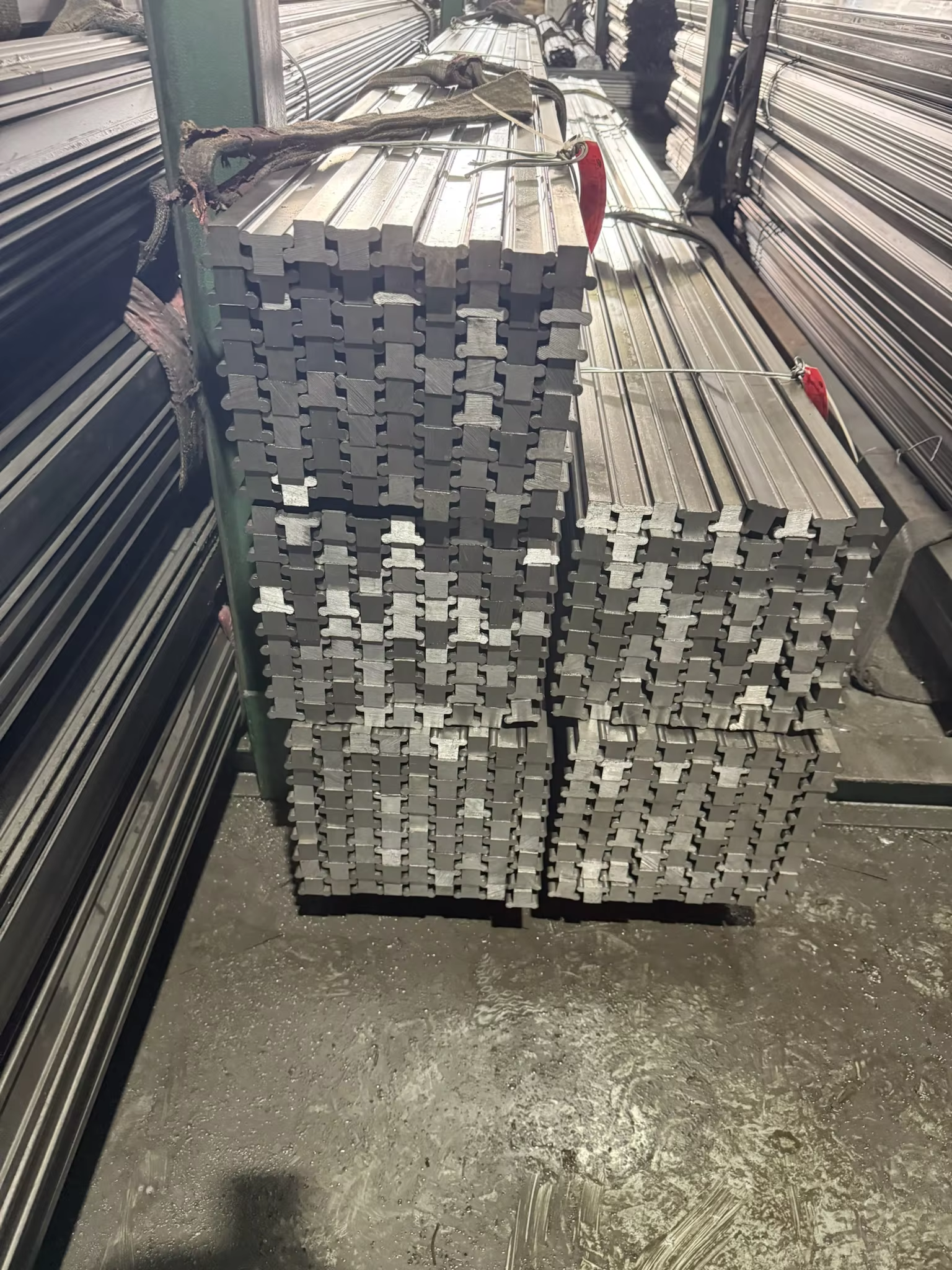
Medium Carbon Steels, for example, 1035, 1045, are a Standard in the Industry
Most of the steel used to create ASTM A325 fasteners comes from grade 1035, which has a 0.35% carbon content, and grade 1045, which has a 0.45% carbon content. During the cold drawing process, these materials achieve a yield strength of over 80 ksi with 12 to 15 percent elongation. This combination of pealite microstructure means the material will have a high yield, and the material will have a ductile nature that will allow for easy forming. Since the carbon content in these materials is relatively low, the materials are less susceptible to cracking during subsequent heat treatments. This also helps to ensure the materials will be of uniform quality across different batches. These materials also have a favorable response to many of the standard coatings used to protect the materials, and in the case of hot dip galvanizing, the response is favorable. These factors are reasons why, when bolts are used in significant elements of a bridge, a building, or in large machinery, the removal of these grades is necessary.
High-Carbon Variants: When Strength Requirements Outweigh Ductility Constraints
Engineers commonly choose steel grade 1080, which is a type of high carbon steel with 0.80% carbon, for ASTM A490 fasteners with a tensile strength >= 150 ksi (approximately 1,034 MPa). Even higher strength is attainable with grade 1095, which has 0.95% carbon. The cold drawing technique used to manufacture A490 fasteners facilitates such high strength. However, the ductility of these fasteners is greatly reduced, often to less than 8% elongation. This makes these fasteners extremely suitable for use in critical structural components, which experience regularly occurring stress loads exceeding 170 ksi. Examples of these components include connections in earthquake-resilient structures, large crane assemblies and parts of heavy industrial machinery. Detail in manufacturing processing is crucial for the proper use of these materials. For example, to prevent dangerous hydrogen cracks from forming, welders must preheat components to between 250 and 300 degrees Celsius. This task is compounded by the presence of large amounts of boron and chromium when alloying, which may also improve the hardenability and toughness of the materials. For these reasons, all components require a careful inspection, which is often done using NDT (non-destructive testing).
Some producers have gone even further by using cryogenic treatment processes which increase impact resistance at cryogenic temperatures down to -30 degrees Celsius, satisfying the Charpy V-notch test criteria of various safety critical applications.
Cold Drawing Plus Heat Treatment: Dual Stage to Certifiable Fastener Performance
How Cold Drawing Microstructure Preconditions for Uniform Quenching
In cold drawing, the first thing done is line up and improve the grain structure prior to any heat treatment. This is to create a more uniform material that's been work hardened to make it easier to austenitize and transform to martensite. The process itself reduces the extent to which austenite grain size varies, increases the speed of carbon diffusion by about twenty percent, and eliminates the residual stresses which tend to warp parts during a rapid cooling. Because of all this prep work, cold drawn steel ends up with about fifteen percent less variation in hardness after quenching than regular hot rolled steel would show. That kind of consistency allows manufacturers to comply with the more stringent ASTM A325 and A490 requirements with regard to both shape and strength.
Balancing Toughness and Hardness via Precision Tempering to meet ASTM Standards
Tempered martensite and not brittle martensite is formed when we temper martensite because tempering reacquires some ductility and dexterity while still retaining much of the original strength. With the ASTM A490 standard, the requirement for these bolts is Rockwell C hardness of 33 to 39. This means a minimum tensile strength of 150 Ksi and good impact resistance, meaning Charpy tests of greater than 27 joules at - 30 degrees Celsius. Achieving these specifications requires care and precision for tempering within a range of 400 to 600 degrees and no more than a 10-degree spread. Timing is important as well because the majority of shops aim for a time span of 30 minutes after quenching to alleviate the risk of stress corrosion cracking. When done correctly, either 1045 or 1080 steel can elongate more than 10 to 15 percent before fracture, providing enough fracture toughness to withstand dynamic loads. The perfect blend of strength and reliability is why the certified specifications for structural fasteners are so important.
Cold Drawn Carbon Steel: Risks and Management Strategies
Because of good strength-to-weight ratios and good accuracy, there are three limitations to cold drawn carbon steel that require management:
Corrosion risk mitigation: The uncoated surface of carbon steel draws humidity and marine environments which can lead to its premature removal. However, hot dip galvanization, zinc flake coatings, or barriers with an epoxy formulation can extend service life by 8-10 years in aggressive environments.
Thermal limitations: The strength of cold drawn carbon steel will drop 30-50% for every 100 degree increase. Although retaining strength by alloying with chromium or molybdenum assists, it is best to use stainless or nickel-based materials.
Weldability: The high carbon variants are without preheat and post tempering, high risks of -induced cracking. Preheating to 250-300ºC with subsequent slow cooling can help with microcrack formation which is essential for field repairs.
Recent Severe Plastic Deformation techniques can improve functionality and low temperature -196°C. Cold drawn carbon steel is the preferred option for high-performance structural fasteners.FAQ
What is cold drawn carbon steel?
Cold drawn carbon steel is steel made by cold drawing. Cold drawing is a steel-forming process where steel is pulled through a die and formed into a wire or rod. The result is a steel product that has high strength and precision. Because of this reason, cold drawn carbon steel is used in high strength fasteners.
Why is cold drawn carbon steel preferred for ASTM A325 and A490 fasteners?
Cold drawn carbon steel is highly preferred for ASTM A325 and A490 fasteners due to increased tensile and yield strength, improved surface finish, and tight control on dimensions. These properties make cold drawn carbon steel highly suitable for ASTM criteria.
What are the benefits of using medium carbon steels like grades 1035 or 1045?
Medium carbon steels such as grades 1035 or 1045 provide a good and useful combination of strength and hardness, as well as ductility. They also provide excellent and variable response to electroplating, which is useful for uniform quality.
How can one mitigate the corrosion vulnerability of cold drawn carbon steel?
The corrosion vulnerability of cold drawn carbon steels can be lessened and reduced by using various protective coatings such as hot-dip galvanizing and zinc flake coatings, as well as epoxy-based barrier coatings. These coatings can significantly extend the service life of the material.
What challenges are associated with high-carbon steel variants?
Even though variants of high-carbon steel are associated with high strength, they also have ductility problems, and the possibility of cracks due to hydrogen embrittlement, which makes the engineering processes more complex.
Table of Contents
- Improved Surface Finish and Dimensional Precision for Dependable Cold Heading
- Medium Carbon Steels, for example, 1035, 1045, are a Standard in the Industry
- High-Carbon Variants: When Strength Requirements Outweigh Ductility Constraints
- Balancing Toughness and Hardness via Precision Tempering to meet ASTM Standards
- What is cold drawn carbon steel?