
 EN
EN
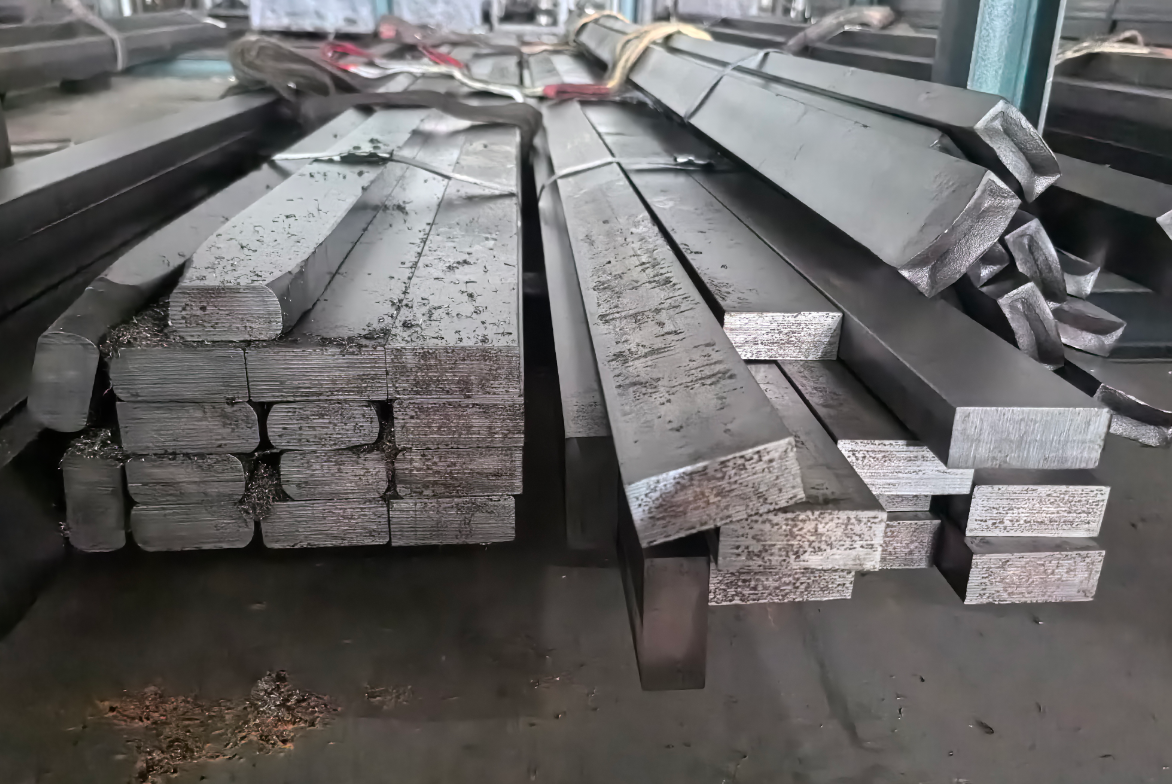
Understanding Cold Finished Steel: Standards, Benefits, and Agricultural Requirements
Why Cold Finished Steel Is Critical for High-Load, Precision Agricultural Components
Cold finished steel undergoes secondary processing—such as cold drawing, turning, or grinding—after hot rolling. This refines dimensional accuracy, improves surface finish, and enhances mechanical properties through strain hardening. For high-load, precision agricultural components like gear shafts, hydraulic cylinder rods, and PTO couplings, these attributes are non-negotiable: even minor dimensional deviations accelerate wear, while surface imperfections promote friction and premature failure. The increased tensile and yield strength allows for lighter, more efficient designs without compromising load-bearing integrity—essential for equipment subjected to cyclic bending and impact on rough terrain. Moreover, the smoother, denser surface resists abrasion from soil, crop residue, and agrochemicals, directly extending service life in dusty, corrosive field environments.
Key ASTM and SAE Standards (A108, J403) Governing Cold Finished Steel for Farm Equipment
ASTM A108 and SAE J403 form the foundational quality framework for cold finished steel in agricultural machinery. ASTM A108 specifies dimensional tolerances, surface quality, and mechanical property requirements for cold-finished carbon and alloy bars—ensuring consistent fit, function, and fatigue performance across assemblies. SAE J403 defines the chemical composition ranges for widely used carbon grades—including 1018, 1045, and 1060—enabling predictable heat-treatment response and mechanical behavior. Compliance with both standards is mandatory for OEMs and reputable aftermarket suppliers, as it guarantees interchangeability, shock-load resilience, and long-term reliability. For mission-critical components subject to regulatory or warranty scrutiny, material certification to ASTM A108 and SAE J403 provides traceable assurance that the steel meets the exacting performance benchmarks of modern farming equipment.
Comparing Common Carbon Steel Grades for Agricultural Use
1018 vs. 1045 vs. 1060: Tensile Strength, Yield Strength, and Hardenability in Real-World Field Applications
The selection among cold finished carbon steels hinges on balancing strength, ductility, and response to heat treatment—each directly impacting durability under abrasive, cyclic loading.
| Property | 1018 (Cold Finished) | 1045 (Cold Finished) | 1060 (Cold Finished) |
|---|---|---|---|
| Typical Carbon Content | 0.15–0.20% | 0.43–0.50% | 0.55–0.65% |
| Tensile Strength (MPa) | 440–520 | 620–740 | 700–850 |
| Yield Strength (MPa) | 340–400 | 480–550 | 520–620 |
| Elongation (%) | 15–20 | 10–15 | 8–12 |
| Hardenability (Jominy) | Low | Moderate | High |
1018 excels in formability and weldability, making it ideal for non-wear-critical structural parts like brackets and frames. 1045 delivers a 35–40% strength gain over 1018 while retaining sufficient ductility for precision-machined, dynamically loaded components—such as splined shafts and gear blanks. Its moderate carbon content supports effective induction hardening, producing a wear-resistant case over a tough core. 1060 achieves the highest strength but sacrifices ductility and notch toughness; its limited elongation increases susceptibility to brittle fracture under impact or stress concentration. Its high hardenability suits static, high-wear applications—but not fatigue-dominated ones.
When to Choose 1045 Over 1060 — Balancing Machinability, Hardness, and Fatigue Resistance in Gears and Shafts
For rotating components like transmission shafts and gears, 1045 is typically the optimal cold finished choice—not because it’s the strongest, but because it best balances three interdependent factors: machinability, achievable hardness, and fatigue resistance. Its lower carbon content yields shorter chips, reduced cutting forces, and longer tool life, lowering production costs and cycle times. When induction hardened, 1045 reliably achieves 55–60 HRC at the surface while maintaining a ductile, high-toughness core—delivering superior bending fatigue performance over millions of operational cycles. While 1060 can reach marginally higher surface hardness (up to 62 HRC), its increased brittleness reduces fatigue strength under tensile stress, and its demanding machining profile raises heat generation and tool wear. As a result, 1045 remains the industry-preferred grade for dynamically loaded agricultural drivetrain components, whereas 1060 is reserved for static, high-abrasion parts such as bushings, pins, and wear plates.
Evaluating Performance Trade-offs in Cold Finished Steel Selection
Machinability vs. Wear Resistance: How Boron-Modified Cold Finished Steel Bridges the Gap
Traditional carbon steel selection often forces a compromise: high-strength grades like 1060 deliver wear resistance but incur steep machining penalties—slower speeds, higher tool wear, and up to 40% greater production cost (Machining Data Handbook, 2022). Softer grades like 1018 machine efficiently but lack durability under sustained abrasion. Boron-modified cold finished steel—containing 0.0005–0.003% boron—offers a practical middle ground. Boron significantly boosts hardenability without raising carbon content, enabling deeper, more uniform case hardening after quenching. This yields up to 15 HRC higher surface hardness than standard equivalents, while maintaining machinability close to mild steel levels. Independent testing confirms boron-treated variants demonstrate 25% greater wear resistance in sliding contact compared to non-boron counterparts of similar core hardness (Wear, 2023). For high-wear, high-volume components like plow discs and tillage points, this combination extends service life and reduces replacement frequency—without inflating manufacturing complexity.
Corrosion Considerations: Limitations of Plain Carbon Cold Finished Steel in Humid or Chemical-Exposed Environments
Plain carbon cold finished steel lacks inherent corrosion resistance—a critical limitation in agriculture. In ambient field conditions averaging 80% relative humidity, unprotected carbon steel corrodes at rates exceeding 0.12 mm/year, effectively halving the functional lifespan of sweeps, coulters, and linkage components (Corrosion Engineering, 2024). Unlike stainless alloys, carbon steel forms no stable passive oxide layer; instead, repeated wet-dry cycles accelerate pitting and localized attack. Exposure to ammonium nitrate-based fertilizers or manure solutions further intensifies degradation, with measured corrosion rates reaching 0.25 mm/year. This uneven material loss creates stress-concentrating pits that initiate fatigue cracks—even in otherwise sound components. Without protective intervention—such as galvanizing, paint systems, or polymer coatings—plain carbon cold finished steel requires frequent inspection and maintenance. For equipment operating in chemically aggressive soils or high-humidity regions, specifying corrosion-resistant alternatives—or integrating surface protection during design—is not optional: the upfront cost savings of bare carbon steel are rapidly erased by downtime, labor, and unplanned replacements.
Frequently Asked Questions (FAQ)
What is cold finished steel?
Cold finished steel is steel that undergoes secondary processing, like cold drawing or grinding, after hot rolling, to improve its dimensional accuracy, surface finish, and mechanical properties.
Why is cold finished steel critical for agricultural equipment?
Cold finished steel provides enhanced strength, precision, and durability required for high-load agricultural components like gear shafts and hydraulic rods, withstanding cyclic loads and abrasive environments.
What standards govern cold finished steel for agricultural use?
Key standards include ASTM A108 for dimensional tolerances and surface quality, and SAE J403 for chemical composition ranges of carbon grades.
How do 1018, 1045, and 1060 steel types compare?
1018 offers excellent machinability and weldability, 1045 balances strength and ductility, while 1060 provides high strength for static applications but reduces ductility.
What are the advantages of boron-modified cold finished steel?
Boron-modified steel achieves higher surface hardness and wear resistance without compromising machinability, making it ideal for high-wear agricultural components.
Does cold finished steel resist corrosion?
Plain carbon cold finished steel lacks inherent corrosion resistance, and protective coatings or corrosion-resistant alternatives are recommended for humid or chemically aggressive environments.
Table of Contents
- Understanding Cold Finished Steel: Standards, Benefits, and Agricultural Requirements
- Comparing Common Carbon Steel Grades for Agricultural Use
- Evaluating Performance Trade-offs in Cold Finished Steel Selection
-
Frequently Asked Questions (FAQ)
- What is cold finished steel?
- Why is cold finished steel critical for agricultural equipment?
- What standards govern cold finished steel for agricultural use?
- How do 1018, 1045, and 1060 steel types compare?
- What are the advantages of boron-modified cold finished steel?
- Does cold finished steel resist corrosion?