
 EN
EN
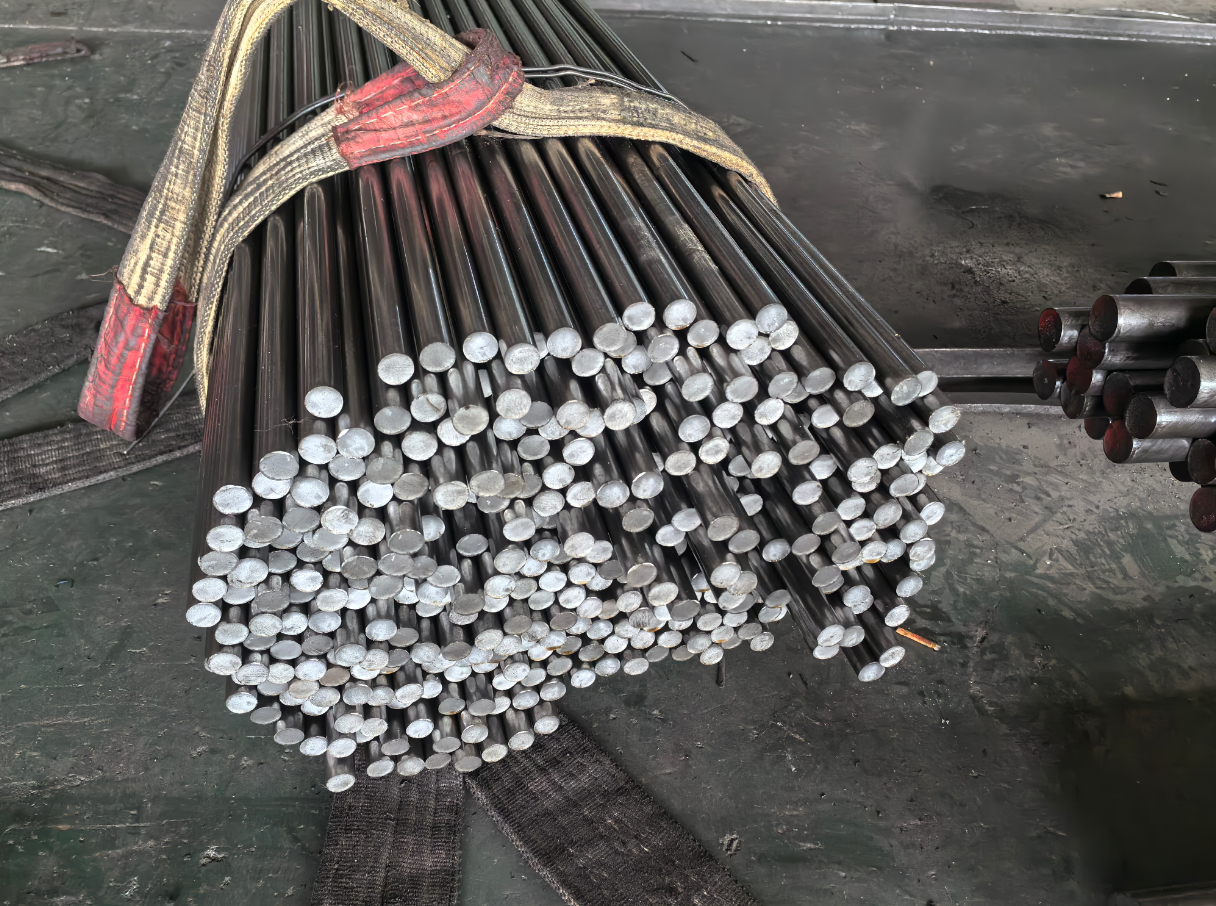
Performance Enhancements of Cold Drawn Steel in Automobile Applications
Increase in Strength and Surface Hardness
Cold drawing of steel is a method of strain hardening which shows strengthening potential of steel by increasing the number and density of dislocations in the steel matrix at room temperature by creating slip resistance barriers. This method increases the strength of steel by 15-30% compared to hot rolled steel with the added benefit of increased surface hardness across the entire steel cross-section. For suspension components and steering components, the cross-sectional improvement in surface hardness means that the components are less likely to deform and perform excellent during wear, which is of the utmost importance when torque and longevity are key.
Core Micro Defect and Grain Structure Improvement.
During the cold drawing process, the grains in the metal align with the draw direction, and many of the voids and defects in the metal which are a result of its initial solidification are completely eliminated. The resultant microstructure is a uniform structure with consistent mechanical properties that improves the integrity of the structure, even more so for components that are of utmost importance to the safety of the automobile such as brake caliper pins and transmission synchronizer rings. Non-destructive testing such as ultrasonic testing with ASTM E114 is a method of testing for the absence of a flaw in the material and to confirm the necessary automotive industry standards for IATF 16949.
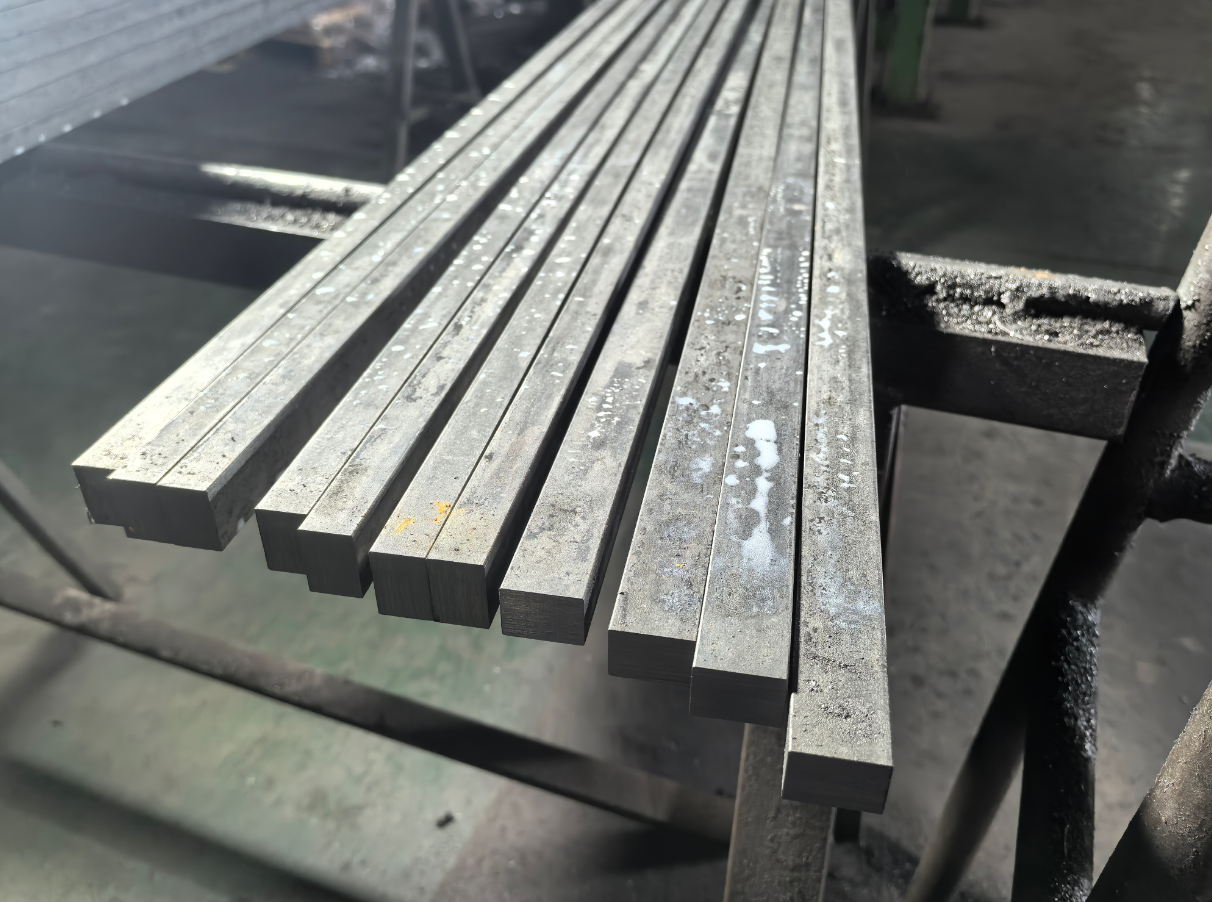
Increased Service Life under Cyclic Loading
Due to the microstructural improvement that cold drawn steel has and the improvement in the integrity of the surface, cold drawn steel has much more resistance to stress concentration which leads to the decrease in the number of fatigue cracks that occur. For components such as axle shafts and transmission gears, cold drawn steel can experience fatigue for much longer compared to its hot rolled counterparts in excess of 1 million cycles of loading that occur in a transmission. The testing which was performed under the requirements of ISO 10823 showed that cold drawn steel can endure 40% higher cycles of loading compared to hot rolled steel in the same transmission. This is a solution to the in-service fatigue failures which occur in a transmission.
Key Cold Drawn Steel Grades Used in High-Durability Automotive Components
Choosing the correct grade is critical when designing parts for automotive applications as regards the balance between strength, toughness, and ease of fabrication. The primary steel grades used in high-durability applications are medium-carbon and low-alloy steels. These grades are notable for their responsive behavior to cold work and ease of use in subsequent heat treatments.
Medium Carbon Steels (such as 1045 and 1050): Structural Frames and Suspension Links.
AISI 1045 and 1050 steels, which contain 0.45 and 0.60% carbon, respectively, provide very high yield strength (20–30% increased strength after cold drawing) while maintaining good ductility for cold forming. The fine γ grain structure, due to reduced internal voids, achieves an ideal balance of hardness and toughness upon normalizing or quenching and tempering. These grades are frequently used for control arms, steering knuckles, and brackets for chassis as they provide predictable yield strength when placed under static and dynamic loads.
Alloy Steels (such as 4140, 4340 and 8620): Engine Valves, Gears and Drivetrain Shafts.
Alloy steels provide increased hardenability during heat treatment caused by intentional addition of chromium, molybdenum, and nickel as well as increased toughness. Cold drawn 4140 and 4340 are typically used for high-load engine valves and gear blanks. Carburized 8620 provides a hard outer case and tough inner core, which are used for CV (constant velocity) joint shafts. Importantly, cold drawing causes the creation of useful, compressive, residual stresses at the surface of the steel, increasing the fatigue limit by as much as 40% compared to hot rolled steels after proper heat treatment. This meets J403 and J1086 of SAE for critical rotating components.
Essential Automotive Applications Where Cold Drawn Steel Shows Significant Benefits
Steering Columns, Axle Shafts, and Control Arms: Accuracy, Reliability, and Endurance
Cold drawn steel possesses the dimensional stability, surface integrity, and fatigue resistance necessary for the fabrication of steering columns, axle shafts, and control arms. Control arms and shafts must be made to a very tight tolerance (±0.005 in. or better) to minimize looseness. The surfaces must be strain hardened to resist fretting wear at the interface of bushings. Cold drawn steel possesses a defect-free, aligned, and optimally sized grain structure that controls the propagation of cracks due to repeated torsional and bending stresses. Real world examples include the OEM specifications to Tier 1 suppliers such as Ford’s WSS-M1A367-B4 and GM 6887M. These specifications require cold drawn 1045 and 4140 for control arms and axle shafts of rear suspensions with a target of 200,000+ miles of service life.
Quantifying Durability Gains from Cold Drawn Steel vs. Hot Rolled Steel in Automotive Applications
Engineers evaluating materials for safety critical applications utilize performance differentials. Cold drawn steel offers durability gains from the permanent change in the microstructure and the residual stresses due to deformation at room temperature. These gains are supported by data as follows:
Property Cold Drawn Steel Hot Rolled Steel Benefit to Automotive Applications
Tensile Strength ~ 20% Higher Lower Supports larger loads in suspension links and axle shafts and lowers the chances of permanent deformation during curb strikes and when hitting potholes
Surface Hardness 25–40 HRC, Up to 40% Higher 15–25 HRC Real world performance of durability in the joint of a suspension system saves on the maintenance of the system and increases the service life of the steering and suspension system
Dimensional Tolerance ±0.005 in. ±0.030 in. Consistent levels of dimensional tolerance leads to lower and consistent levels of vibration and noise
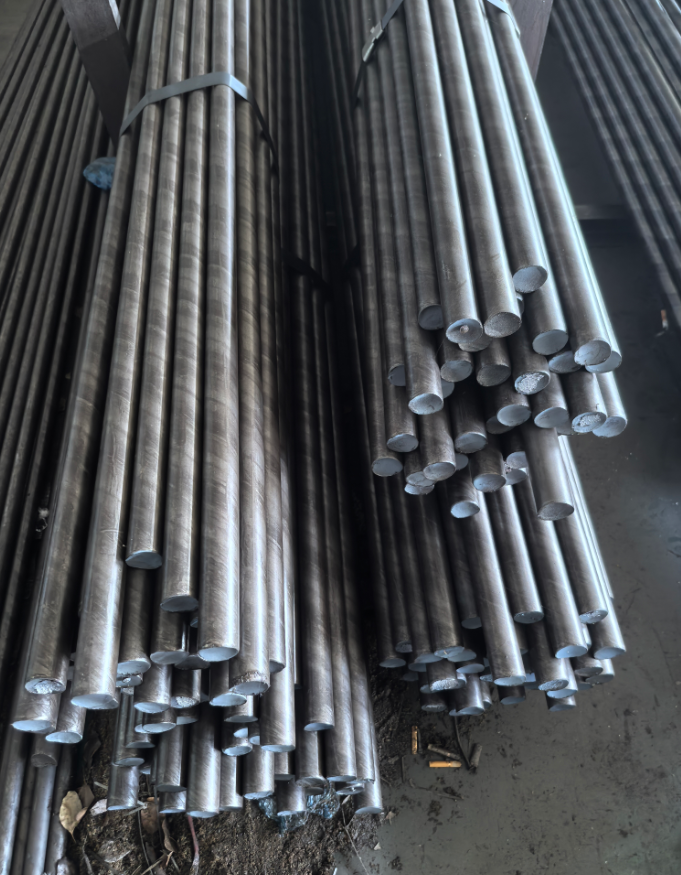
Fatigue Life 40% Higher Lower Delay of crack initiation in steering columns and half shafts is critical to meet OEM mark durability expectations of 10 years and 150,000 miles.
Surface Finish Low Ra (0.4–0.8 µm) Smooth Minor corrosion after coating, lower friction in moving parts These advantages work in concert, as cold drawn axle shafts from suppliers certified to IATF 16949 consistently exceed 1.2 million stress cycles in laboratory testing – far beyond the 800,000-cycle benchmark set for hot rolled steel.
Like cold drawn control arms, hot rolled control arms maintain alignment within specification limits over 60,000 miles of rough-road simulation. Beyond this, the geometry of hot rolled control arms begins to drift. While hot rolled control arms are ideal for non-severe applications, such as support brackets, and body reinforcements, cold drawn control arms should be used in applications where the safety and longevity of the vehicle are required.
FAQ
What is the primary advantage of cold drawn steel for automotive applications?
Cold drawn steel is stronger, harder, and more durable compared to hot rolled steel. Because of these properties, cold drawn steel should be used in automotive applications that require the highest safety concerns.
How does the cold drawing process improve steel's properties?
Cold drawing steel results in desirable mechanical properties via improved grain structure, enhanced strain hardening, and decreased stress concentrations.
What are the key automotive uses of cold drawn steel?
Cold drawn steel is used in automotive applications such as control arms, suspension links, axle shafts, steering columns, engine valves, and gears due to its durability and strength.
How does cold drawn steel compare to hot rolled steel in terms of fatigue life?
Cold drawn steel has a 40% improvement in fatigue life compared to hot rolled steel. This improvement decreases the likelihood of failure in service for more demanding applications.
Which steel grades are used for high-durability automotive parts?
Medium carbon steel of the grades 1045 and 1050, as well as some of the alloy steels 4140, 4340, and 8620, are used for high-durability automotive parts. These steels are suited for automotive applications because of their excellent mechanical properties and usability with heat processes.