
 EN
EN
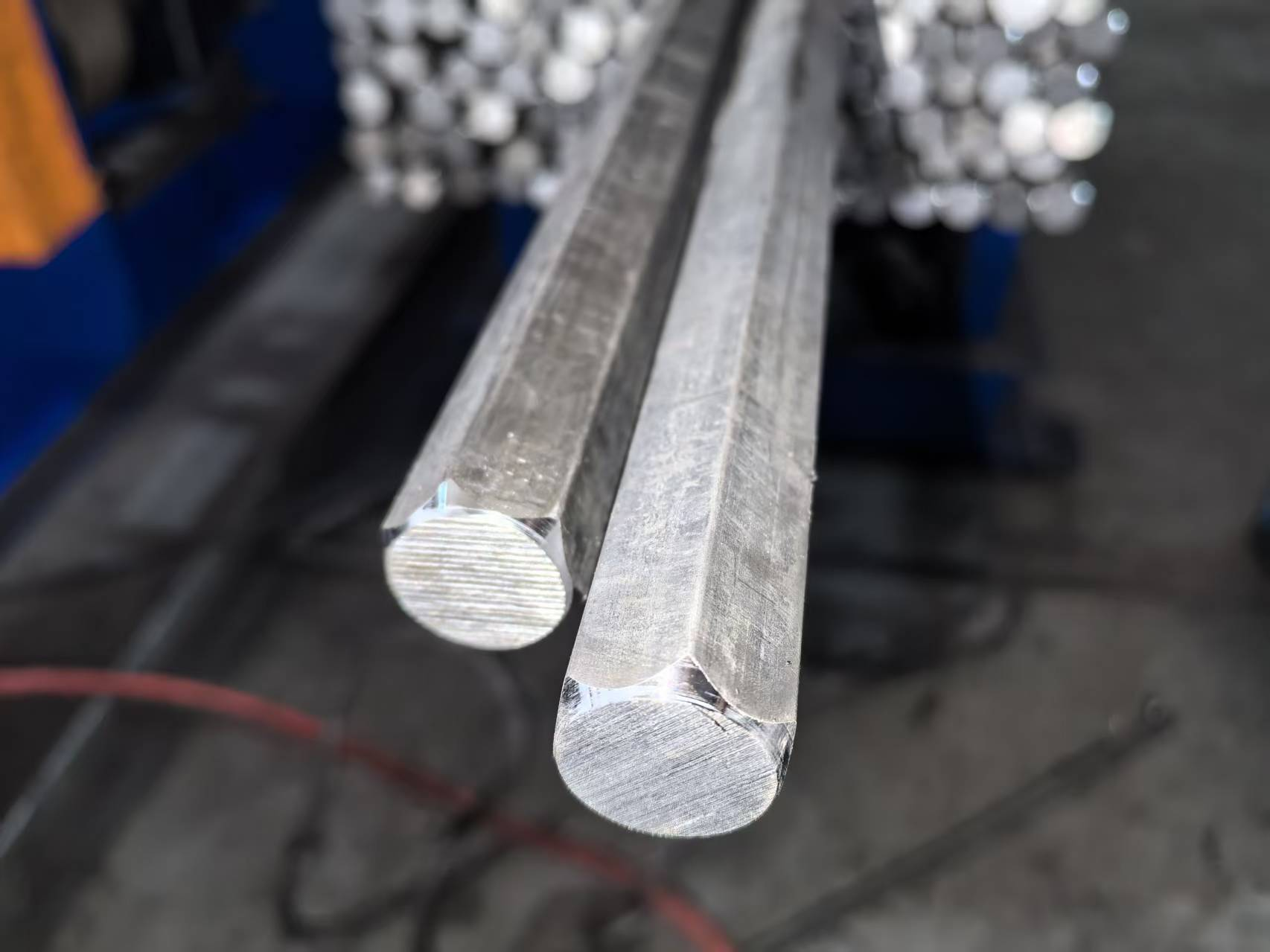
Flat Steel Bar Fundamentals: Geometry, Strength, and Structural Role
Flat steel bars—defined by their rectangular cross-section with width significantly greater than thickness—deliver targeted structural performance in frame construction. Their geometry directly governs load distribution, stiffness, and stability, making them indispensable for both primary load-bearing and lateral bracing applications.
Cross-Sectional Advantages: High Moment of Inertia and Bending Stiffness per Unit Mass
The rectangular profile delivers superior bending resistance about its major (width) axis due to a high moment of inertia. This allows flat bars to achieve greater bending stiffness per unit mass than round or square sections of equivalent weight. Under transverse loading, material distributed across the width efficiently resists deflection—making them especially effective as stiffeners where weight optimization is critical.
Load-Bearing vs. Bracing Functions in Frame Systems
Flat steel bars serve two distinct but complementary structural roles:
- As primary load-bearing members, they carry axial tension or compression along their length—typically oriented vertically (as columns) or horizontally (as lintels or chord members) within the main frame skeleton.
- As bracing elements, they provide lateral stability when installed diagonally, resisting wind, seismic forces, and restraining buckling in slender compression members.
While yield strength ranges from 250–450 MPa depending on grade—and supports both functions—design criteria differ markedly: load-bearing applications prioritize axial capacity and slenderness control, whereas bracing relies more heavily on connection rigidity (welded or bolted), geometric stiffness, and cyclic performance.
Stability Enhancement Mechanisms of Flat Steel Bar in Frames
Static Stability: Alignment Control and Buckling Resistance Under Compression
Flat steel bars enhance static stability through inherent geometric stiffness. Their high width-to-thickness ratio increases resistance to flexural-torsional buckling—particularly vital for vertical compression members and diagonal braces. Uniform stress distribution across the rectangular section minimizes localized yielding or distortion during service. According to the American Institute of Steel Construction (AISC), properly proportioned flat bar bracing can improve buckling resistance by up to 40% compared to round bars of equal mass, while also limiting deflection in horizontal elements like lintels and girts.
Dynamic Stability: Damping Cyclic Deformation and Reducing Fatigue Accumulation
Under dynamic loads—including wind gusts, machinery vibration, or seismic shaking—the bidirectional stiffness of flat steel bars helps damp oscillatory motion. Vibration analysis studies indicate this geometry reduces resonant amplification in frames by up to 30% relative to circular sections. Additionally, the homogeneous microstructure of hot-rolled flat steel slows fatigue crack initiation and propagation. When used as seismic links or equipment supports, flat bars reliably withstand over 2 million stress cycles before measurable fatigue damage occurs—a 25% improvement over angle sections under comparable loading conditions.
Flat Steel Bar in High-Performance Applications: Seismic Resilience and Modular Efficiency
Seismic Bracing: Energy Dissipation Through Controlled Yielding and Ductile Behavior
In earthquake-prone regions, flat steel bars excel as sacrificial seismic bracing elements. Their high ductility enables stable, repeatable plastic deformation—bending and stretching without fracture—to convert kinetic energy into heat. Engineers design these components to yield predictably at pre-engineered locations, ensuring energy dissipation occurs safely and avoids brittle failure modes. Combined with high strength-to-weight ratio and buckling resistance, flat bars maintain post-yield integrity across multiple seismic events.
Modular Construction Benefits: Weldability, Tolerancing, and Rapid Assembly
Flat steel bars support efficient modular construction through excellent weldability, tight dimensional tolerances, and consistent geometry. These traits enable precise factory fabrication—especially for automated welding, cutting, and drilling—while minimizing on-site adjustments. Consistent cross-sections simplify connection detailing and quality assurance, reducing erection time and labor costs. As a result, flat bars contribute meaningfully to faster project delivery, improved constructability, and lower total installed cost in modern high-performance frame systems.
Frequently Asked Questions (FAQ)
What are flat steel bars used for?
Flat steel bars are primarily used in structural applications like load-bearing members and bracing elements. They provide axial tension or compression and lateral stability in frame construction.
Why are flat steel bars preferred over round bars?
Flat steel bars have a higher moment of inertia and bending stiffness per unit mass, making them more effective for weight optimization and resistance to deflection in structural elements.
How do flat steel bars enhance stability in frame systems?
Their wide-to-thickness ratio improves resistance to buckling, flexural forces, and cyclic deformation. They are effective for both static and dynamic stability in construction.
Can flat steel bars be used for seismic bracing?
Yes, flat steel bars are highly ductile, enabling controlled yielding and energy dissipation during seismic events. They are a reliable choice for earthquake-prone regions.
Are flat steel bars suitable for modular construction?
Absolutely. Their consistent geometry and excellent weldability simplify factory fabrication and reduce on-site labor and adjustments, making them ideal for modular systems.