
 EN
EN
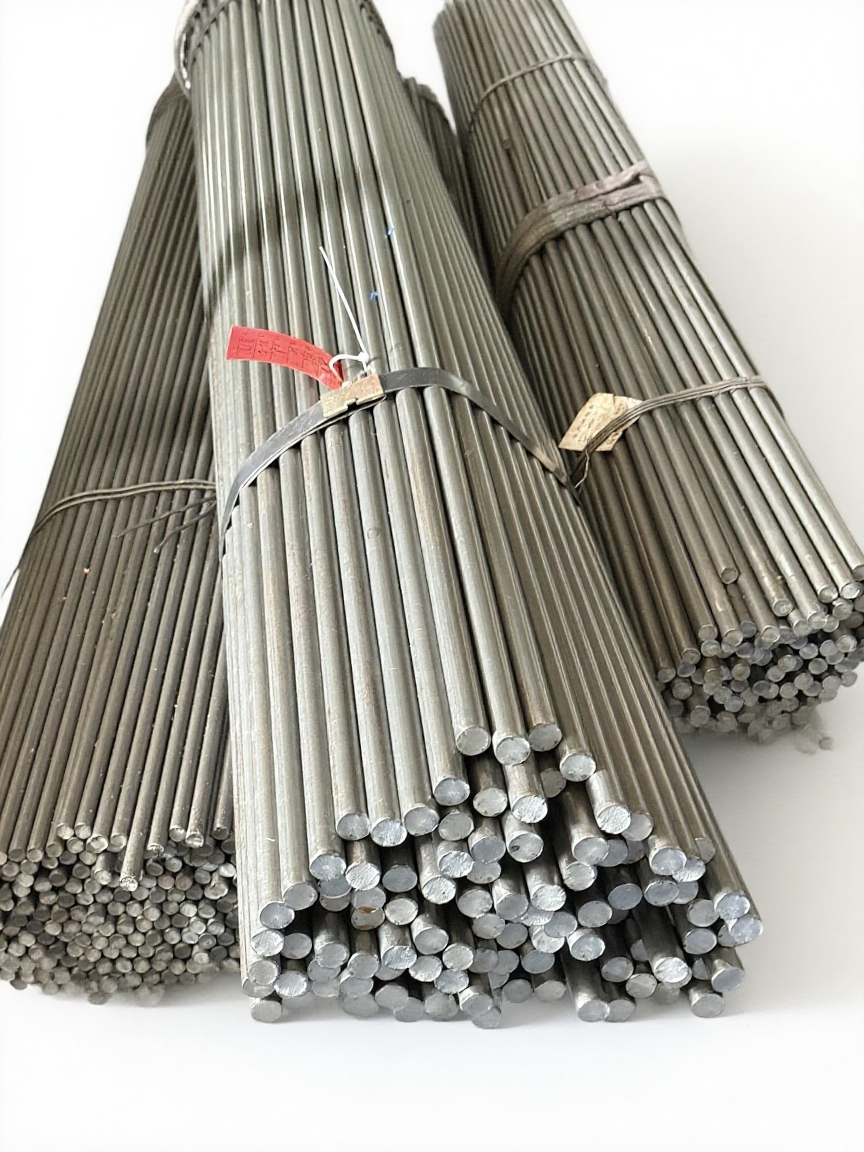
The Dominant Range: The ~80% General Industrial Demand for Round Steel Rods Ranges from 6mm to 50mm
The 2023 MSCI Steel Procurement Survey shows 78% of round steel rods ordered fall within 6mm to 50mm, which demonstrates the demand for this range. It is especially efficient for mass produced fasteners, shafts, and bolts. Because of its properties, and the demand for products to have the same dimensions, it is utilized across the automotive industry, construction, and many manufacturing machines across the industry. The balance presented by this dimension range optimizes almost every potential tradeoff across design and fabrication.
Functional Drivers: High Utilization of Tradeoff Balance Across Competitive Fabrication Systems, Higher Utilization of Tradeoff Balance Across Standardization Fabrication Systems, Cost and Fabrication Trade Innovation
The high utilization of tradeoff balance across the 6mm to 50mm round steel rods is due to this standardization:
Tradeoff Balance Across Fabrication Systems: Standardized use across fabrication systems also allows for innovative Cold Form Fabrication Systems as well as Post Form Light Fabrication Systems.
Tradeoff Balance Across Standardization Fabrication Systems: Round steel rods range from 6mm to 50mm and have demand to supplement the sock range of tradeoff balance within the industry.
Cost and Fabrication Trade Innovation: Innovation of brokerage systems and machines to offset Plateau elasticity in the industry. Have positioned this dimension range.
This range avoids the constraints of smaller rods lacking load-bearing capacity and wider diameters that are heavier and harder to finish with exactness. Consequently, manufacturers have reported faster production using their existing tools, and engineers have reported gains with low-carbon, medium-carbon, and alloy grades. So, companies can quickly finish projects while spending 12 – 18% less on materials than conventional sizes.
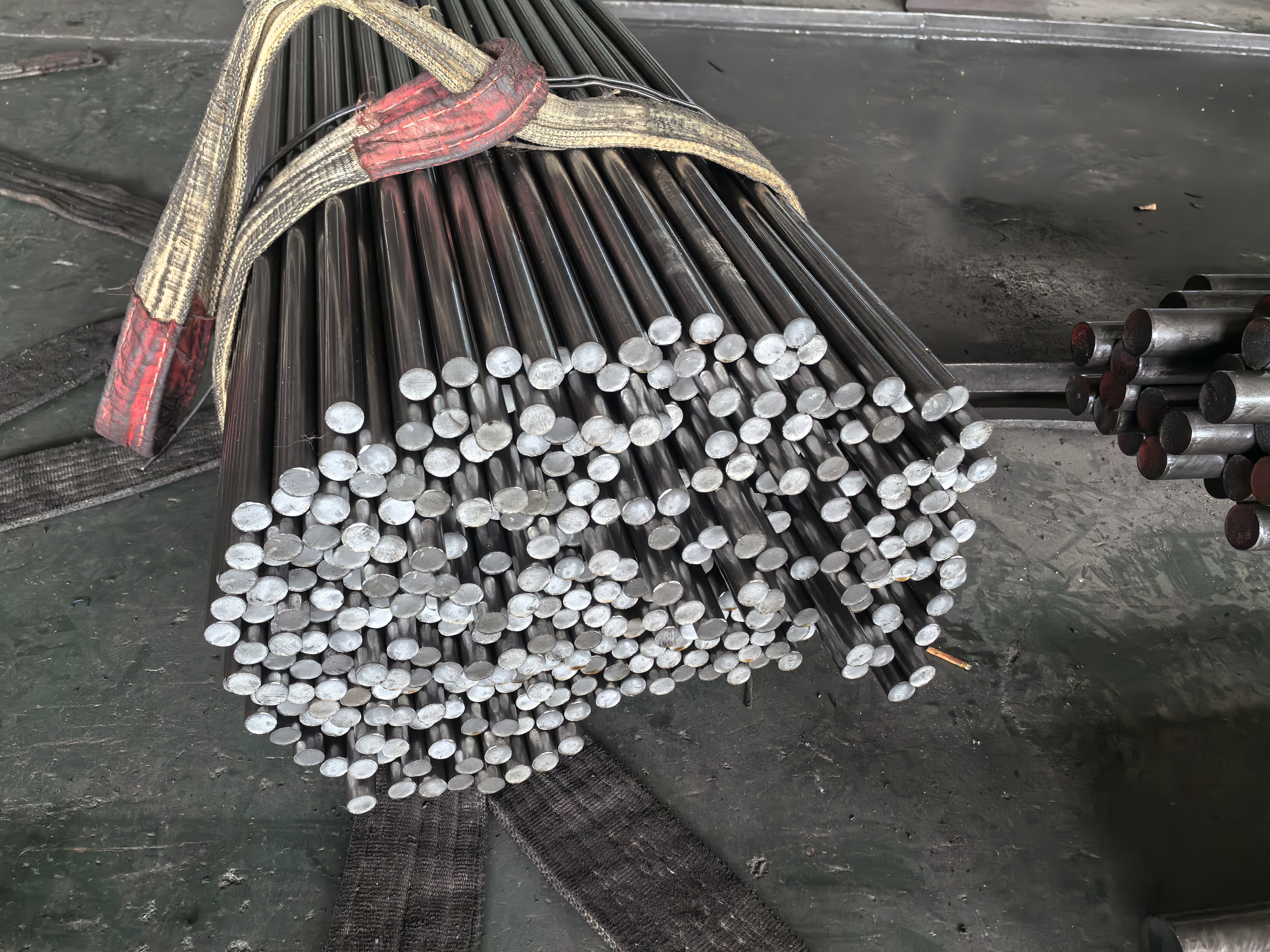
Application Requirements Informing Diameter Choices By Industry
Machinery and Automotive: 6mm to 50mm Diameter Round Steel Rods
While the diameter ranges from 6mm to 50mm, the balance of strength and weight, as well as the ease of manufacture, is apparent. Constant dynamic loading requires stability of dimension, as is the case with engine crankshafts and fastener pins. Standard CNC tools generate less material wastage, and as a result, more cost-effective high-tolerance pieces. Diameters of less than 20mm will provide for operations for fastener mass cold-forming. The middle of this diameter range of 30mm to 50mm are sufficient for torsional applications like drivetrain components. The broadness of the range provides the ability to standardize procurement with an eye to diverse and functional requirements like surface finishes resistant to fatigue.
Construction & Heavy Equipment: Specialized Applications of 50mm-100mm Round Steel Rod for Structural Supports and Connectors
When exceeding 50mm in diameter, round steel rods become necessary for the construction and operation of heavy machinery. The axles of earth-moving machinery and construction equipment require rods with diameters of 70mm-100mm to resist the high compressive forces of 1,400 MPa. Thick rods are needed for crane rigging due to the requirements of weld integrity. However, heavy, round steel rods account for only 12-15% of the total steel consumption for a majority of the steel industry, as reported in the 2023 Global Steel Fabrication Report. This is due to the requirements of specialized handling, increased costs of transporting and storing, and steel premiums of quenched and tempered (QT) grades. This is due to the construction of heavy equipment and their specific applications, where fracture toughness is prioritized. This is also the reason why QT grades, ASTM A576 Grade 1045, or EN 10083-2 C45 are used for critical load paths. The construction of heavy equipment in these applications have a specific tolerance of 1.5mm, unlike those of the automotive industry, where tolerance is more strict. However, these are more rigorous.
Material Form and Tolerances: Dominance of Cold-Drawn Round Steel Rods in the 6mm–20mm Range
Precision Advantage: Using cold drawn steel rods allows for press fit bearings and bushings without secondary machining.
Cold drawn steel rods replace the 6mm-20mm market segments because of their surface and dimensional quality. With a tolerance of ±0.05mm and a cold drawn steel surface quality of Ra ≤ 0.8 µm , dynamic surfaces can be produced with minimal limitations. In many CNC applications, the consistency of the cold drawn rods provides predictable tool engagement, minimized chattering, and reduced scrap, all of which are extremely important when producing parts in mass quantities. This production speed is increased as the post-processing secondary operations are eliminated. Compared to hot drawn rods with a tolerance of ±0.25mm, which require secondary operations such as grinding, cold drawn rods provide improved production speed and reduced part costs by 15-22%. This information comes as a result of research by the AISI and CEN and provides metrics for production costs when secondary operations are present. Cold drawn the 6mm-20 mm market segment for steel rods provide survival production lines with minimal post-processing operations.
FAQ
6 mm-50mm Popularity
The 6mm-50mm range is the most well-known range in the steel rod market as a result of being the most versatile size and popular mass production application of fasteners, shafts, and structural supports. The 6 mm-50mm range has a steel rod product of mass production operations, as a result of the balance of product strengthening and mass production operations.
What are the advantages of using 6mm–50mm round steel rods?
They are flexible regarding fabrication and have no new tooling requirements. It doesn't take a lot of material to reach the goal yield strength, and they reduce waste created from not using material.
What are the differences between cold-drawn and hot-rolled round steel rod?
Cold-drawn rods have better surface quality, a difference of about three times, and better dimensional precision, a difference of about 0.2mm. This quality allows rods to be placed into bearings directly, which saves time and money.
Industries that commonly use 6mm–50mm round steel rods?
Industries that commonly use 6mm–50mm round steel rods are the automotive, mechanical, and construction industries. These rods easily fit the requirements of the industry due to strength and the ability to be easily manufactured. Examples include engine crankshafts, fasteners, and hydraulic valve bodies.
Why aren’t larger diameters, like 50mm–100mm, as common?
These diameters, unlike larger diameters, aren’t common because unlike larger diameters, they are not as versatile and not as easy to transport. These diameters are mostly used for applications that are specialized to be niche and high-stress resistant, like the axles of heavy machinery.