
 EN
EN
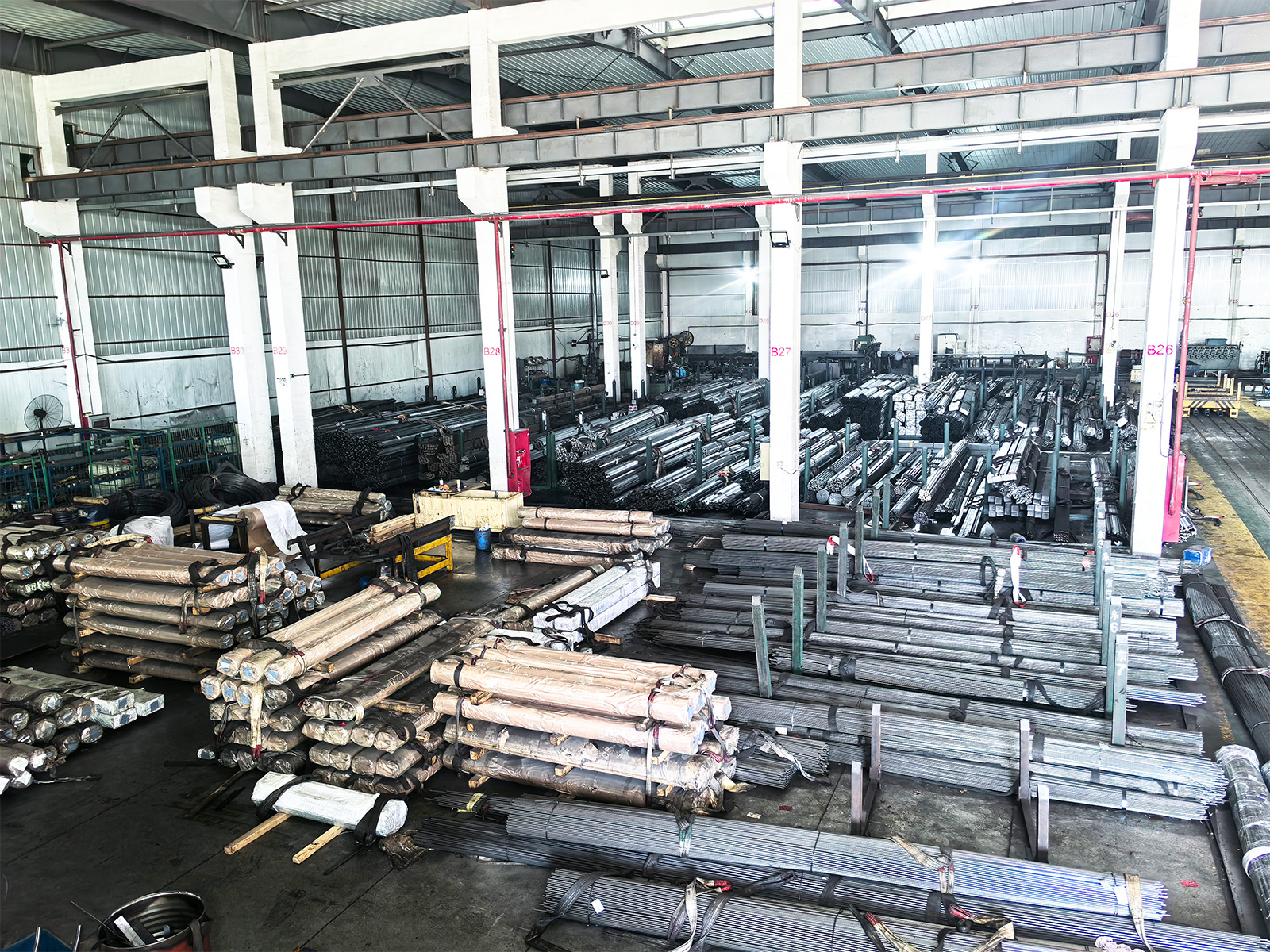
Cold Drawn Special Steel Profile
Time : 2025-11-24
Cold-drawn steel is a high-precision, high-strength profile produced through the cold-drawing process (applying tensile force to steel at room temperature to achieve plastic deformation). Saponification and phosphating are core surface treatment processes in the production and subsequent processing of cold-drawn steel—often used in combination, they respectively undertake the functions of "lubrication and friction reduction" and "protective priming," directly affecting the processing performance, surface quality, and service life of cold-drawn steel. The following is a detailed analysis from dimensions such as core definitions, process principles, key parameters, and application scenarios:
I. Core Concepts and Process Nature
1. Cold-Drawn Steel
• Definition: A type of steel produced by using hot-rolled steel as the blank and achieving plastic deformation through die drawing at room temperature, ultimately obtaining high-precision dimensions (tolerance up to ±0.02mm level), high surface finish (Ra as low as 0.4μm), and excellent mechanical properties (tensile strength increased by 20%-30%).
• Core Characteristics: High dimensional accuracy, low surface roughness, refined grains, and uniform mechanical properties. It is widely used in machinery manufacturing, automotive components, hydraulic pipe fittings, precision instruments, and other fields.
• Surface Treatment Requirements: Severe friction between the die and steel during cold drawing is prone to surface scratches and die wear, and carbon steel cold-drawn steel is susceptible to corrosion. Therefore, treatments such as saponification and phosphating are required to solve the two core problems of "lubrication" and "rust prevention."
2. Phosphating
• Definition: A process of immersing cold-drawn steel in a phosphate solution (mainly zinc-based, manganese-based, and iron-based) to form a water-insoluble crystalline phosphate conversion film (thickness 5-50μm) on the metal surface through chemical reaction.
• Core Functions:
◦ Corrosion Protection and Rust Prevention: The film isolates corrosive media such as air and moisture, with a rust prevention period of up to several months for the bare film and extended to several years when combined with oiling (corrosion resistance in salt spray tests is improved by dozens of times);
◦ Enhanced Adhesion: The porous phosphating film can absorb subsequent coatings (paint, powder) or lubricants, increasing the bonding force by 30%-50%;
◦ Auxiliary Lubrication: Manganese-based phosphating films have high hardness (HV≥500), which can directly improve wear resistance; zinc-based phosphating films can react with saponification solution to form a composite lubricating layer.
• Common Types and Parameters (Mainstream Applications for Cold-Drawn Steel):
Type Treatment Temperature Treatment Time Film Weight Core Advantages Application Scenarios
Zinc-based Phosphating 40-90℃ 4-15min ≥3g/m² Easy saponification, low cost Cold drawing lubrication pretreatment, coating priming
Manganese-based Phosphating 70-100℃ 10-20min ≥7.5g/m² High hardness, strong corrosion resistance Load-bearing friction components (gear shafts, bolts)
Iron-based Phosphating ≥95℃ ≥30min ≥10g/m² Integrated rust removal and phosphating Early rust prevention treatment (less used now)
|
Type |
Treatment Temperature |
Treatment Time |
Film Weight |
Core Advantages |
Application Scenarios |
|
Zinc-based Phosphating |
40-90℃ |
4-15min |
≥3g/m² |
Easy saponification, low cost |
Cold drawing lubrication pretreatment, coating priming |
|
Manganese-based Phosphating |
70-100℃ |
10-20min |
≥7.5g/m² |
High hardness, strong corrosion resistance |
Load-bearing friction components (gear shafts, bolts) |
|
Iron-based Phosphating |
≥95℃ |
≥30min |
≥10g/m² |
Integrated rust removal and phosphating |
Early rust prevention treatment (less used now) |
3. Saponification
• Definition: A process of immersing cold-drawn steel (usually after phosphating) in a saponification solution containing sodium stearate, sodium hydroxide, and other components to form a metal soap lubricating film (thickness 5-15μm) on the metal surface.
• Core Functions:
◦ Extreme Lubrication: The lubricating film can reduce the cold drawing friction coefficient by 30%-50% and the drawing force by 15%-25%, avoiding surface scratches on steel and die adhesion;
◦ Die Protection: Reduces die wear, and the service life can be increased by 40%-60% (e.g., for cold drawing of Φ25×2mm steel pipes, the die life is extended from 800 meters to 1300-1500 meters);
◦ Improved Surface Quality: Reduces the surface roughness Ra of cold-drawn steel from 6.3μm to below 1.6μm, and reduces the residual oxide scale by more than 85%.
• Key Process Parameters:
◦ Saponification Solution Formula: Sodium stearate + sodium hydroxide + phosphate compound system (environmentally friendly type is organic carboxylate + nano-silica), pH value 8.5-10.5;
◦ Treatment Conditions: Temperature 70-85℃, immersion time 8-20min (8-12min for pipes with diameter ≤20mm, 15-20min for pipes with diameter 20-50mm);
◦ Quality Control: Free alkalinity 15-25 points, total alkalinity 18-28 points, film weight 3-5g/m², key element ratio Fe:Zn:P=5:3:2.
II. Correlation Between Phosphating and Saponification: "Composite Protection-Lubrication System" for Cold-Drawn Steel
In the production of cold-drawn steel, phosphating and saponification often form a combined process of "phosphating priming + saponification lubrication," with the following workflow:
Blank Pretreatment (Pickling/Degreasing) → Rinsing → Phosphating → Rinsing → Saponification → Drying (Optional) → Cold Drawing Forming
• The porous structure of the phosphating film provides an "adsorption carrier" for the saponification solution, and stearate ions combine with metal cations in the phosphating film to form a more stable and wear-resistant composite lubricating layer (Fe₃(PO₄)₂・8H₂O phosphating film + metal soap layer);
• If saponification is performed directly (without phosphating), the lubricating film has poor adhesion and is prone to falling off during high-stress cold drawing, leading to lubrication failure; if only phosphating is performed without saponification, the cold drawing friction coefficient is too high to meet the requirements of precision forming;
• For high-carbon steel or ultra-thin-walled cold-drawn parts (wall thickness ≤1mm), a drying process at 80-100℃ for 3-5min should be added after saponification to avoid local falling off of the lubricating film.
III. Process Selection and Precautions
1. Basis for Process Selection
• If cold-drawn steel is used for "cold working forming" (e.g., drawing, extrusion): Prioritize the "zinc-based phosphating + saponification" combination, focusing on lubrication performance, suitable for cold drawing speed of 8-12m/min;
• If cold-drawn steel is used for "load-bearing friction components" (e.g., gears, bearings): Select "manganese-based phosphating" (no saponification or only mild lubrication), focusing on wear resistance and corrosion resistance;
• If cold-drawn steel is used for "subsequent coating" (e.g., powder coating, painting): Select "zinc-based phosphating" (no saponification), focusing on improving coating adhesion; chromate sealing treatment is required after phosphating;
• Scenarios with high environmental requirements: Adopt phosphorus-free saponifier (organic carboxylate system), which reduces wastewater COD value by 70%, but the cold drawing speed needs to be reduced by 20% to match the lubricating film performance.
2. Key Quality Control Points
• Pretreatment Requirements: Thorough oil and rust removal are required before phosphating/saponification; the residual acid amount after pickling should be ≤0.5g/m², and the conductivity of rinsing water should be ≤50μS/cm; otherwise, it will lead to irregular film crystallization and decreased adhesion;
• Tank Solution Maintenance: Daily detection of free alkalinity and total alkalinity of saponification solution, weekly determination of phosphating film/saponification film weight, and regular replenishment of chemicals to maintain stable concentration;
• Defect Avoidance: Adding 0.5%-1.2% sodium molybdate to the saponification solution for high-carbon steel can improve the high-temperature stability of the lubricating film (withstanding instantaneous temperature rise of 300℃ during cold drawing); timely clean residual lubricant after cold drawing to avoid affecting subsequent processing.
IV. Summary
Saponification and phosphating of cold-drawn steel are complementary surface treatment processes: phosphating serves as the "basic protective layer" to solve rust prevention and adhesion problems; saponification acts as the "functional lubricating layer" to solve cold working friction problems. The reasonable combination of the two can significantly improve the processing qualification rate, surface quality, and service life of cold-drawn steel, and is an indispensable key link in the production of precision cold-drawn steel. In practical applications, appropriate phosphating type, saponification formula, and process parameters should be selected according to the steel material, processing technology, and final use, while taking into account environmental requirements and cost control.