
 EN
EN
Application Scenarios of Cold-Drawn Round Steel, Flat Steel, Square Steel, and Special-Shaped Steel
Cold-drawn section steels are widely utilized across various industries due to their high dimensional accuracy (tolerance: ±0.02mm level), low surface roughness (Ra ≤ 1.6μm), and excellent mechanical properties (tensile strength increased by 20%-30%). Their applications are specifically tailored based on shape differences. This article details the core application scenarios, compatible processes, and typical cases according to the classification: Cold-Drawn Round Steel → Cold-Drawn Flat Steel → Cold-Drawn Square Steel → Cold-Drawn Special-Shaped Steel.
I. Cold-Drawn Round Steel: Suitable for Rotating/Transmission Components, Highest Versatility
Core Shape Advantage
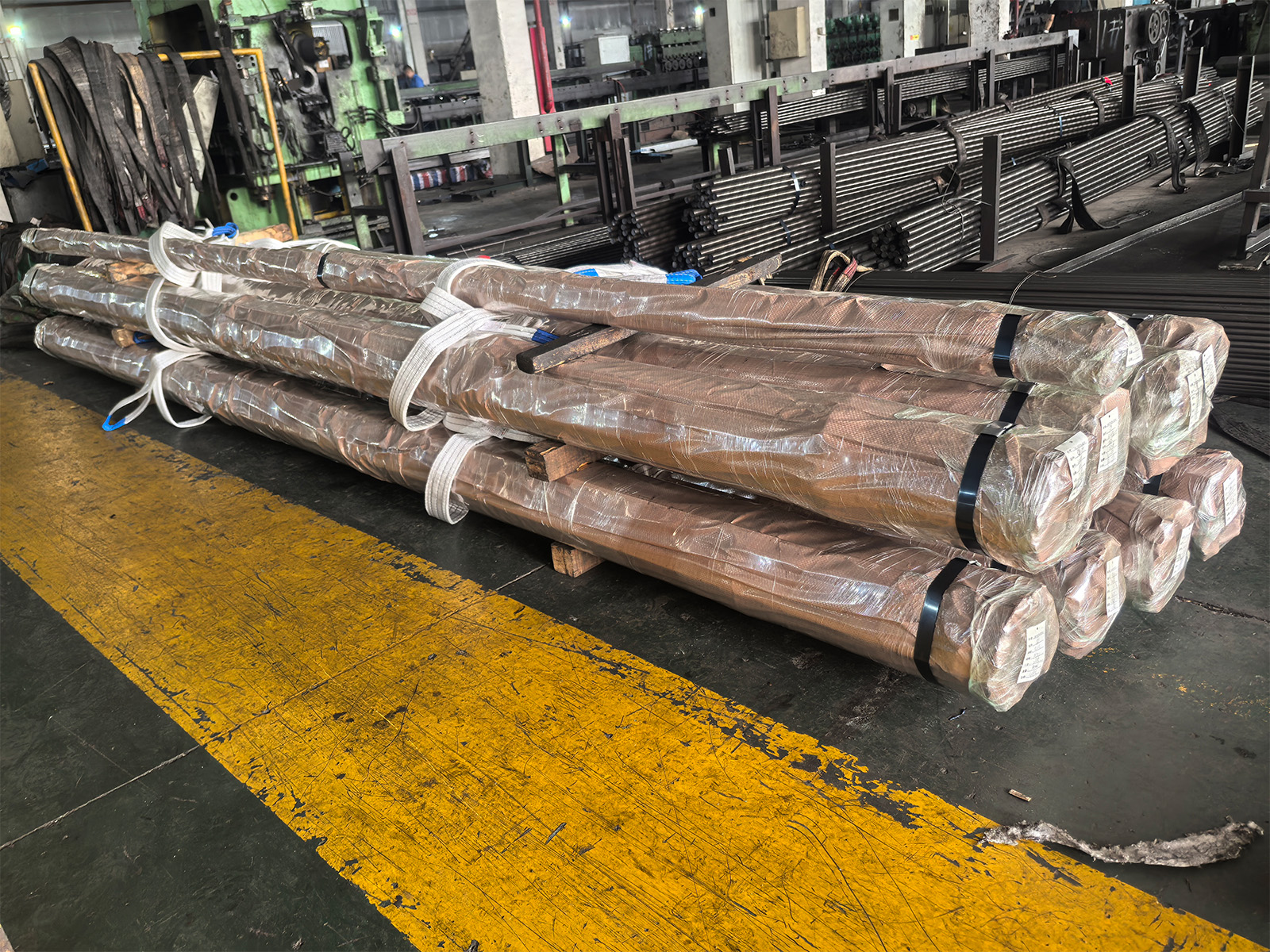
The circular cross-section ensures uniform stress distribution and easy processing (machining, grinding, heat treatment). By adjusting the diameter (Φ5-Φ200mm), it can meet different load requirements, making it the most widely used type among cold-drawn sections.
Typical Application Scenarios
• Mechanical Transmission Field:
◦ Shaft Components: Motor output shafts, gear shafts, bearing inner ring skeletons (e.g., Φ25×300mm cold-drawn round steel treated with manganese phosphating for enhanced wear resistance, suitable for washing machine motor shafts).
◦ Fasteners: High-strength bolts, nuts (e.g., Grade 8.8 bolts using Φ16 cold-drawn round steel, directly rolled after cold drawing, eliminating rough turning required for hot-rolled steel and improving processing efficiency by 40%).
• Hydraulic & Pneumatic Field:
◦ Hydraulic piston rods, cylinder rods (e.g., Φ50 cold-drawn round steel, treated with "zinc phosphating + saponification" before cold drawing, achieving surface roughness Ra≤0.8μm, and used directly as the piston rod base without additional grinding).
◦ Oil pipe joint core shaft (Core shafts for oil pipe joints) (e.g., small diameter Φ8-Φ12 cold-drawn round steel for low-pressure pipeline connections in hydraulic systems).
• Precision Instrument Field:
◦ Instrument pointer shafts, sensor support shafts (e.g., fine diameter Φ3-Φ8 cold-drawn round steel with dimensional accuracy of ±0.01mm, meeting precise transmission needs).
Surface Treatment Compatibility
• Transmission/Stress-bearing components: Prioritize manganese phosphating (improves corrosion and wear resistance).
• Components for subsequent chrome plating: Zinc phosphating (enhances adhesion of chrome layer).
• Small diameter precision parts: Saponification only (ensures surface finish from cold drawing).
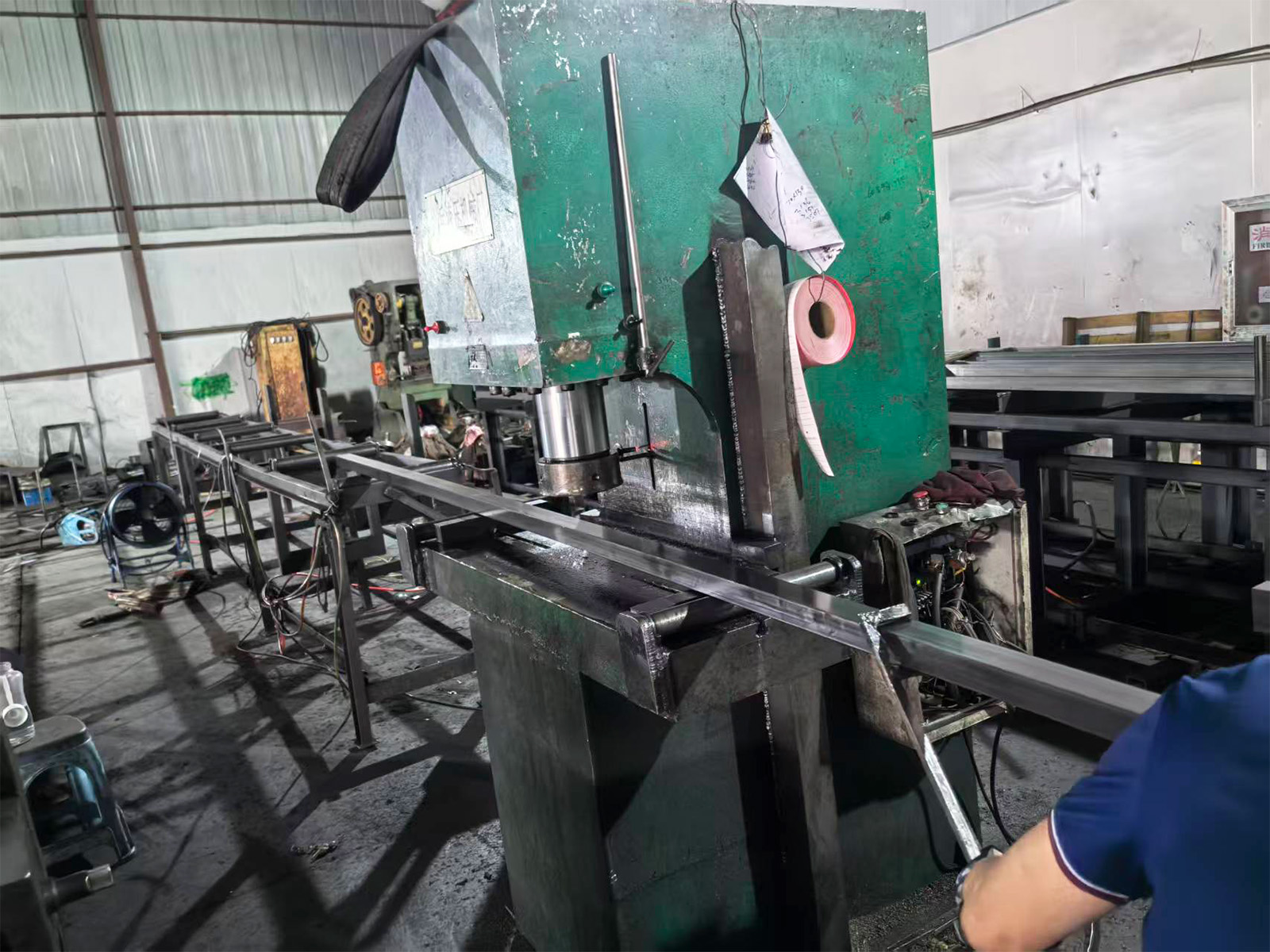
II. Cold-Drawn Flat Steel: Suitable for Support/Connection Components, Focused on Planar Stress
Core Shape Advantage
The rectangular cross-section (thickness: 3-50mm, width: 10-150mm) offers high flatness (tolerance ≤0.1mm/m), making it ideal for support surfaces or connection carriers. It can directly replace some milled hot-rolled flat steel.
Typical Application Scenarios
• Structural Support Field:
◦ Equipment guide rails, slider bases (e.g., 10×50mm cold-drawn flat steel, milled and used as CNC machine tool guide rails with flatness error ≤0.05mm/m).
◦ Shelving crossbeams, brackets (e.g., 5×30mm cold-drawn flat steel, welded into storage racks, 15% lighter and 8% lower cost than hot-rolled flat steel).
• Electrical Field:
◦ Distribution cabinet grounding bars, conductive busbars (e.g., 6×80mm cold-drawn flat steel, tin-plated for stable conductivity, suitable for low-voltage distribution cabinets).
◦ Motor end cover connection strips (e.g., 3×15mm cold-drawn flat steel, stamped and formed as supports for motor terminal blocks).
• Hardware Products Field:
◦ Door/window hinges, hinge leaves (e.g., 2×12mm cold-drawn flat steel, stamped and bent, with high dimensional consistency, eliminating subsequent shaping).
◦ Toolbox frames, brackets (e.g., 4×20mm cold-drawn flat steel, welded and painted, where surface flatness ensures uniform paint application).
Surface Treatment Compatibility
• Structural support components: Zinc phosphating + oiling (basic rust prevention).
• Conductive components: No phosphating (to avoid affecting conductivity, only degreasing/cleaning).
• Welded components: Only pickling pretreatment (removes scale, ensures weld quality).
III. Cold-Drawn Square Steel: Suitable for Symmetrically Stressed/Positioning Components, Balancing Strength and Precision
Core Shape Advantage
The square cross-section (side length: 5-100mm) has consistent dimensional accuracy on all sides (tolerance ±0.02mm), offering excellent symmetrical load-bearing performance. It is suitable for use as a positioning datum or symmetrical transmission parts.
Typical Application Scenarios
• Mechanical Positioning Field:
◦ Fixture positioning pins, guide rods (e.g., 20×20mm cold-drawn square steel used as positioning datums in jigs and fixtures, perpendicularity error ≤0.03mm/m).
◦ Mold guide pillars, bushings (e.g., 25×25mm cold-drawn square steel, heat-treated and ground, suitable for symmetrical guidance in stamping dies).
• Transmission Field:
◦ Worm gear, spline shaft base (e.g., 30×30mm cold-drawn square steel, milled into worm teeth, saving 30% machining allowance compared to hot-rolled square steel).
◦ Rolling door transmission shafts (e.g., 15×15mm cold-drawn square steel, welded into transmission brackets, where symmetrical structure ensures smooth operation).
• Special Equipment Field:
◦ Medical device support arms (e.g., 8×8mm cold-drawn square steel used as adjustment arms for surgical instruments, where dimensional accuracy ensures adjustment precision).
◦ Automation equipment locating pins (e.g., 6×6mm cold-drawn square steel, stamped and used as part locating pins with tolerance ±0.005mm).
Surface Treatment Compatibility
• Positioning/Guiding components: Zinc phosphating + saponification (used directly after cold drawing to ensure accuracy).
• Transmission components: Manganese phosphating (improves wear and corrosion resistance).
• Precision parts: No phosphating (only degreasing to avoid dimensional impact from coating).
IV. Cold-Drawn Special-Shaped Steel: Suitable for Customized/Integrated Components, Replacing Multi-Step Processing
Core Shape Advantage
The cross-section is non-standard (e.g., T-shaped, L-shaped, U-shaped, I-shaped, or complex sections with bosses/grooves). It can be customized according to requirements, achieving "one-time cold-drawn forming" and reducing subsequent welding or assembly steps.
Typical Application Scenarios
• Automotive Manufacturing Field:
◦ Car seat slide rails (T-shaped cold-drawn special-shaped steel with grooves, used directly as the rail base, offering 25% higher strength than stamped and welded structures).
◦ Door anti-intrusion beams (U-shaped cold-drawn special-shaped steel, thickness 3mm, lightweight design, meeting weight reduction needs of new energy vehicles).
• Architectural Decoration Field:
◦ Curtain wall mullions (U-shaped cold-drawn special-shaped steel, width 50mm, with pre-formed mounting holes, used directly for fixing glass curtain walls, improving installation efficiency by 50%).
◦ Stair handrail brackets (L-shaped cold-drawn special-shaped steel, polished and chrome-plated, replacing welded structures for better aesthetics and strength).
• Special Industry Field:
◦ Elevator guide rails (T-shaped cold-drawn special-shaped steel, drawn with dedicated dies, rail accuracy ±0.05mm, suitable for smooth operation of high-speed elevators).
◦ Photovoltaic bracket connectors (Cold-drawn special-shaped steel with clips, formed in one step and directly clipped onto PV panels, reducing installation cost by 30%).
Surface Treatment Compatibility
• Automotive/Elevator components: Manganese phosphating (high corrosion and wear resistance).
• Architectural decoration components: Zinc phosphating + painting/powder coating (enhances coating adhesion).
• Customized precision parts: Saponification + drying (ensures cold-drawing quality, subsequent treatment as needed).
V. Application Comparison Summary of Various Cold-Drawn Section Steels
|
Section Type |
Core Suitable Scenarios |
Key Advantages |
Typical Industries |
Surface Treatment Priority |
|
Cold-Drawn Round Steel |
Shafts, Fasteners, Transmission Parts |
Uniform Stress, Easy Machining |
Machinery, Hydraulics, Instruments |
Manganese Phosphating > Zinc Phosphating |
|
Cold-Drawn Flat Steel |
Support, Connection, Conductive Parts |
Flat Surface, Low Cost |
Structure, Electrical, Hardware |
Zinc Phosphating + Oiling > Degreasing |
|
Cold-Drawn Square Steel |
Positioning, Guiding, Symmetrical Transmission Parts |
Symmetrical Dimensions, High Precision |
Mold, Automation, Medical |
Zinc Phosphating + Saponification > No Phosphating |
|
Cold-Drawn Special-Shaped Steel |
Customized, Integrated Structural Parts |
Reduced Steps, Lightweight |
Automotive, Construction, Special Equipment |