
 EN
EN
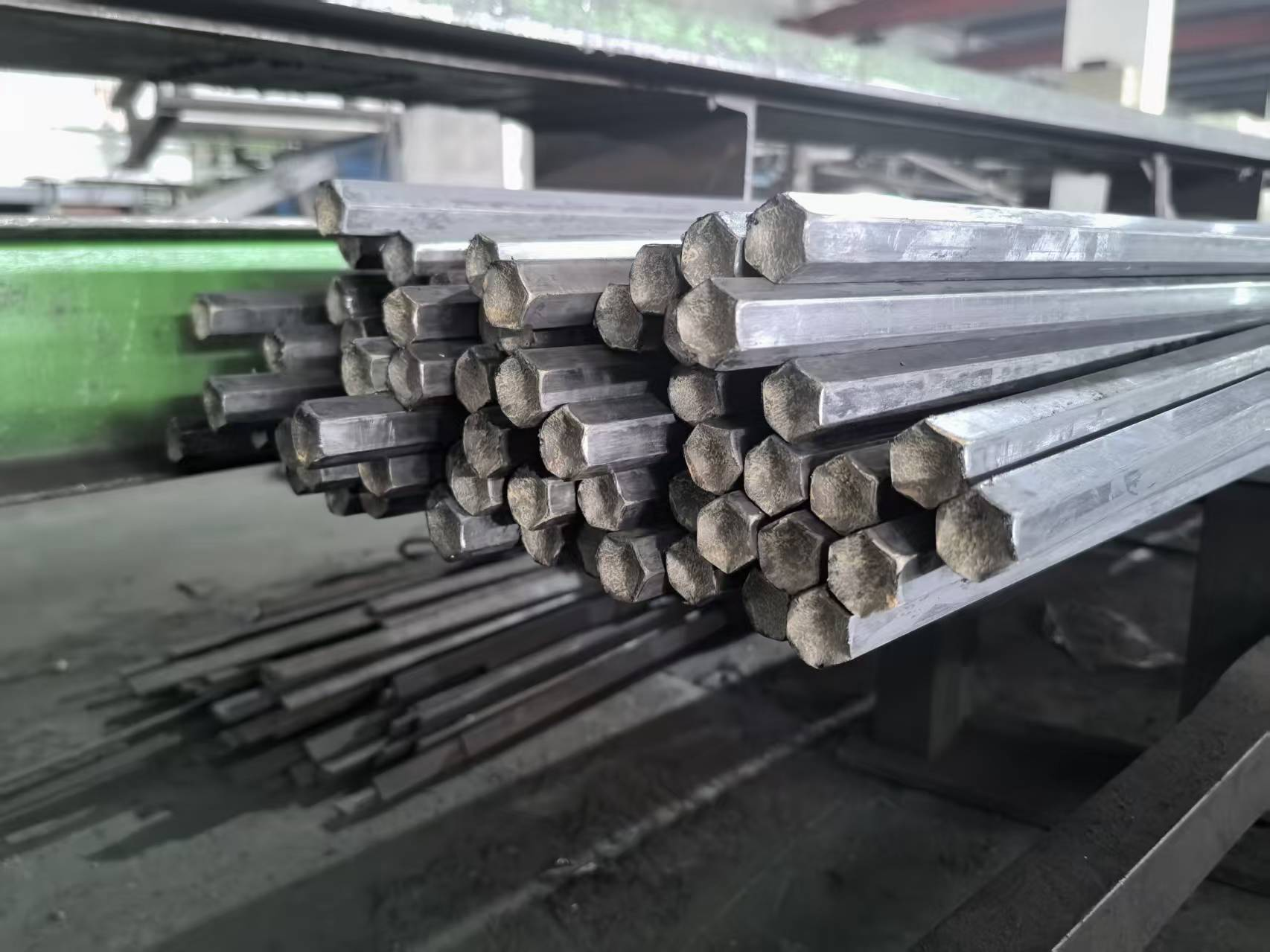
Hex Steel Bar: Torque Performance, Precision Machining & Industrial Applications
Round steel bars often suffer from slippage, uneven torque distribution, and low machining stability in power transmission and high-precision industrial applications. Hex steel bar solves these critical pain points with its six-sided symmetrical structure, delivering stronger torsional rigidity, zero-slip clamping, and superior dimensional consistency. Widely used in power transmission parts, high-strength fasteners, automotive components and mechanical axle systems, hex steel bar has become the preferred raw material for heavy-load, high-precision industrial manufacturing.
Superior Torque Handling and Structural Rigidity for Power Transmission Parts
Power transmission components such as drive shafts, axles and couplings require stable mechanical performance under continuous rotational stress and dynamic load. Unlike round steel, hex steel bar features flat-sided symmetrical geometry that completely eliminates fitting slippage during torque transmission. Its uniform six-sided structure distributes torsional stress evenly along the longitudinal axis, avoiding local stress concentration and structural deformation.
With high metallurgical rigidity, excellent tensile strength and long-term fatigue resistance, hex steel bar maintains precise shaft alignment under heavy-duty operation. It effectively stabilizes the overall drivetrain system, making it ideal for mission-critical power transmission components including axle shafts, drive couplings and mechanical spindle parts.
Field Case: 34% Service Life Improvement on Agricultural Equipment Axles (AISI 4140)
Heavy-load agricultural machinery such as combine harvesters works on bumpy terrain with frequent shock loads and alternating torsion, causing traditional round steel axles to deform and wear quickly. In a practical equipment upgrade project, engineers replaced round steel with quenched and tempered AISI 4140 hex steel bar.
AISI 4140 hex steel provides 414 MPa yield strength, outstanding wear resistance and enhanced torsional stiffness. The hexagonal profile enables precise radial positioning during assembly and strongly resists structural distortion under dynamic augering and field impact loads. Long-term field verification shows that the upgraded axles achieve a 34% longer service life compared with traditional round steel configurations, proving excellent reliability for high-stress outdoor mechanical equipment.
Hex Steel Bar Advantages for High-Strength Fastener Cold Forming
Hex steel bar is the optimal raw material for mass production of high-performance bolts and screws. Its uniform cross-section perfectly matches industrial cold-forming processes, bringing obvious advantages over traditional round steel machining.
Cold forming with hex steel bar optimizes internal steel grain structure, improving tensile strength and fatigue resistance of finished fasteners. This process greatly reduces material waste compared with full machining. Meanwhile, precision-drawn hex steel maintains strict dimensional consistency before threading, producing neat, high-strength threads that effectively prevent thread stripping under high clamping pressure. It ensures stable joint reliability for automotive, aerospace and industrial mechanical assemblies.
Cost and Performance Balance for Standard-Grade Fastener Manufacturing
For mass fastener production, manufacturers need to balance mechanical performance and production cost. Medium-carbon and low-alloy steel grades including AISI 4140 and AISI 4130 are the most cost-effective choices. After standard heat treatment, these hex steel bars easily reach ISO 8.8 and ISO 10.9 high-strength fastener standards without excessive processing costs.
Cold finishing technology further improves surface smoothness and yield strength. High-precision hex steel allows manufacturers to use smaller diameter blanks than hot-rolled steel, reducing raw material weight and overall production cost. By eliminating rough machining procedures while retaining full mechanical integrity, hex steel bar supports large-scale, cost-competitive high-strength fastener production.
Precision CNC Machining Stability of Hex Steel Bar
Hexagonal geometry brings natural clamping and positioning advantages for CNC turning and milling processes. Compared with round steel bar, hex steel completely avoids rotational slippage during high-speed machining, greatly improving workholding rigidity and jig fitting accuracy.
Professional-grade hex steel bar supports strict machining tolerance up to ±0.05 mm. Its stable blank precision reduces surface roughness variation by 40%. Adopting IT7-grade CNC processing can achieve surface finish below 0.8 μm Ra, fully meeting the requirements of sealing surfaces and wear-resistant precision parts.
Industrial test data verifies core processing advantages: • Hex geometry reduces high-speed milling rotational slippage by 62% • Optimized tool path produces segmented chips to avoid secondary cutting defects • In-process real-time gauging compensates tool deviation over ±0.025 mm
Components finished with stable <1.6 μm Ra surface quality reduce fastener galling failures by more than 45%, significantly improving final assembly stability and product yield.
Automotive Supply Chain Compliance and Full Material Traceability
As a core base material for automotive structural and fastening parts, hex steel bar fully meets IATF 16949 industrial traceability requirements. Each batch of hex steel is equipped with complete mill certification, including chemical composition reports, mechanical strength test data and standardized heat treatment records.
Complete material traceability allows manufacturers to bind raw material information to component quality files. Once non-conformity or quality risk occurs, teams can quickly locate root causes, implement targeted containment and optimize batch recall efficiency. Integrating steel batch data into factory MES systems realizes full lifecycle quality control, strengthens supply chain stability, and supports continuous process improvement for automotive mass production.
FAQ
What are the main applications of hex steel bar?
Hex steel bar is widely used in power transmission shafts, mechanical axles, high-strength fasteners, precision CNC components and automotive structural parts, favored for its high rigidity, anti-slip torque performance and excellent machinability.
Why is hex steel bar better for torque transmission?
The six-sided flat structure provides multiple stable clamping points, eliminates rotational slippage, and distributes torsional stress evenly. It delivers far higher torque stability and structural rigidity than traditional round steel bar.
What benefits does cold forming bring to hex steel fastener production?
Cold forming refines steel internal grain structure, improves tensile strength and fatigue resistance, reduces material waste, and produces precise, anti-stripping threads for high-reliability fasteners.
What steel grades are commonly used for hex steel bars?
AISI 4140 and AISI 4130 low-alloy steel are the most mainstream grades. After heat treatment, they stably reach ISO 8.8/10.9 strength standards with balanced cost and performance.
Table of Contents
- Superior Torque Handling and Structural Rigidity for Power Transmission Parts
- Field Case: 34% Service Life Improvement on Agricultural Equipment Axles (AISI 4140)
- Hex Steel Bar Advantages for High-Strength Fastener Cold Forming
- Cost and Performance Balance for Standard-Grade Fastener Manufacturing
- Precision CNC Machining Stability of Hex Steel Bar
- Automotive Supply Chain Compliance and Full Material Traceability
- FAQ