
 EN
EN
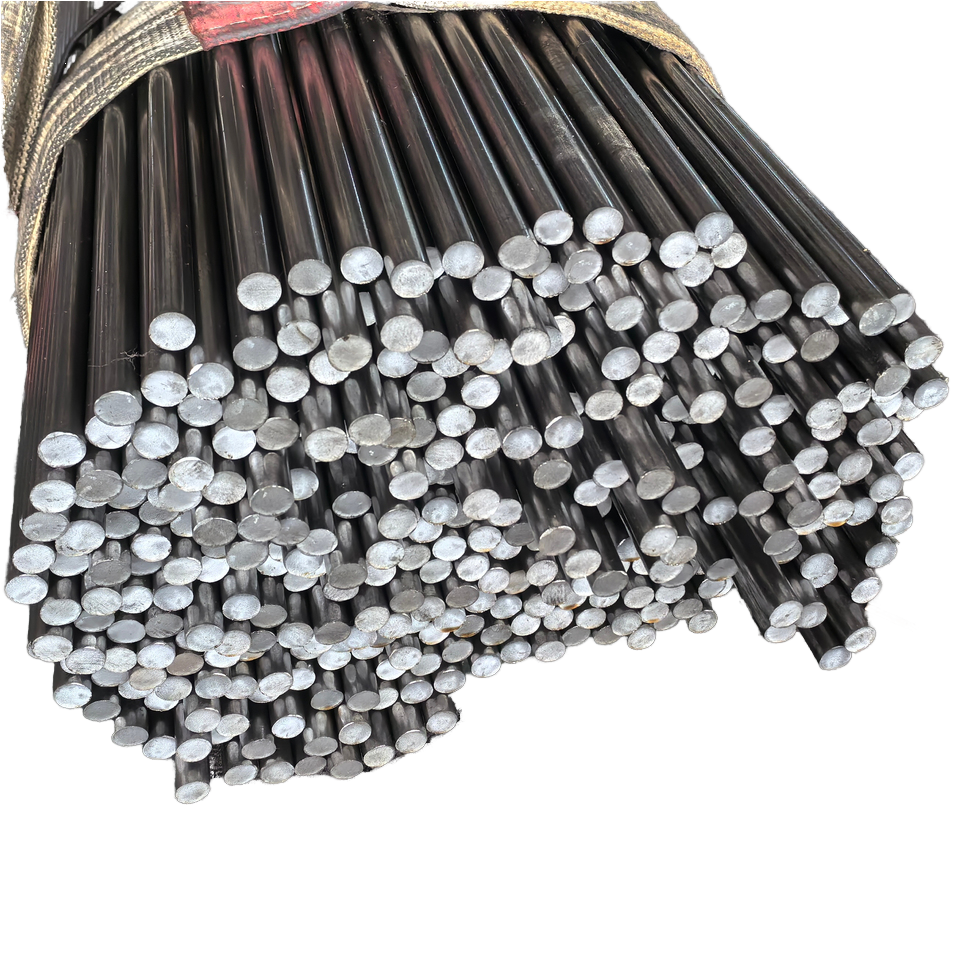
Precision Dimensional Control: Cold Drawing Lead over Hot Rolling
Dimensional precision of cold drawn steel is achieved through anti-thermal expansion and micro-structural control; tolerances of cold drawn steel can be expressed as ±0.001”, while that of hot rolled steel is ±0.030”. Dimensional precision implies uniform micro-structure, consistent cross-sections, and minimal variability. Thus, structures obtained through cold steel drawing require no human implementation for net-shape and near-net-shape positioning. Examples are bearing races and fuel injection components.
Precision Assembly and Cold Drawn Hysraulic Cylinder Rods, and Linear Motion Systems
There is always a concern for the geometric integrity of the components of a linear motion system and a hydraulic cylinder system due to the loss of operating fluids and the resultant premature seal wear breakage of the system. This also leads to a very significant improvement of the system’s operational stability due to a reduction in system self-excited vibrations which can range from 40% to a factor of 2. Cold drawn assemblies also prove very beneficial in the improvement of the operational integrity of systems, by withstanding extreme operational conditions including dynamic and extreme load conditions.
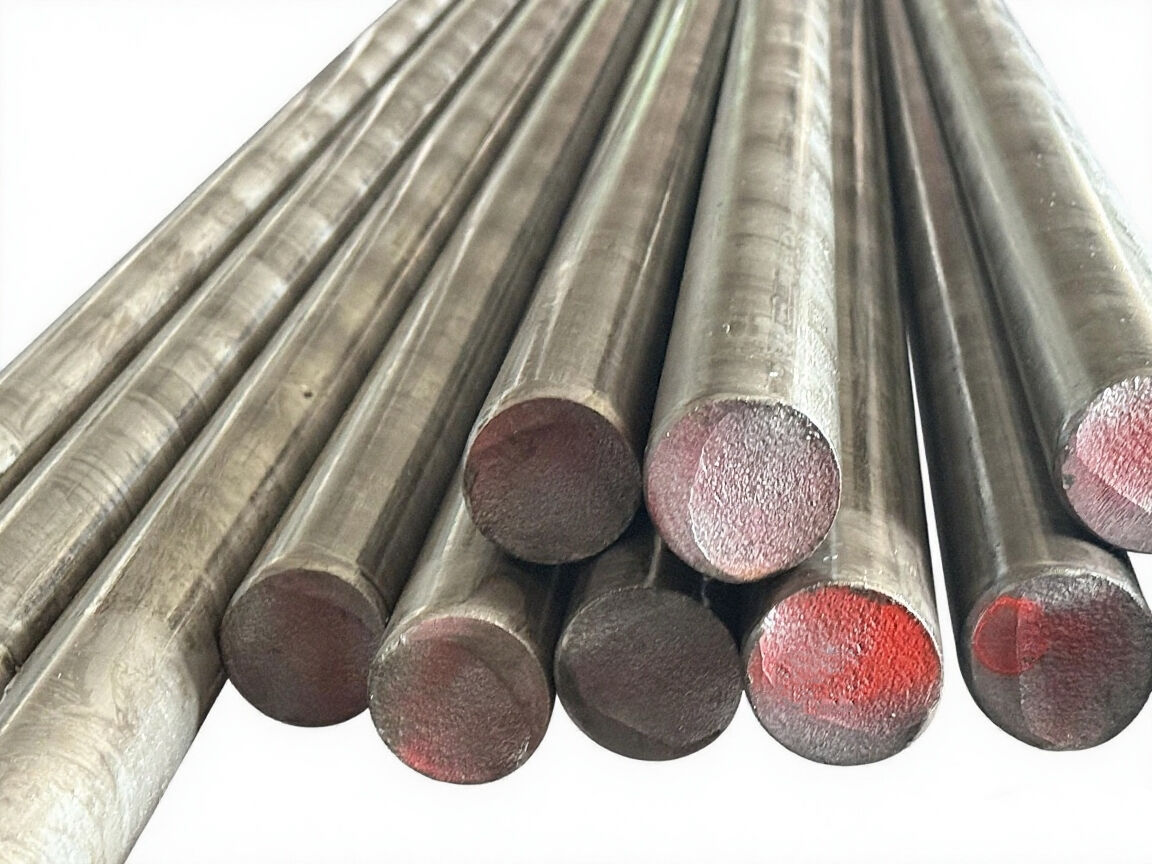
Enhanced Surface Finish - Fewer Secondary Machining Functions
Ra 0.4–0.8 µm vs. Ra 2.5–6.3 µm: How Cold Drawn Steel Cuts Finishing Time by 2–3 Steps
Cold drawn steel has a range of 0.4–0.8 µm in surface finishness (Ra); six times better than 2.5–6.3 µm exhibiting hot rolled steel. Cold drawn steel has a smooth finish due to die compression. The quality of the cold drawn finish meets most functional conditions without the need of a finish grind or polish.
Complete grind/polish removal: The surface as drawn meets performance specifications as needed in hydraulic cylinders, precision shafts, and gears.
Cost savings: Each step in the finish grind/polish is from 15 to 30 percent savings in machining costs.
Shortened lead times: Intermediate steps are eliminated and production is 25 to 40 percent faster.
Manufacturers state that in close tolerance applications, total process steps are reduced from five to two, thus eliminating all of the cost and lead time steps.
Cold drawn steel does not need surface finish subsystems to enhance performance, such as sealing interfaces or contact surfaces due to the cold drawn finish.
Higher Strength and Work-Hardening Mechanical Properties
20 - 30% higher tensile strength and an improved yield to tensile ratio for load critical applications
Cold drawing utilizes sophisticated techniques to obtain work hardening through controlled plastic deformation at room temperature. This increases the dislocation density and decreases the grain size. The tensile strength is this way improved by 20% - 30% when compared to their hot rolled counterparts and leads to 40% in reduction in grain size dispersion. This creates a much stronger and more uniform microstructure. Additionally, yield strength improves proportionally, with an improvement in the yield to tensile ratio to values more than 0.85. This improvement leads to a much larger resistance to permanent deformation while at the same time providing adequate ductility necessary to absorb the impact energy, which is improved by 35% when compared to hot rolled steel.
Work hardening improves the dimensional accuracy, surface integrity and mechanical performance. Work hardening is one of the improvements sought in the negative work applications. With the emergence of medical shocks, robotic spindles, and the ever-obliging devices hitting the load limit while thermally achieving.
Direct deployments where the cold drawn steels improve the financial aspects include work hardening, medical devices, robotics, and automation spindles at the load limit. In the aerospace industry, a cold drawn steel with a tolerance of ± 0.001" is a requirement to guarantee good control during high G maneuvers. Additionally, the use of cold drawn steel reduces the risk of bacterial colonization on the surface in medical devices. Of robotics and the automation spindles the cold drawn steels allow repetitive synchronous motions with breaking strengths increases by 20–30% and maintain dimensional integrity across millions of cycles.
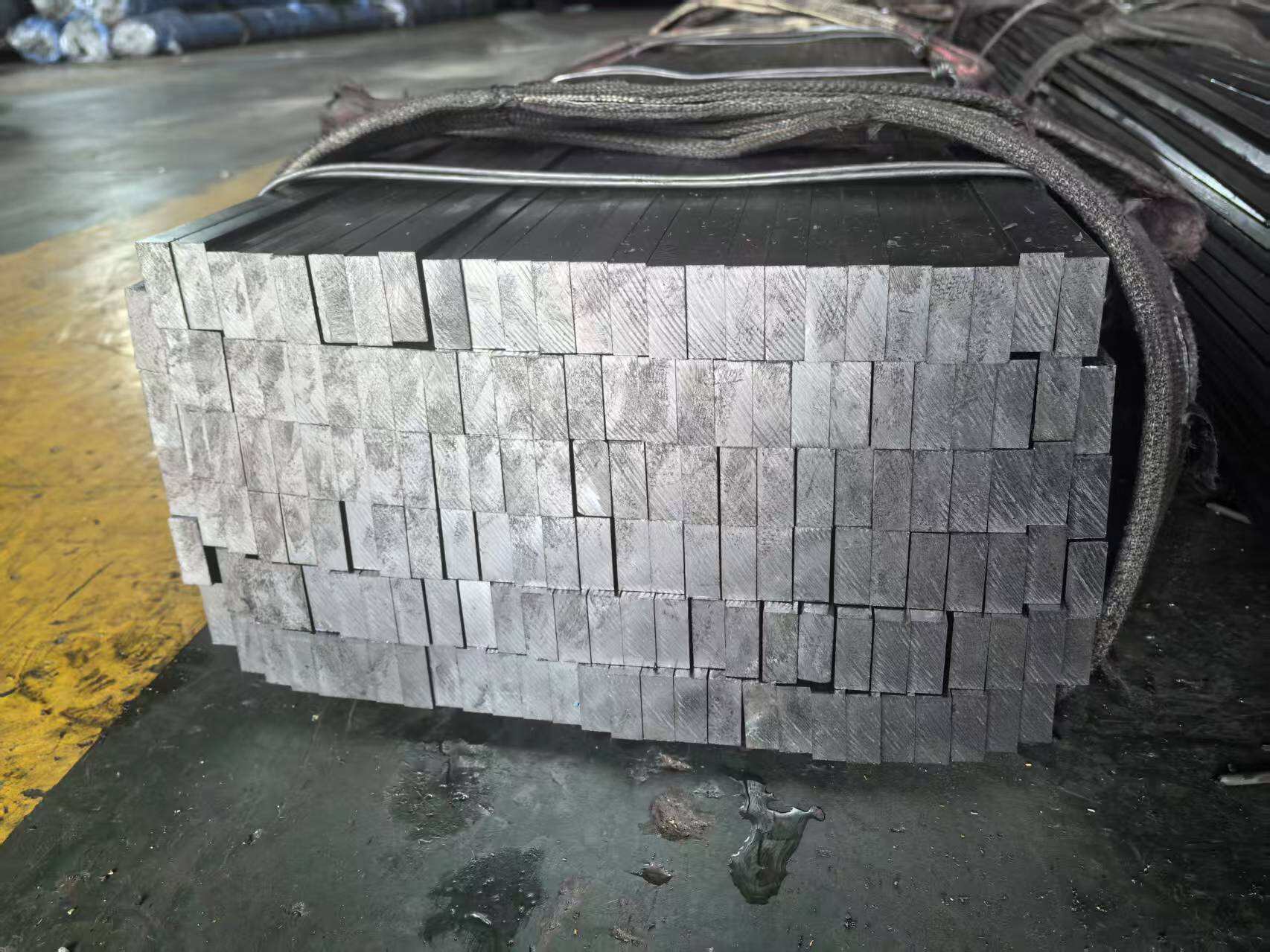
The cold drawn steels allow repetitive synchronous motions with breaking strengths increases by 20–30% whilst maintaining consistency across millions of cycles.
Even though starting material costs are higher than hot rolled steel, there are lifecycle advantages such as eliminating secondary operations, and significantly reducing field failure rates, resulting in an impressive ROI. For example, the total ownership cost decreased by 23% (Journal of Advanced Manufacturing, 2023). Some of the primary considerations are as follows:
Mission-critical reliability: 99.98% operational uptime in certified aerospace systems
Biocompatibility Compliance: Meets ISO 13485 standards Out-of-the-die
Fatigue Resistance: 3x extension in service life for high-cycle automation components
The investment is justified not by cost savings alone, but also by the assurance of risk reduction and long-term function of the system.
FAQ Section
What is the primary advantage of using cold drawn steel in comparison to hot rolled steel?
One of the primary advantages of using cold drawn steel is the improved precision. Cold drawn steel also has a finer surface finish, and is comparatively stronger than hot rolled steel.
What is the reason for tight tolerances in cold drawn steel?
Cold drawing is a process that occurs at room temperature, resulting in tolerances that are tight (±0.001″), while tolerances in hot rolled steel are (±0.030″).
What is the reason for fewer secondary machining steps with cold drawn steel?
Cold drawn steel has a surface finish that is very smooth (Ra 0.4–0.8 µm). This high quality finish often does not require secondary machining such as grinding or polishing.
What are the primary uses of cold drawn steel?
Cold drawn steel is primarily used in the aerospace and automation industries. It is also commonly used in the medical device industry. Cold drawn steel, regardless of the use, is known for its reliability, biocompatibility, and fatigue resistance.
Is cold drawn steel stronger than hot rolled steel?
Yes, cold drawn steel has 20-30% higher tensile strength and better yield-to-tensile ratio which is ideal for load critical applications.