
 EN
EN
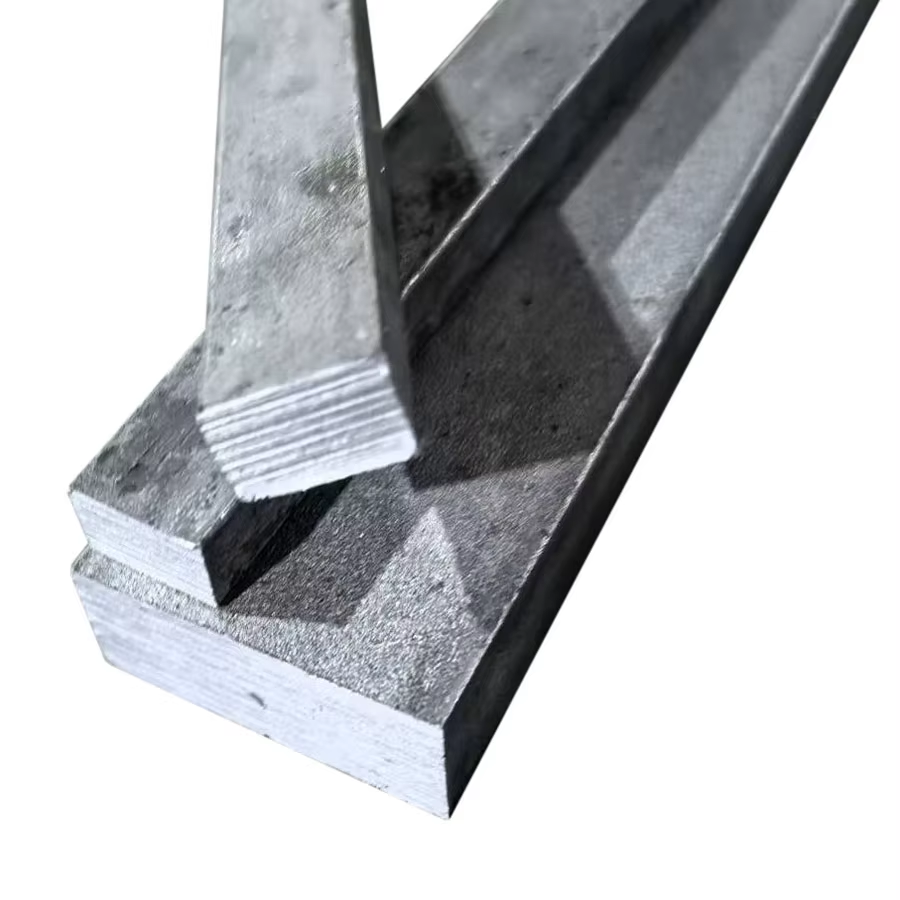
The Mechanical Properties of 1045 steel bar enabling Class 8.8+ bolt performance (Tensile and Yield strength): Compliance to ISO 898-1 specifications for bolts of structural applications
1045 steel bars, when optimally quenched and tempered, can achieve tensile strengths exceeding 800 MPa and yield strengths exceeding 640 MPa, which is more than enough to surpass Class 8.8 bolt requirements per ISO 898-1. The steel's homogenous microstructure allows for the even distribution of stress across the entire cross-section of the bolt including the threads and the fastener head. This uniform distribution is critical in maintaining and sustaining clamping force within the fastener when there are recurring shear loads and dynamic bolt-up conditions caused by vibration or oscillations within the fabricated assemblies of machinery structures and equipment. Bolt failure within industrial machinery and equipment structures and assemblies poses severe safety risks and creates costly production losses due to downtime. Thus, bolt reliability is crucial.Hardness-Ductility Synergy: Preserving Integrity of Threads and Reliability of Joints
Due to the carbon content approximately between 0.43 and 0.50 percent, materials achieve a hardness of 25 to 32 on the Rockwell scale, after heat treatment. This level of hardness is sufficient to prevent the stripping of threads when components are installed, and still allows approximately 10 to 15 percent elongation prior to fracture. The material stays ductile and is flexible enough to avoid cracking, which is of great importance for components of farming equipment or construction machinery that are impacted or loaded repeatedly. During assembly, the contractive force or torque is applied, and of the metal pulls stronger in the length of the bolt, without the threads or the radius of the holes becoming more susceptible to failure. The practical outcome is enhanced treatment of loose joints and those annoying failures.
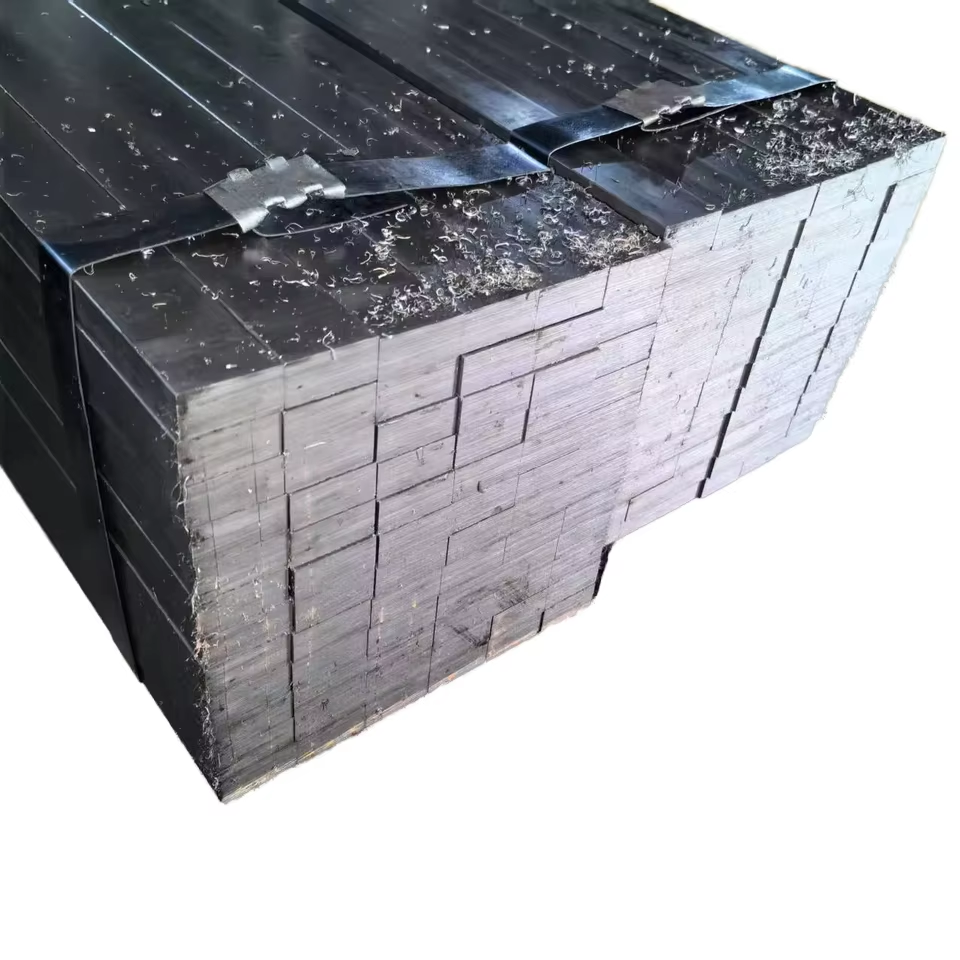
ISO 898-1: Mechanical properties of fasteners made of carbon steel and alloy steel
Chemical composition of 1045 steel bar: Precision balance in respect of strength and machinability
Structural bolts demand a specific ratio of carbon and manganese. A total carbon composition of less than 0.43% is weak and less than 0.5% makes them too brittle. While low carbon steel is brittle, high carbon steel (brittle and weak) also has low carbon. Carbon in steel is responsible for strength especially after heat treated, increasing tensile strength beyond 620 MPa. Manganese makes the structure of the steel anti-toxically (together) crystalline and benefits the flow of the steel (when hot) as a weaker structure of crystalline (less chance of stress points in the final product, anti-toxically).
The formulation of the bolts is what makes it optimal. It consistently yields a tensile ratio between 0.6, and 0.8 which is what is required in ISO 898-1 for fasteners of Class 8.8. Its also nice that no exotic alloys in the mix (no chromium or molybdenum) so the manufacturers can make it in bulk, cheaply.
The Reason For Metal's Treatment Versatility: 1045 Steel Bar's Effective Heat Treatment Target Strength Grades Attainment
Mobile 1045 quench & tempering vs 1045 AN- CD: MPa & Elongation Loss
The process of quenching and tempering 1045 steel turns it into tempered martensite. This process makes it strong enough to manufacture Class 8.8 bolts. These bolts have a yield strength of around 580 MPa and a tensile strength of approximately 670 MPa. This process of quenching and tempering 1045 steel does have a downside: the elongation percentage decreases. This is a stark contrast to the 20% elongation found in its AN (annealed) counterpart. The importance, however, is justified when it comes to joints with load bearing.
Cold drawing is exceptional when it comes to achieving the desired dimensions and surface quality, but it does have its costs. Most notably, it decreases the impact resistance. Because of this, we often restrict cold drawn components to applications where the tensile forces will not be high. The following table illustrates a comparison of mechanical properties of different conditions.
Avoiding Over-Hardening: Preserving Toughness for Dynamic Load Applications
Getting the thermal control right, is of great relevance for the properties of the material. If the austenitization is not done above 820 degrees Celsius, we will have brittle zones in the material. On the other hand, tempering above 600 degrees, will result in less than 25 HRC hardness which will be susceptible to shearing forces. The “ideal” region is 400 to 550 degrees Celsius, where the center is tough enough to withstand impacts (approximately 27 Joules in Charpy tests) yet achieves the required hardness level above the 8.8 grade. Slower cooling rates are also required for the formation of brittle zones. It has been shown that keeping the cooling rates under thirty degrees per second, will prevent the formation of those annoying carbides along the grain boundaries. This step will greatly reduce the stress corrosion cracking and fatigue that occur when components are subjected to vibrations or repeated heating cycles.
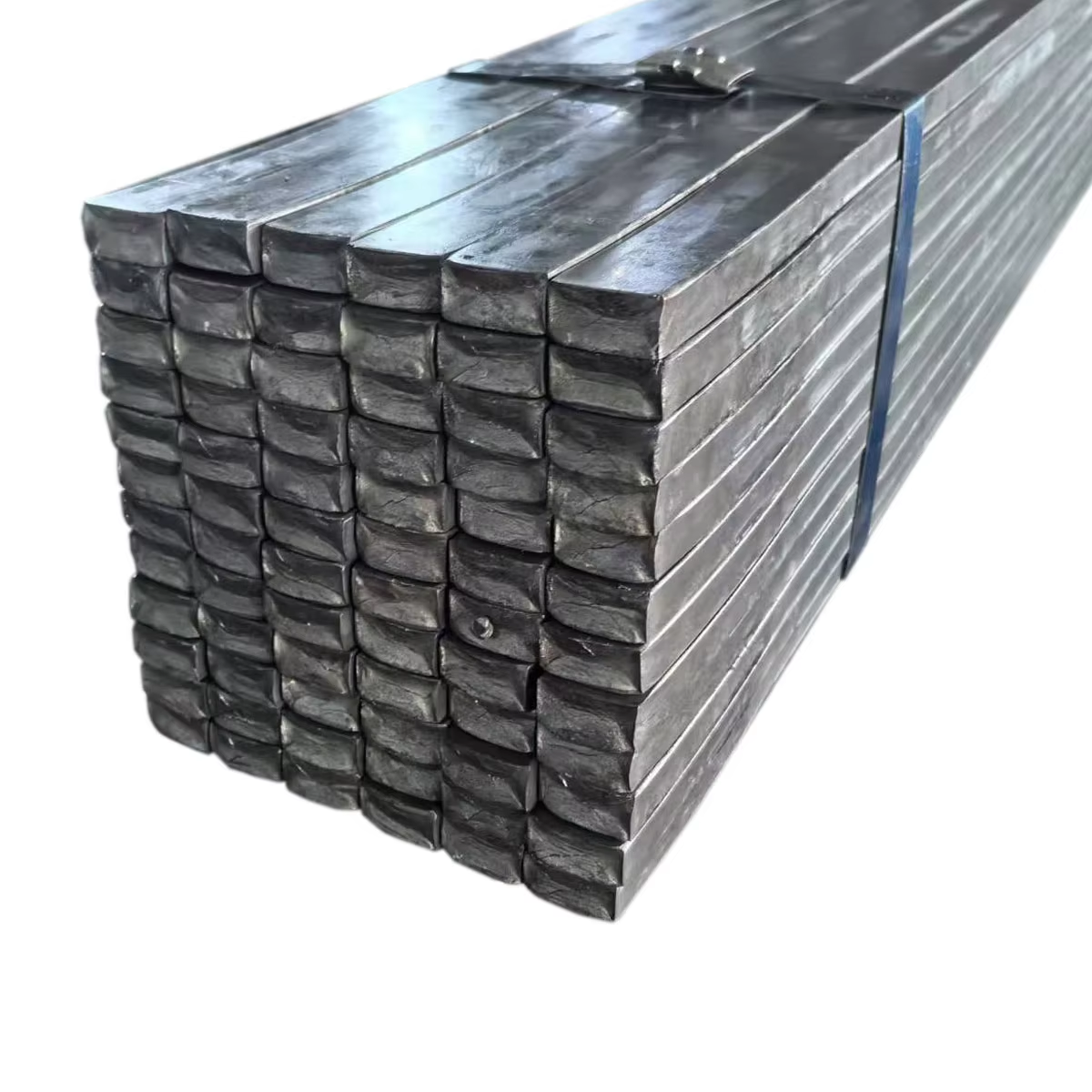
Cost-Performance Leadership: 1045 Steel Bar Vs Common Bolt Steel Alternatives
When manufacturing Class 8.8+ bolts, 1045 steel bar is one of the best options for balancing both performance and cost. In comparison to low carbon alternatives, such as 1018 steel, 1045 provides 30 to 50 percent higher tensile strength for only 15 to 20 percent higher material cost. This is an important consideration, as 1018 steel is unable to meet sufficient strength demands for many applications. In comparison, 4140 high alloy steel requires a complex, and costly, heat treatment, for an additional 50 to 70 percent material cost, and is more time intensive due to higher energy consumption. 1045 steel alloy is desirable because it achieves high strength levels through a more simple, less costly quench and tempered heat treated process. This can reduce total production costs by approximately 25 percent when compared to specialty alloys, while still performing sufficiently for use in tough structural connections where no failure is acceptable.
FAQ Section
What mechanical features does 1045 steel have that is appropriate for Class 8.8 bolts?
1045 steel has good ductility, high tensile and yield strength, and high levels of hardness, all of which are appropriate for Class 8.8 bolts because they have the ability to withstand extreme levels of stress and vibrations.
What is the significance of the 1045 steel chemical composition?
The chemical makeup of 1045 steel is critical because the combination of carbon and manganese determines strength and machinability, while avoiding excessive brittleness, and it is compliant with the ISO standards.
What are the effects of heat treatment on the features of 1045 steel?
The effects of heat treatment on 1045 steel provides varying effects depending on the treatment. For example, quenching and tempering the steel increases its strength, making it applicable for high load purposes, while annealing and cold drawing provide varying degrees of elongation and tensile strength.
What are the advantages of 1045 steel over other steel alternatives for bolts?
Compared to lower carbon steels such as 1018, 1045 steel is more economical and provides better tensile strength, and it is less expensive than 4140 high alloy alternatives.