
 EN
EN
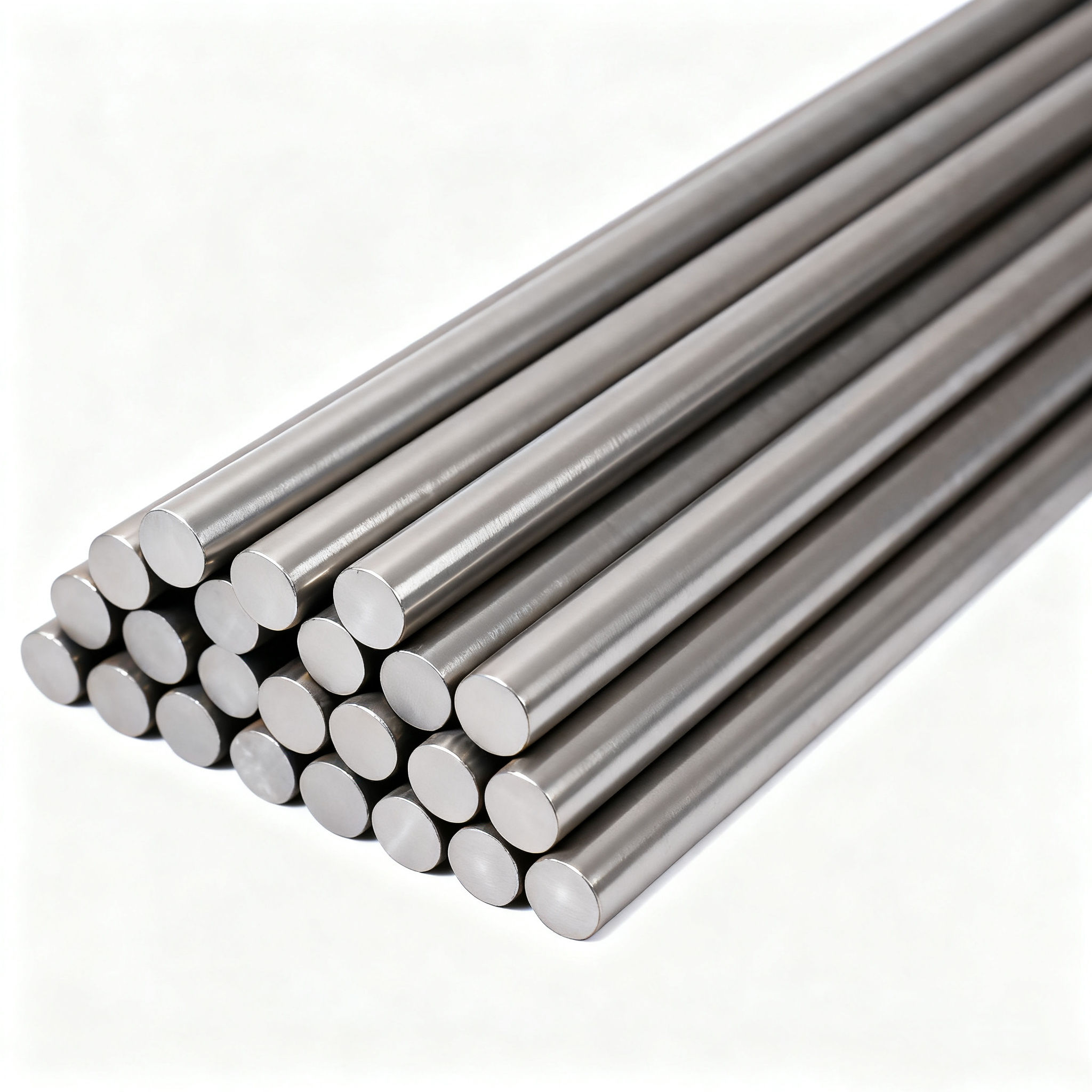
Steel rods with diameters below 25 mm (1 inch) comply with ASTM A108 standards for precision machining, while steel bars are usually over 25 mm and are subject to regulation by ASTM A36 for their use in construction and other structural functions. The ISO makes further distinctions as follows:
Rod: ≤ 9.5 mm (cold finished)
Bar: > 9.5 mm (hot rolled)
The divide in dimensions affects the level of precision of tolerances that rods are made with a precision of ± 0.05 mm, bars ±1.5 mm, which is industrial.
Uses of Each Term and Implications Beyond Size
The term “rod” designates the item as ready for manufacture on a lathe or CNC machining with high requirements for Ra surface finishes (smoothness) of ≤ 3.2 μm. The term “bar” on the other hand, designates the item as being structural and as having a millscale surface finish). The terminology used in the industry helps to clarify any potential confusion concerning the use of:
Round steel rod = shafts, fasteners, pins
Round steel bar = columns, braces, anchors
Using the terms incorrectly in construction can have serious consequences, such as using oversized bars in precision gears which will result in the tolerances being exceeded or using undersized rods which will buckle under a structural load of 50 kN.
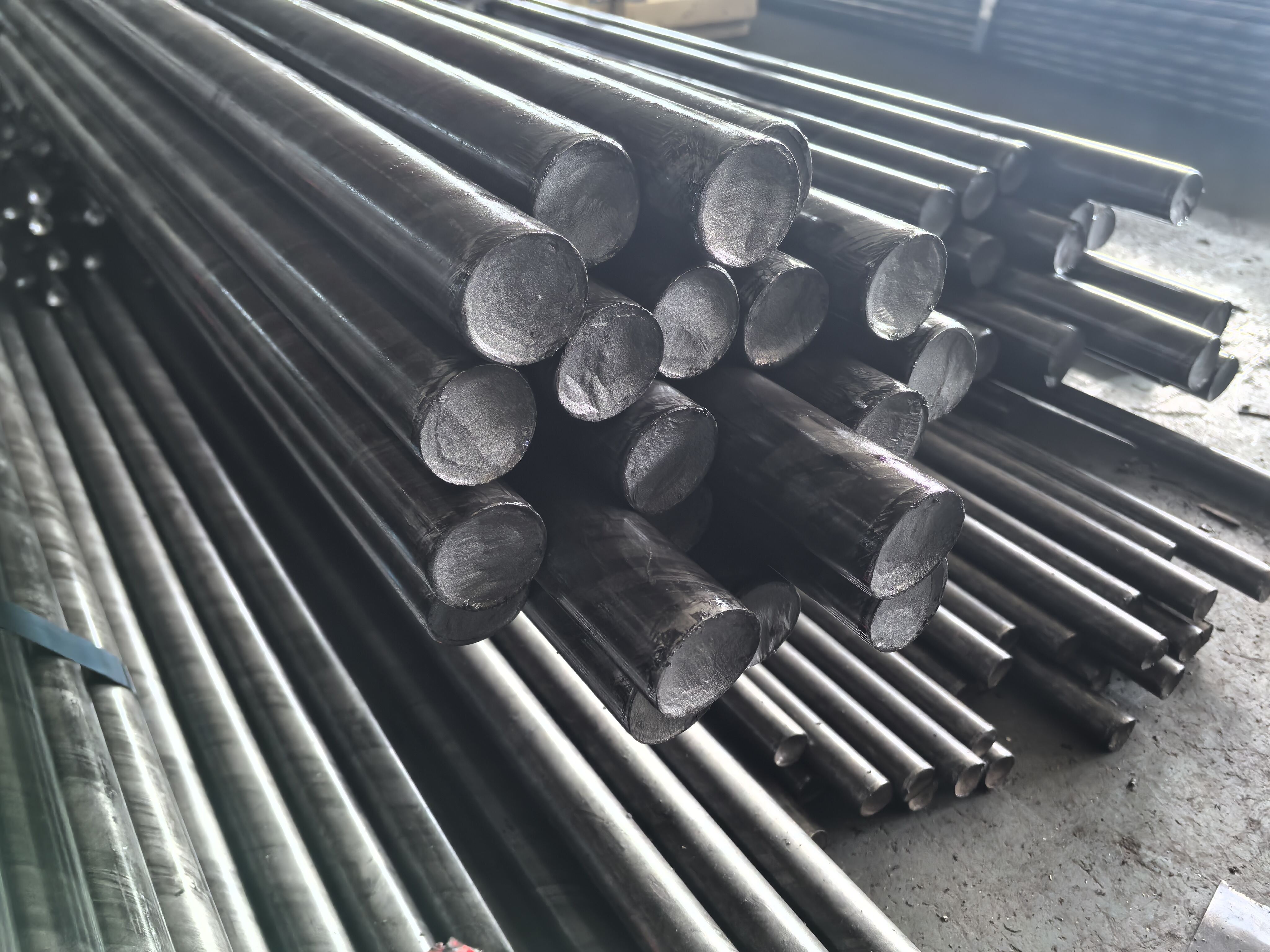
Key Application Drivers: Tolerance, Surface Finish, and Mechanical Performance
When choosing between a round steel rod and a bar, the essential consideration is the dimensional tolerance, the surface finish, and the mechanical properties, as they determine the performance in critical applications and, subsequently, the risk of component failure and excess cost of production.
Why The Use Of Round Steel Rods Are The Most Advantageous In Precision Machining And Fastener Manufacturing
Round Steel Rods Are Preferred In Precision Machining As They Provide Better Control Over Diameter With A Tolerance Of ±0.01 Mm. They Also Provide Better Surface Finish With Roughness Average Around 1.6 Microns. As A Result, Additional Work Is Not Needed On Parts Used In Hydraulic Valves, And Aircraft Bolt Assemblies. Round Steel Rods Have Improved Consistency Of Internal Structure And Provide Good Hardness In The Range Of 30 - 40 HRC, Which Helps In Controlling Tool Wear While CNC Machining. In Fact, They Have 20 - 25% Less Tool Wear Compared To Other Steel Rods With Uneven Cross Sections. Manufacturing Companies That Produce Fasteners In Thousands Always Look For Reliability In Round Steel Rods. Consistency In Manufacturing Round Steel Rods Is Important To Avoid The Unwanted Jamming Of Threads And The Problem Of Cracks Due To Stressed Threads.
The Strength of Round Steel Bars
When building large structures, round steel bars offer significant advantages over regular rods, primarily due to their ability to support more weight. Round steel bars have a diameter of 25-150mm and withstand over 450 MPa of compressive force. This makes them ideal for concrete column reinforcement in seismic zones and crane construction. These steel bars are also budget friendly, offering a 15-20% cost savings when compared to precision rods. Due to their rough surface (between Ra 3.2 and 12.5 microns), they also have better adhesion when used in composites. Finally, round steel bars are easy to bend and weld without breaking, which is essential for construction on ships or in factories where alterations may occur during construction.
Industry-Specific Usage: Construction, Automotive, and Industrial Machinery
Construction: Alternatives to Rebar and Anchor Systems with Round Steel Rods
Steel rods are a strong alternative to rebar in concrete projects where precision is critical. With a diameter deviation of ±0.005 inches, steel rods are highly precise in their weight distribution capabilities, especially with respect to the stresses induced by earthquakes and other natural phenomena. Their precision helps prevent unexpected structural failures. While regular rebar is prone to corrosion and requires clearance for installation, steel rods are manufactured with corrosion-resistant zinc coatings, and construction crews are increasingly using them because they are more durable and take up less space on construction sites.
Anchors for suspended ceilings in skyscrapers
Masonry tie systems with deflection tolerances at <1 mm
Precast concrete joints with threaded requirements
Automotive and Machine Engineering: Axles, Shafts and Pins - Selection of Materials
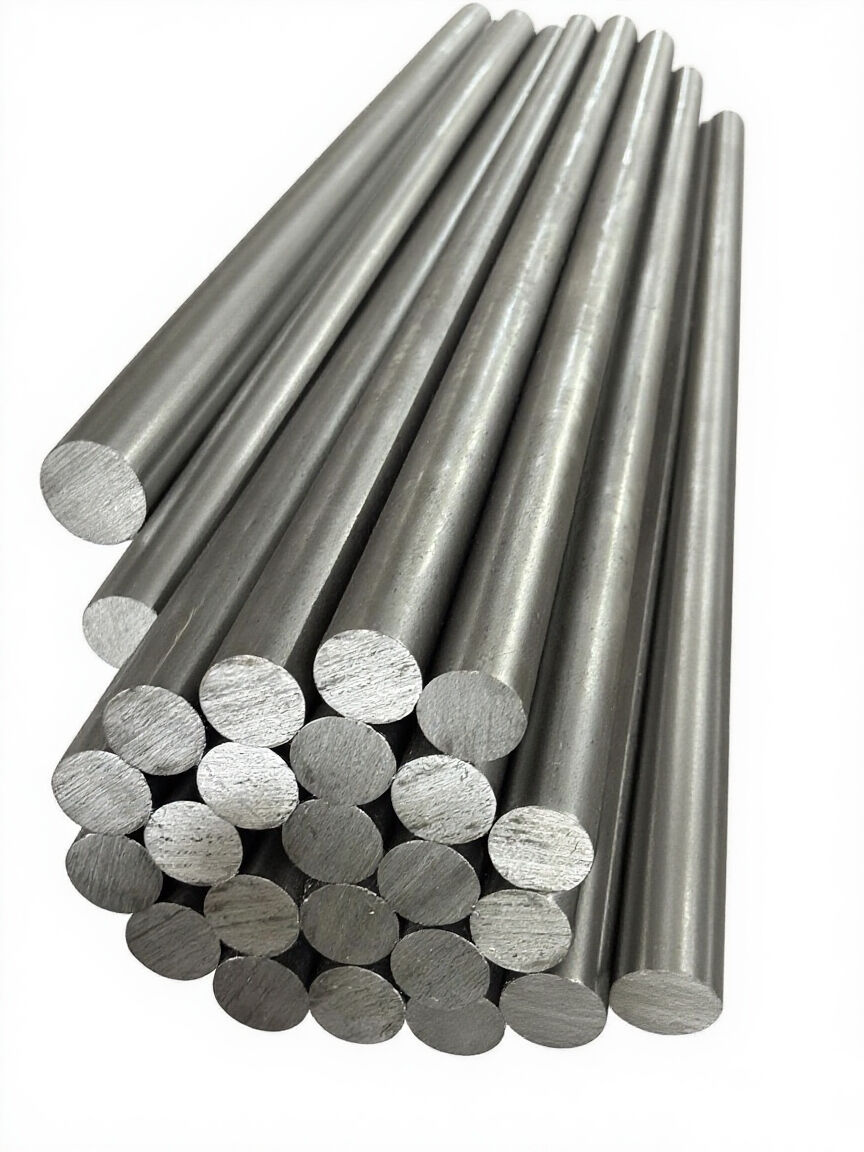
When materials engineers purchase round steel rods to manufacture moving parts, they consider three parameters: metal fatigue strength (preferably over 620 MPa), ease of machining, and behavior during heat treatment. Axle manufacturers often choose micro-alloyed steels, for example, SAE 4140, due to the additional stiffness against torsional forces. However, the requirements for transmission shafts differ, and preference is given to the cold drawn ones, since they are much less deformed during rotation at very high speeds (thousands of rotations per minute). Precision pins are often made of case-hardened steels, where the layer of material is very hard (about 60 HRC) to prevent seizing during operation, while the core remains soft to avoid breaking under the load. No less interesting are the bushes made on CNC machines.
The material being used is stress relieved rod material, and it helps avoid unwanted changes in size after all of the machining is complete.
Component Critical Property Round Steel Rod Advantage Axles Torsional Yield 15% higher than hot-rolled bars Shafts Straightness Maintains <0.003" over 1 m length Pins Surface Hardness Case depth control within 0.2 mm Avoiding Costly Misapplication: When Substituting Round Steel Rod for Bar (or Vice Versa) Fails When round steel rod is substituted with bar stock by engineers, for some reason they never consider the differences in weight tolerance, etc. This can lead to a number of engineering problems. Using a regular steel rod instead of bar grade steel in a structural member is one way to mess the member up. Steel stocks tend to fail easily when they are improperly sized and prevent the part from being machined at all. This is probably the most frequent engineering mishap and industry experts say the cost of the correction is probably a rough justification of the value of the mistake. It is claimed that 1 of 9 problems with the fabrication of the assembly can be classified as a consequence of the confusion of materials. Before any replacement is decided, a thorough check of the 3 important criteria should be done.Types of Steel Rods
The ASTM A108 steel rods are more expensive than A36 steel bars because the former has much more exacting tolerances than the latter.
- Demand tolerance thresholds: ASTM A108 cold-drawn rods require a tolerance of ±0.001" while A36 hot-rolled bars require a tolerance of +/-0.01"
- Demand surface integrity: cold-drawn rods require a smoother surface than hot-rolled bars because the former are used in bearings and the latter are used in mill scales
- Demand yield strength alignment with application loads: structural steel frameworks require steel bars with a yield strength of 36-50ksi while fastening threads require steel rods with a yield strength of 100ksi
FAQs
What is the difference between a round steel rod and round steel bar?
The difference between a round steel rod and a round steel bar is that a round steel rod has a smaller diameter of 25 mm while a round steel bar has a diameter greater than 25 mm.
What are the advantages of round steel rods in precision machining?
The advantages of round steel rods in precision machining is that they have a smoother surface finish which requires less post processing.
What structural applications require round steel bars?
Round steel bars are required for structural applications and heavy fabrication because they can sustain more weights than round steel rods.
Table of Contents
- Uses of Each Term and Implications Beyond Size
- Why The Use Of Round Steel Rods Are The Most Advantageous In Precision Machining And Fastener Manufacturing
- The material being used is stress relieved rod material, and it helps avoid unwanted changes in size after all of the machining is complete.
- FAQs