
 EN
EN
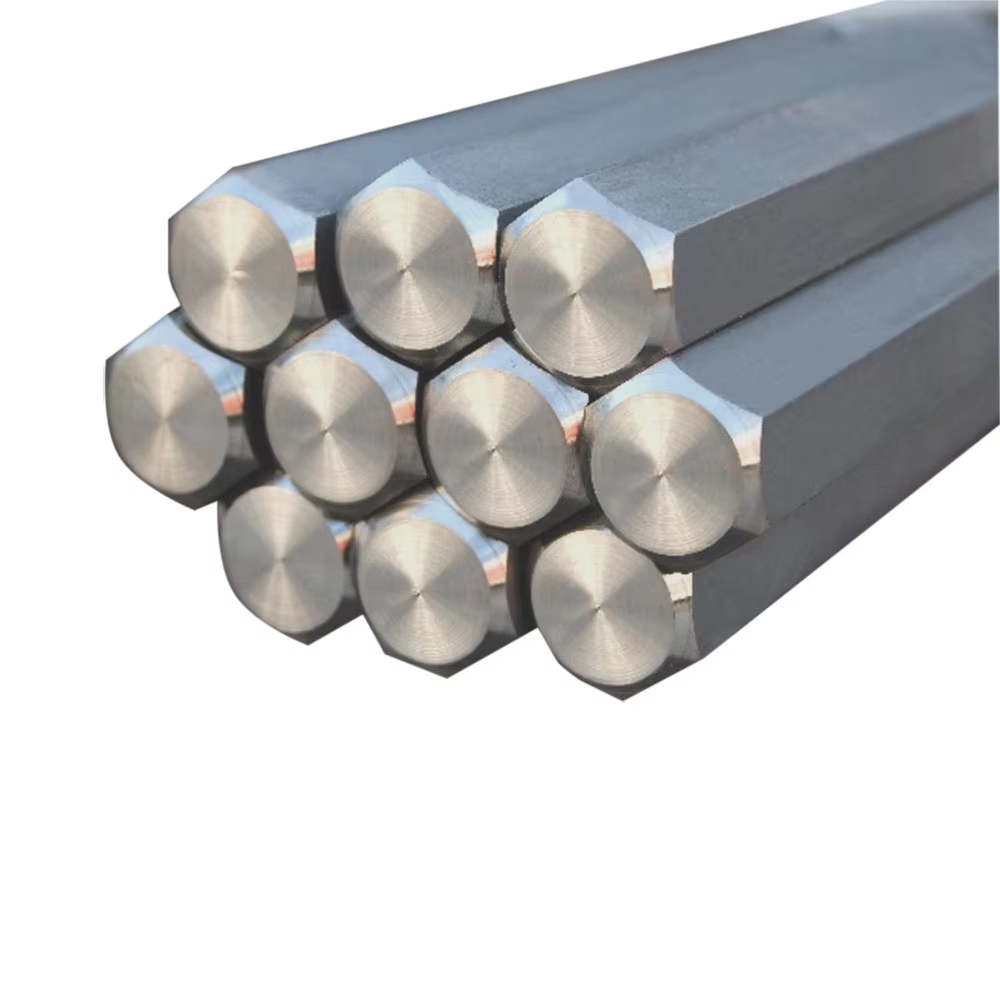
Dimensional Accuracy and Tolerance Control in Round Steel Rod
Cold Drawing vs. Centerless Grinding: Achieving ±0.01 mm Tolerance for Precision Instrumentation
Precision instrumentation demands dimensional stability beyond standard machining capabilities. Round steel rod achieves ±0.01 mm tolerances primarily through centerless grinding—where abrasive wheels remove material without workpiece fixation—though cold drawing (pulling material through dies at room temperature) can deliver ±0.025 mm consistency as a cost-effective pre-process. Cold drawing improves tensile strength by 15–20% via grain alignment but falls short of the ultra-fine control required for aerospace sensors or medical device components. Centerless grinding delivers superior surface finish (Ra ≤ 0.4 µm) and tighter diameter control, albeit at 30–40% higher production cost. Material behavior dictates process selection: low-alloy carbon steels like 1018 typically hold ±0.02 mm in cold-drawn form, while stainless grades (304/316) often require grinding due to work hardening. Leading manufacturers therefore adopt a hybrid approach—using cold-drawn rods as precision preforms before final centerless grinding—to balance cost, throughput, and metrological certainty.
Material Consistency and Its Effect on CNC Machining Stability of Round Steel Rod
Homogeneous microstructure is foundational to CNC machining stability and repeatable dimensional outcomes. Hardness variations exceeding 5 HRC cause measurable tool deflection (>0.03 mm) during turning, while alloy segregation leads to inconsistent chip formation and surface finish. Decarburization—a common defect in hot-rolled stock—reduces surface hardness by 10–15%, accelerating tool wear and introducing drift in critical features. Certified cold-drawn or ground rods compliant with EN 10278 demonstrate 60% fewer size deviations during high-speed machining versus non-certified alternatives. For optical alignment pins or gauge blocks, vacuum-melted specialty steels provide the tightest compositional control, sustaining batch-to-batch tolerances within ±0.008 mm. Equally vital is microcleanliness: inclusion ratings ≤1.5 per ASTM E45 significantly reduce machining vibration, enabling stable chip flow and predictable tool life—key enablers for high-volume precision instrument manufacturing.
Surface Integrity and Finish Performance of Round Steel Rod
Ra ≤ 0.2 µm Surface Finish: How Ground Round Steel Rod Supports Optical Calibration and Contact Metrology
Optical calibration devices and contact metrology probes rely on surface integrity as much as geometry. Ground round steel rod consistently achieves Ra ≤ 0.2 µm—a threshold essential for minimizing light scattering in interferometric systems and reducing friction-induced hysteresis in mechanical contacts. This ultra-smooth surface preserves measurement fidelity across repeated use; even submicron peaks or valleys can introduce systematic errors in coordinate measuring machines (CMMs) or laser alignment fixtures. Specifying ground rod eliminates secondary polishing steps, streamlining production while enhancing process reliability in applications where traceability and repeatability are non-negotiable.
Residual Stress and Micro-Burrs in Cold-Drawn Round Steel Rod—Risks to Tool Life and Part Reliability
Cold drawing enhances dimensional consistency but often introduces tensile residual stress and micro-burrs—surface imperfections that compromise downstream performance. These defects accelerate tool wear during CNC machining and degrade fatigue resistance in finished components. For example, micro-burrs on bearing journals may initiate premature failure in high-speed rotating assemblies. Research published in the Journal of Manufacturing Processes (2023) found tensile residual stresses reduced tool life by up to 30% in hardened steels under continuous cutting conditions. To mitigate these risks, stress-relief annealing or secondary centerless grinding is recommended—ensuring geometric accuracy aligns with long-term functional reliability.
How Do Surface Integrity and Finish Performance of Round Steel Rod Impact Precision Manufacturing?
Surface integrity is not ancillary—it’s determinative. High roughness, tensile residual stress, or micro-burrs directly trigger accelerated tool degradation, inconsistent metrology readings, and shortened service life in end-use instruments. In contrast, rods exhibiting low Ra values and compressive residual stress profiles support tighter part tolerances, reduced runout, and extended maintenance intervals. Therefore, process selection—cold drawing versus centerless grinding—and post-treatment decisions (e.g., stress relief, passivation, or electropolishing) carry equal weight with base material specification. A holistic view of surface condition ensures the round steel rod serves not just as raw stock, but as a calibrated foundation for precision performance.
Material Selection: Matching Round Steel Rod Grades to Precision Instrument Requirements
316L Stainless Steel Round Rod: Balancing Corrosion Resistance, Biocompatibility, and Machinability for Medical Instruments
316L stainless steel round rod is the benchmark for medical instrumentation requiring simultaneous corrosion resistance, biocompatibility, and dimensional stability. Its low carbon content (<0.03%) suppresses carbide precipitation during welding or autoclaving, preserving passive layer integrity against aggressive sterilants and bodily fluids. The grade meets ISO 10993 biocompatibility requirements for temporary and permanent implants, making it suitable for surgical forceps, retractors, and measurement fixtures used in sterile environments. While its “gummy” nature poses machinability challenges—increasing risk of built-up edge and poor surface finish—these are reliably mitigated with optimized speeds/feeds, rigid tooling, and high-pressure coolant. When processed correctly, 316L delivers both the Ra ≤ 0.2 µm finish needed for optical calibration components and the long-term dimensional stability demanded by repeatable clinical instrumentation.
Manufacturing Workflow Optimization for Round Steel Rod-Based Precision Components
Producing precision instrument components from round steel rod requires a tightly synchronized workflow—where minor inefficiencies compound into tolerance drift, surface defects, or elevated scrap. To sustain ±0.01 mm accuracy, manufacturers must integrate real-time monitoring of cutting forces and tool wear on CNC lathes, coupled with adaptive feed-rate control. Efficient toolpath design—minimizing air cuts and rapid traversals—reduces cycle time without sacrificing surface integrity. Just-in-time material staging, feeding rods directly from controlled storage to the machine, prevents surface contamination and handling-induced deformation. Critically, in-process gauging and post-process measurement systems must be calibrated daily to detect drift before it propagates through a batch. Embedding these practices into a closed-loop feedback system—linking metrology data back to machine parameters—enables consistent quality, lower per-part costs, and shorter lead times without compromising the EEAT-critical assurance of dimensional and surface performance.
FAQ
What is the key difference between cold drawing and centerless grinding?
Cold drawing enhances tensile strength and provides ±0.025 mm dimensional accuracy at a lower cost, while centerless grinding offers tighter tolerances (±0.01 mm) and superior surface finish (Ra ≤ 0.4 µm), making it ideal for precision instrumentation.
Why is surface integrity critical for round steel rods in precision manufacturing?
Surface integrity directly impacts tool life, measurement accuracy, and component reliability. Smooth surfaces with low Ra values reduce friction, wear, and systematic errors during use in precise applications like optical devices and metrology systems.
What are the machining challenges of 316L stainless steel round rods?
316L stainless steel's "gummy" nature can lead to built-up edge and poor surface finish. These challenges are mitigated with optimized machine settings, rigid tooling, and the use of high-pressure coolant.
How does material consistency affect CNC machining outcomes?
Homogeneous materials with consistent hardness and inclusion ratings ensure stable tool performance, predictable chip formation, and reduced machining vibration, which are essential for repeatable precision in high-volume production.
What steps can improve manufacturing workflow for precision components?
Implementing real-time monitoring, adaptive feed-rate control, just-in-time material staging, and closed-loop feedback systems ensures consistent quality and reduces per-part costs.
Table of Contents
- Dimensional Accuracy and Tolerance Control in Round Steel Rod
-
Surface Integrity and Finish Performance of Round Steel Rod
- Ra ≤ 0.2 µm Surface Finish: How Ground Round Steel Rod Supports Optical Calibration and Contact Metrology
- Residual Stress and Micro-Burrs in Cold-Drawn Round Steel Rod—Risks to Tool Life and Part Reliability
- How Do Surface Integrity and Finish Performance of Round Steel Rod Impact Precision Manufacturing?
- Material Selection: Matching Round Steel Rod Grades to Precision Instrument Requirements
- Manufacturing Workflow Optimization for Round Steel Rod-Based Precision Components
-
FAQ
- What is the key difference between cold drawing and centerless grinding?
- Why is surface integrity critical for round steel rods in precision manufacturing?
- What are the machining challenges of 316L stainless steel round rods?
- How does material consistency affect CNC machining outcomes?
- What steps can improve manufacturing workflow for precision components?