
 EN
EN
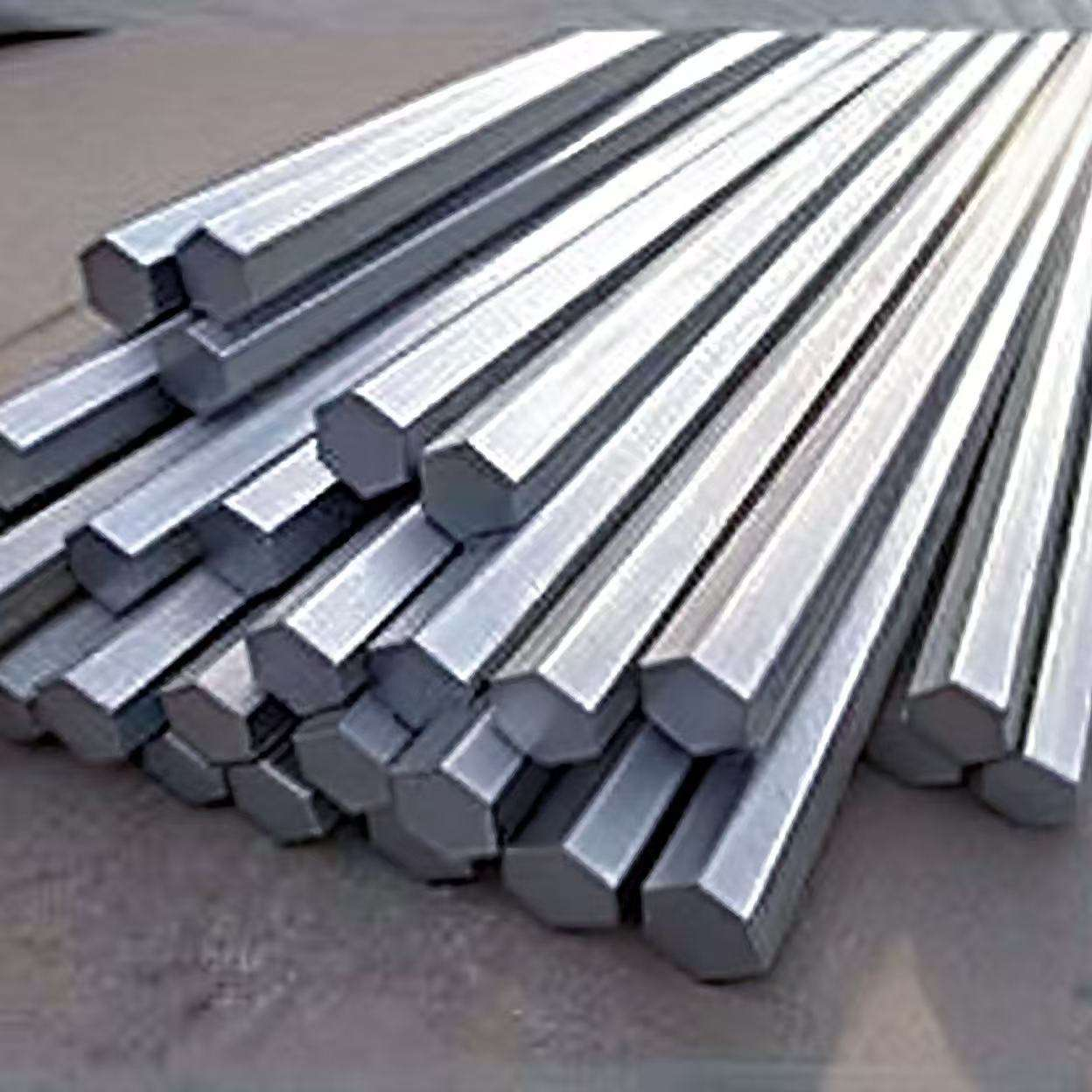
Superior Mechanical Performance: Strength, Fatigue Resistance, and Structural Uniformity
Round steel bar delivers exceptional mechanical performance for demanding shaft applications where reliability is non-negotiable. Its uniform circular cross-section ensures consistent radial stress distribution under torsional and bending loads—eliminating weak points common in irregular profiles. This structural predictability directly enhances fatigue life, a critical factor for drivetrains, turbines, and other rotating equipment subjected to millions of load cycles. When properly processed, round steel bar exhibits seamless grain flow aligned with the longitudinal axis, minimizing stress concentration and enabling confident design for high-torque environments without unexpected fracture risk.
Uniform Microstructure and Radial Stress Distribution in Round Steel Bar
Hot-rolled or cold-drawn round steel bar develops a directional microstructure that responds uniformly to radial stresses during rotation—preventing localized deformation seen in asymmetric sections. Finite element analysis shows round profiles generate up to 35% lower peak stress concentrations than hexagonal or square equivalents under identical torque loads. The absence of corners removes inherent stress risers—the most common initiation sites for fatigue cracks—resulting in more predictable, long-term performance. This homogeneity supports accurate fatigue life modeling, essential for safety-critical applications where shaft failure poses unacceptable risk.
Alloy-Specific Enhancements: How AISI 4140 and 1045 Round Steel Bar Deliver Torque-Resistant Fatigue Life
Material selection must align precisely with operational demands. Quenched and tempered AISI 4140 chromium-molybdenum alloy steel achieves tensile strengths exceeding 950 MPa while retaining fracture toughness—making it ideal for high-cycle fatigue applications like turbine and crankshafts. Its deep hardenability ensures consistent mechanical properties across large-diameter sections. In contrast, medium-carbon AISI 1045 offers superior machinability for complex shaft geometries while delivering adequate fatigue resistance (endurance limit ~50% of tensile strength) for industrial drive shafts where cost-performance balance is key. Both alloys surpass non-ferrous alternatives in torque transmission efficiency; 4140’s torsional yield strength exceeds 550 MPa—critical for resisting permanent deformation during overload events.
Precision Fabrication Efficiency: Machinability and Dimensional Consistency of Round Steel Bar
Cold-Drawn Round Steel Bar for Tight Tolerances and Enhanced Surface Integrity
Cold drawing refines round steel bar at room temperature, improving diameter accuracy, surface finish, and straightness—key requirements for precision shafts. The process compresses the material, eliminating surface defects and yielding tolerances as tight as ±0.001 inches. Such precision enables direct press-fitting into bearings or housings without secondary machining. The resulting surface integrity reduces assembly friction and extends service life. Consistent hardness along the length ensures repeatability in CNC turning and grinding, while the uniform microstructure lowers tool wear and improves chip control. For high-volume production—especially in automotive and industrial equipment—cold-drawn round steel bar delivers an optimal balance of dimensional accuracy, machinability, and process reliability.
Application-Driven Material Selection: Matching Round Steel Bar Grades to Industry Requirements
Selecting the right round steel bar grade requires matching its mechanical, thermal, and chemical properties to specific industry demands—not just nominal strength. This targeted approach ensures reliable performance under unique environmental, regulatory, and loading conditions.
Automotive Powertrain Shafts: Forged and Heat-Treated Round Steel Bar in Crankshafts and Drive Shafts
Automotive powertrains impose extreme cyclic torsional loads and require precise dimensional control. Forged AISI 4140 and 4340 round steel bars—heat-treated to 28–32 HRC—deliver the required combination of tensile strength (≥950 MPa), fatigue resistance, and dimensional stability. These properties prevent premature failure in high-RPM operation while supporting precision machining of splines, bearing journals, and oil passages.
Aerospace and Pharma: Stainless Steel Round Bar for Corrosion Resistance, Cleanability, and Regulatory Compliance
For environments demanding corrosion resistance and strict hygiene, 300-series stainless steels are the standard. Grade 316L round bar—containing 2.5% molybdenum—provides chloride resistance critical for marine and aerospace components. Its non-porous, passive oxide layer meets FDA and USP Class VI requirements for pharmaceutical mixing shafts, maintaining dimensional stability through repeated sterilization cycles without leaching or degradation.
Cost-Performance Optimization: Why Round Steel Bar Delivers Better ROI Than Alternatives
True return on investment for shaft materials extends far beyond raw material cost. Total cost of ownership—including machining efficiency, scrap rate, maintenance frequency, unplanned downtime, and service life—determines economic viability. Round steel bar consistently outperforms alternatives like aluminum alloys in high-torque, high-cycle applications. Its superior strength and fatigue resistance reduce replacement intervals and repair costs, while cold-drawn or heat-treated variants minimize machining scrap through tighter tolerances and improved surface integrity. Although aluminum offers weight savings, its lower yield strength necessitates larger diameters to achieve equivalent torsional stiffness—eroding cost advantages and increasing packaging and assembly complexity. Over typical five- to ten-year lifecycles, round steel bar’s durability, consistency, and fabrication efficiency deliver a demonstrably higher ROI for mission-critical rotating components.
Frequently Asked Questions (FAQ)
What is the main advantage of round steel bars in mechanical applications?
Round steel bars provide uniform circular cross-sections that ensure consistent radial stress distribution under torsional and bending loads, enhancing fatigue life and reliability for demanding applications.
Why is AISI 4140 preferred for high-cycle fatigue applications?
AISI 4140 chromium-molybdenum alloy steel offers high tensile strengths (>950 MPa) and excellent fracture toughness, making it ideal for applications like turbine shafts and crankshafts subjected to high-cycle fatigue.
What are the benefits of cold-drawn round steel bars?
Cold-drawn round steel bars offer enhanced diameter accuracy, improved surface finish, and tighter tolerances, which are crucial for precision applications like press-fitting into bearings and housings.
How does stainless steel round bar ensure corrosion resistance?
300-series stainless steels like 316L provide a passive oxide layer and added molybdenum content, ensuring resistance to chloride-induced corrosion and compliance with strict regulatory standards in industries like aerospace and pharmaceuticals.
What factors contribute to round steel bars offering better ROI than alternatives?
Factors like superior strength, fatigue resistance, tighter tolerances, and lower total cost of ownership make round steel bars a reliable and cost-effective choice for mission-critical applications.
Table of Contents
- Superior Mechanical Performance: Strength, Fatigue Resistance, and Structural Uniformity
- Precision Fabrication Efficiency: Machinability and Dimensional Consistency of Round Steel Bar
- Application-Driven Material Selection: Matching Round Steel Bar Grades to Industry Requirements
- Cost-Performance Optimization: Why Round Steel Bar Delivers Better ROI Than Alternatives
-
Frequently Asked Questions (FAQ)
- What is the main advantage of round steel bars in mechanical applications?
- Why is AISI 4140 preferred for high-cycle fatigue applications?
- What are the benefits of cold-drawn round steel bars?
- How does stainless steel round bar ensure corrosion resistance?
- What factors contribute to round steel bars offering better ROI than alternatives?